There are cities that serve as a film set and others that end up writing the script. These days, Barcelona demonstrates that, beyond having inspired stories and characters, the city is also a driving force in the film industry. A quarter of a century after the Goya Awards gala left its usual venue in Madrid for the first time to land in the Catalan capital, the city once again dresses up for its fortieth edition. Beyond reaffirming the good moment of Catalan audiovisuals —a sector that bills more than 9,000 million euros a year—, the great film festival arrives with the explicit will to leave its mark and turn its passage into a lasting legacy.
This ambition is materialized in an extensive program of activities that runs throughout the month of February until the celebration of the gala —Saturday, February 28 at the Auditorium of the Barcelona International Convention Center (CCIB), presented by Rigoberta Bandini and Luis Tosar—. Conferences, concerts, screenings of the nominated films at the Filmoteca de Catalunya and even the installation of large bronze busts scattered around the city seek to make Barcelona breathe cinema before and after the ceremony. But, beyond the visible impact, the purpose is also intangible: to awaken and consolidate local talent.
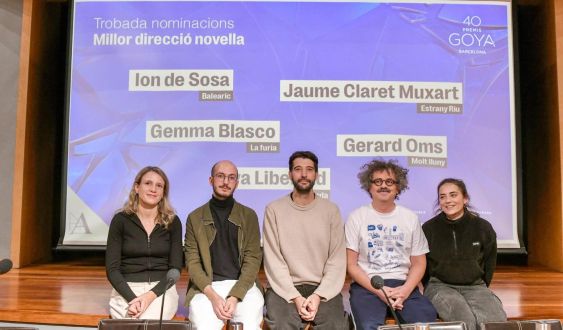
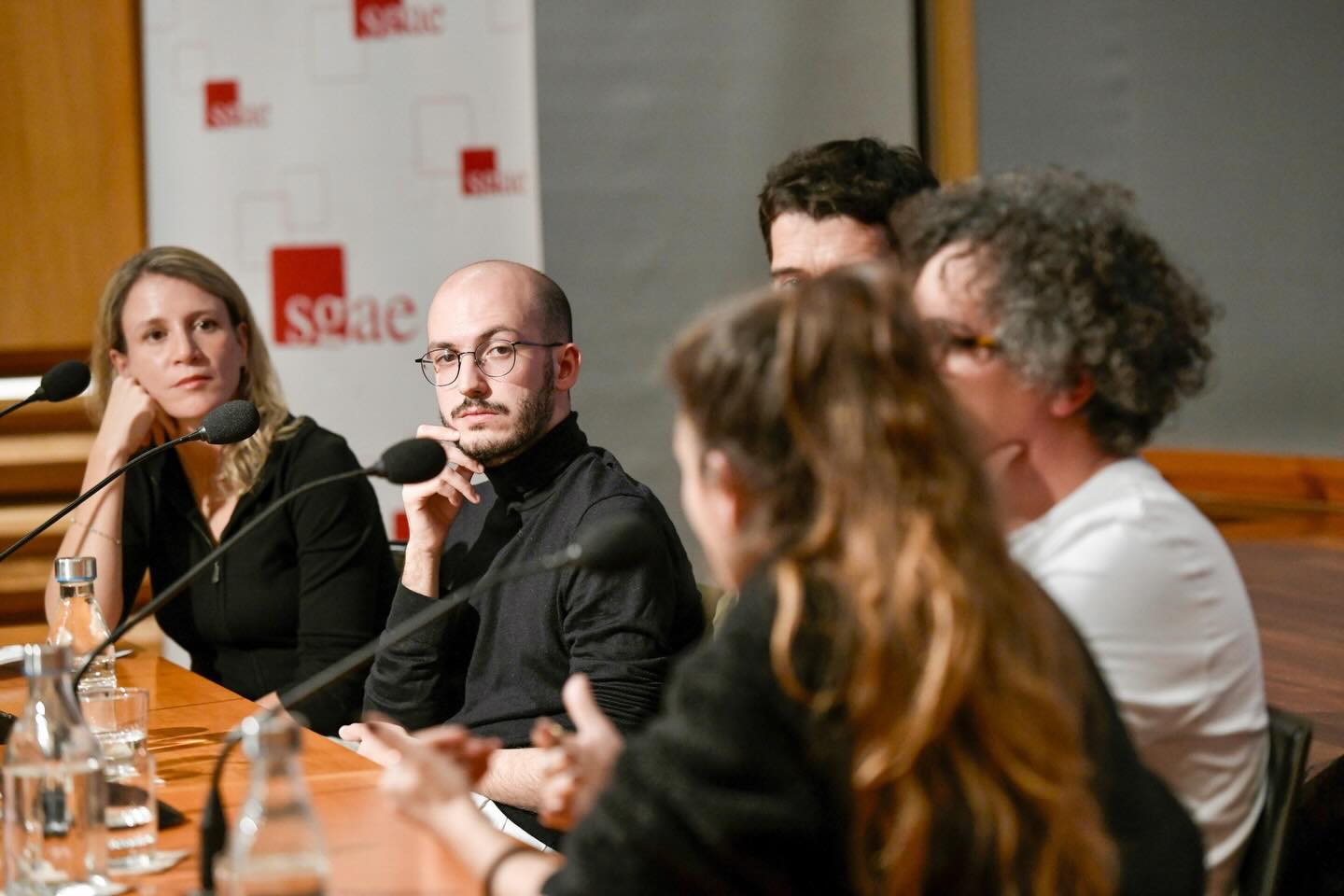
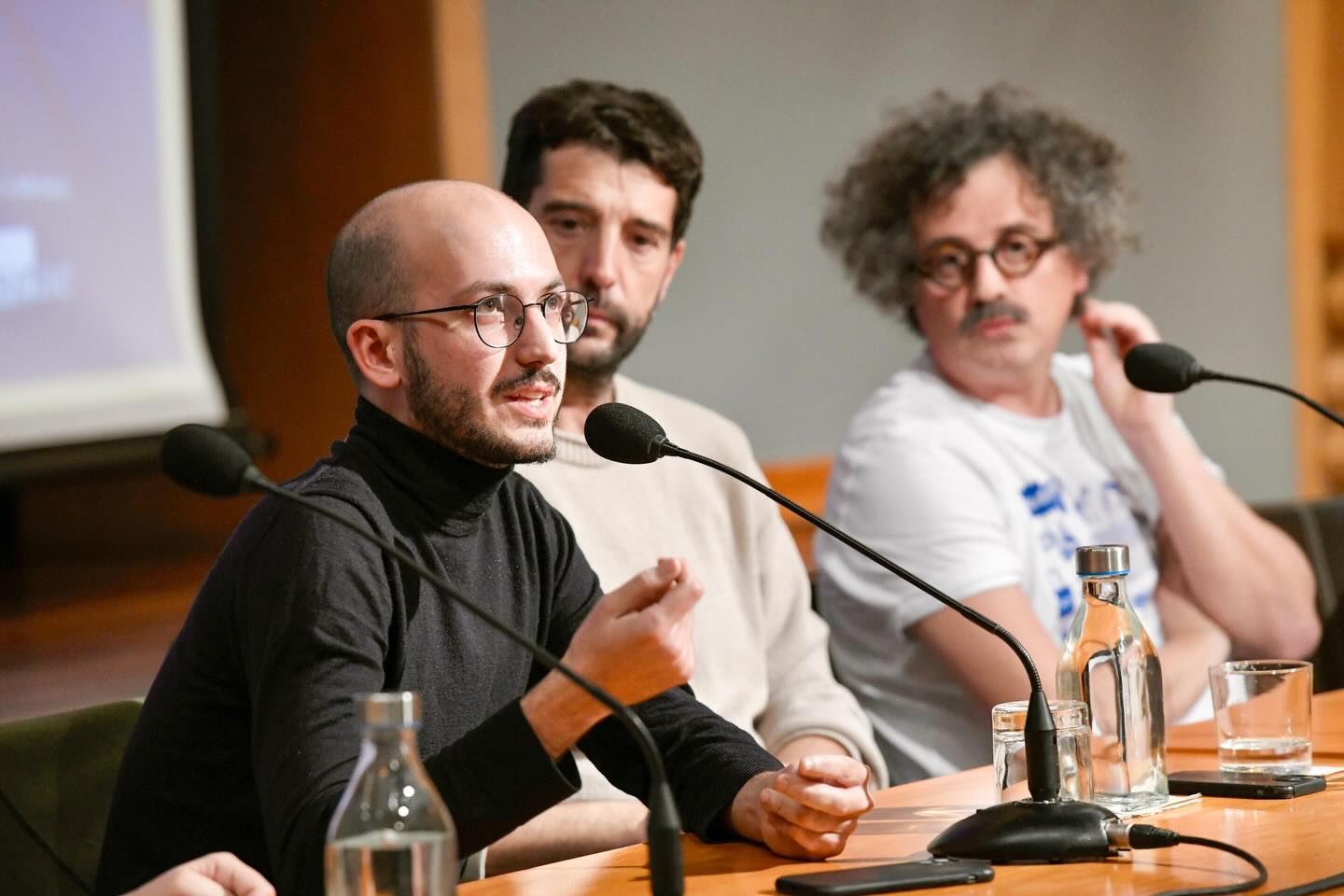
The desire to promote emerging talent is materialized in meetings such as that of the nominees for Best New Director, held this Monday at the headquarters of the General Society of Authors and Publishers (SGAE). In Catalonia, in fact, local talent is not scarce: it is no coincidence that three of the five nominees in this category are Catalans: Jaume Claret Muxart (Estrany riu), Gemma Blasco (La fúria) and Gerard Oms (Molt lluny)—, to which are added Eva Libertad (Sorda) —a Catalan co-production that arrives at the gala with a total of seven nominations— and the Basque Ion de Sosa (Balearic). The five arrive at the gala with their debut film, culminating years of sustained work, perseverance and determination.
Producing and directing a film is never easy. Not only because of the material demands —the investment of time and funding, the building of a team or a cast—, but also because of the emotional toll involved in maintaining a project for years, especially when it is the first feature film. "I have had moments of abyss, of being alone and thinking: Have I really dragged so many people to get this film made?", recalled Eva Libertad (Molina de Segura, Murcia, 1978), connected telematically to the meeting. A vertigo that is not exceptional, but shared among all the nominees.
The abyss of the debut film
Accustomed to short films or other roles within the shoot —like Ion de Sosa (San Sebastián, 1981), who had worked as a director of photography—, they describe the leap to feature film as a constant exposure to the imposter syndrome and inner monsters. However, these fears transform when the shoot arrives. "Fear disappears when you enter the set. When you see so many people connected with your project, you feel accompanied," says de Sosa, who vindicates the strength of collective work and trust in the team, in his case formed by a cast he knows firsthand from his previous productions.
However, before reaching the set, directors must go through a long and often solitary process, in which the initial idea must transform into a real project. Jaume Claret Muxart (Sant Cugat del Vallès, 1998) is an example: it has taken him seven years to bring to life Estrany riu, inspired by his family bicycle trips through Europe, which delicately narrates the process of adolescent Dídac falling in love when he meets a mysterious boy in the waters of the Danube. "Persistence has been key: I had a very clear idea of the expressiveness and optics I wanted, avoiding falling into clichés or stereotypes, and I didn't want to give that up due to budgetary limitations," explains Claret, attributing his obstinacy in part to his Taurus horoscope.
Rewriting trauma: cinema as a channel for expression and repair
The films in this edition are born from experiences that burn within. Gemma Blasco (Barcelona, 1993) describes La fúria —awarded the Gaudí for Best New Director— as her "creative revenge" against a sexual assault she suffered in the past: "I was dying to tell it screaming, roaring, from the gut." Libertad also felt the need to talk about the situations her sister Míriam (the film's lead actress) has had to face throughout her life "in an ableist society." A personal experience combined with an intense research process to approach motherhood, the central theme of the film.
"It's not about doing therapy through the film, but about protecting it so as not to distort it along the way"
Although less evident, in Ion de Sosa's case, Balearic narrates how a group of young people is attacked by violent dogs in a private pool while the neighbors joyfully celebrate the San Juan festival, thus raising a reflection on the midlife crisis and adults' decisions to improve the world for new generations.
Gerard Oms has spoken of the "reparative" feeling of seeing Mario Casas, protagonist of Molt lluny, washing dishes in the same Arab restaurant where he himself had worked in 2008, while experiencing a life moment similar to that of the protagonist. For him, directing Molt lluny —which tells the story of a young man from Barcelona who decides to break with his past and stay to live in Holland— has been a process of "resignification" of past pain.

Gerard Oms assures that, although the filming turned out to be "therapeutic" without seeking it, he had to distance himself from his character so that he could "begin to fly" fully. "If I saw myself reflected in him, I wouldn't allow him to face his shadows or address certain traumas," he recounts. An idea shared by Gemma Blasco: autofiction demands distance. "It's not about doing therapy through the film, but about protecting it so as not to distort it along the way," she defends. For Blasco, La fúria has been a way of rewriting her own story: "It's me, but, at the same time, it's not me."
To survive the pressure and emotional weight of their first feature film, these directors opt for horizontal and human working methods. The main actors —in some cases, experienced professionals such as Mario Casas (Molt lluny), Nausicaa Bonnín (Estrany riu) or Ángela Cervantes (La fúria)— as well as the technicians, are treated with the same care and respect. This way of directing helps to demystify the figure of the "director-dictator", as Jaume Claret Muxart recalls.
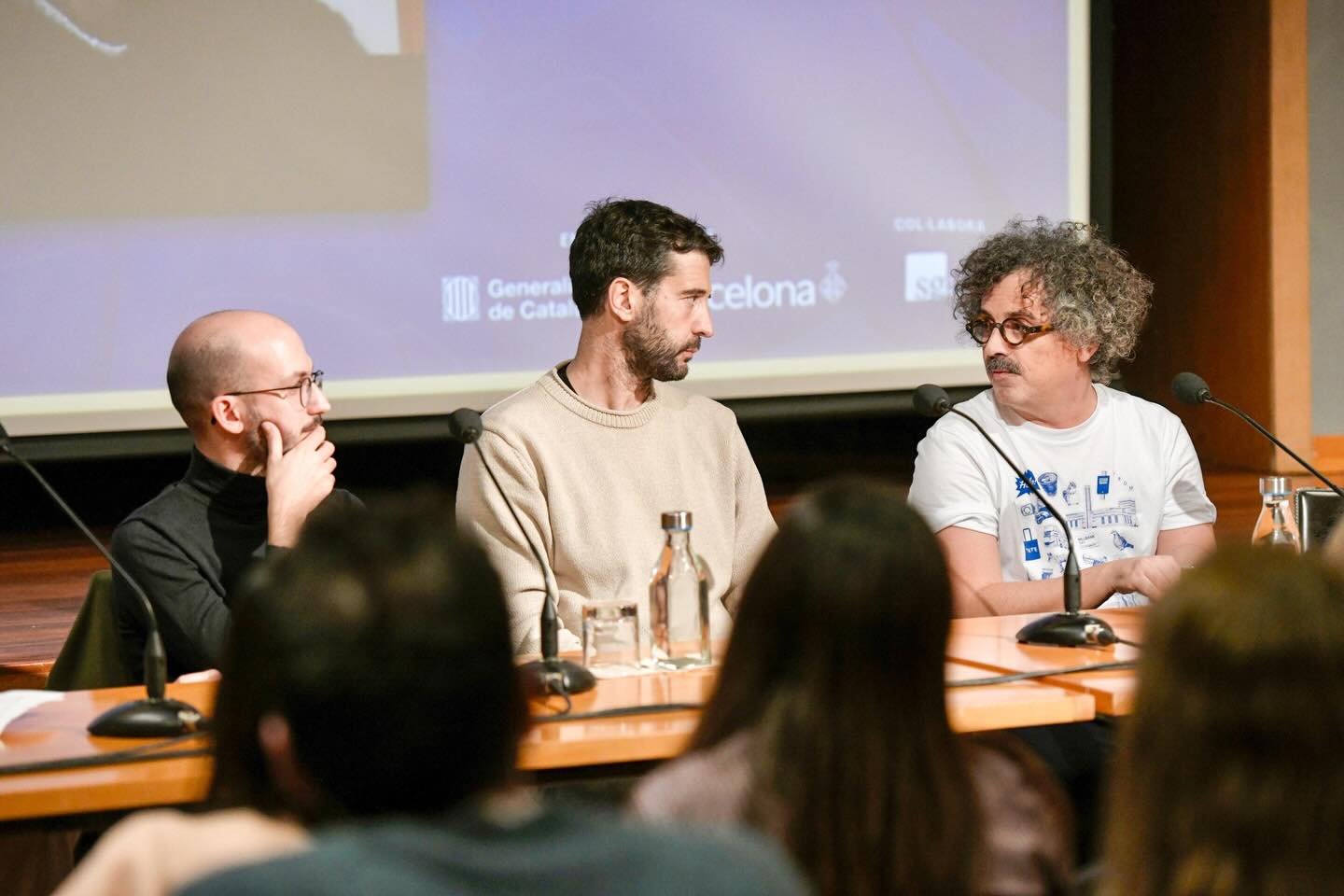
In addition, Blasco compares cinema to a gear: each shot is a piece, and each piece counts. Quoting screenwriter Lluís Aller, he recalls: "A complex is a set of simple things", reminding us not to be overwhelmed by the global magnitude, but to focus on each of the details that build it.
And now what? Managing expectation and pressure
Although they enjoy the success of their debut films, the five directors already feel the pressure of the future. The film industry is fast and often forgets the names on the scene as soon as recognition is received. Jaume Claret Muxart admits that he is concerned about the post-Goya void: "I am worried about having to go through a grueling seven-year process again." They all agree that success generates an "implicit debt": the need to prove to themselves and the industry that they can live up to their first work. This fear, however, far from paralyzing them, has become a driving force that pushes them to work with more determination and perseverance.
These messages of perseverance and courage in the face of obstacles are part of the legacy that the Goyas leave in Barcelona. Beyond the spotlights of the gala and the awards, it is in these meetings and workshops where new directors build an inspiring narrative, capable of encouraging audiovisual talent that is not scarce in Catalonia.
Add The New Barcelona Post as your preferred Google source for free
Stay informed with the latest news.
