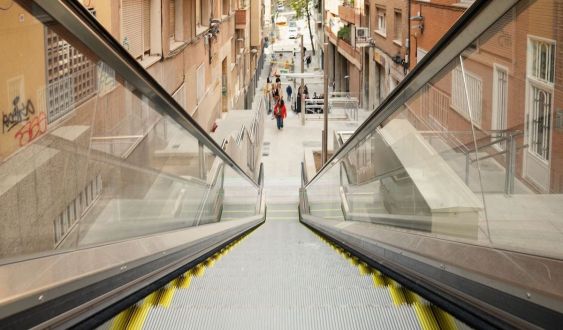
Barcelona is La Rambla, its squares with terraces, its monuments and theaters, and also its research centers and cutting-edge hubs. But Barcelona is also sewers, traffic lights, pavement, streetlights, fountains, and even escalators and crucial elevators to overcome the unevenness of a city with two mountains and no less than seven hills.
Barcelona is that and more, and what is behind it to make everything work. All with the aim of ensuring that the proper functioning of each of these services forms a well-articulated and well-oiled public space, which acts as a social infrastructure in itself. The machinery behind each element that makes up the urban landscape is extensive and is evolving. Until now, the systems responsible for everything working were on alert to start up when something failed —a pipe, an elevator, a streetlight—; now, the municipal framework has changed its angle and looks at public space from a preventive and anticipatory position.
"What we have done is incorporate the culture of prevention and have a guaranteed budget to be able to plan intensive renovations of public space before they are deteriorated or require repair." This is emphasized by the manager of Urban Services and Maintenance of the City Council, Sònia Frias. "Benches, bollards, sidewalks, playgrounds, lighting, traffic lights, fountains… public space is rich and intense, and it is the democratic space par excellence. Repair does not stop going through a process of degradation of public space. The novelty is that we incorporate prevention," remarks the manager.
In addition, technology plays in favor of this prevention: "One of the lines of work of all maintenance plans also has to do with the digitalization of the service, with the vocation of knowing how they work best, and being more predictive and less reactive." Whether detecting the elevators that fail the most or checking the best lighting schedule, "technology allows optimizing the maintenance and functioning" of everything that must be running in the city.
To ensure this operation, the City Council annually allocates some 550 million euros to ordinary maintenance. In 2026, and within the framework of the Pla Endreça, it will add another 200 million to enhance this preventive vision. With this objective, it will carry out improvement works with a hundred actions in the sewage system —which will add 10 kilometers, more than the entire Diagonal—, 80 paving works, 450 traffic light intersections, 170 signaling improvements, and an et cetera that includes everything from road structures to urban furniture, parks, and fountains.
"A basic mobility structure"
Among all these actions, Frias emphasizes a basic one for mobility: escalators and elevators in neighborhoods that climb the mountains and hills of the city. In total, this year interventions will be carried out in 24 escalators and 13 elevators.It represents 25% of the escalators and half of the elevators, on which action will be taken with one objective: that by 2027 there will be no escalator older than 20 years, and that elevators older than 15 years will have been renovated. This purpose translates into an investment of15.8 million euros, the largest made in a year to improve these basic infrastructures, in this case in neighborhoods of Sarrià-Sant Gervasi, Horta-Guinardó and Nou Barris.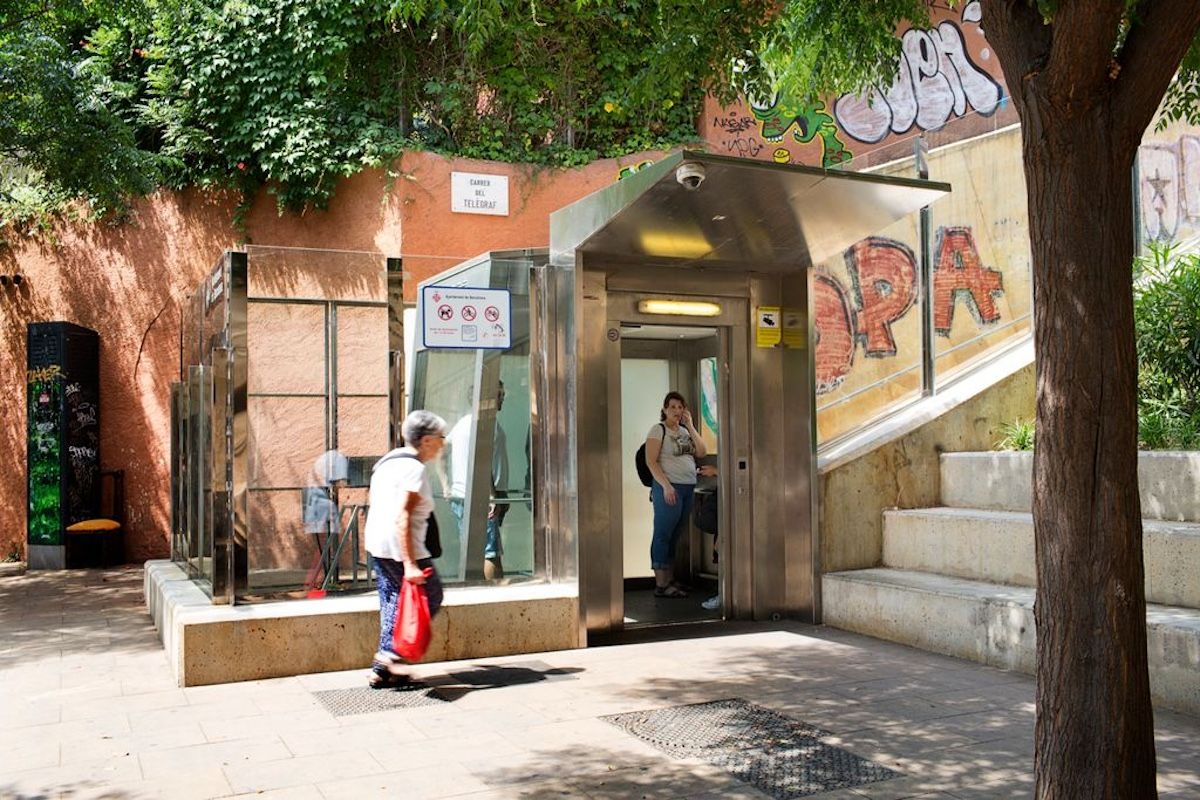
It all starts from a basic vision: "Elevators and escalators are a basic mobility structure in mountain neighborhoods. They can move millions of people, as much as a bus line, or almost as much as the metro." So much so that in 2025 the city's 55 elevators accumulated 6.8 million trips, and the hundred escalators were used by 20.9 million people: "It is an essential service."
It is so essential that it is indispensable for people with mobility problems who rely on them as basic elements to overcome the great unevenness of neighborhoods distributed across six of the city's ten districts. For this reason, recurrent incidents that can affect these facilities represent a handicap for many residents. In this regard, the priority has been clear: "We have opted to replace or modernize the oldest ones because they are the ones that generate the most incidents."
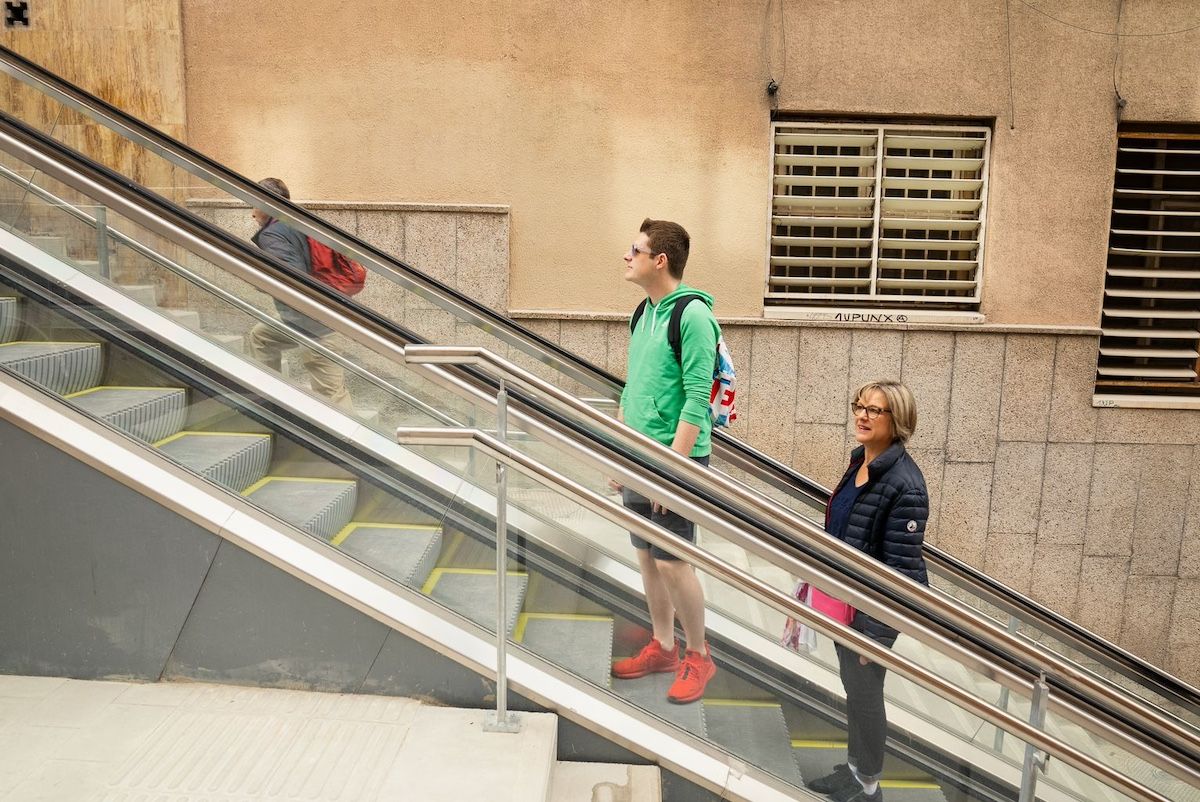
"In addition to detecting breakdowns with a certain recurrence, we also encounter problems in repair, because often there are discontinued parts in older installations," highlights Frias. Thus, this renovation and replacement will represent a saving in time and cost of repairs, although "it is not approached only from an economic perspective, but from a perspective of service availability, because they are vital for many people in their daily lives."
Given this "social function," interventions will be carried out ensuring that several do not coincide in time and in the same neighborhood, to try to ensure that residents can continue to move even if they have to change their route. And the works will not be short: the shortest will last about two months, which will extend to four in cases where the entire installation must be replaced.
To these preventive maintenance investments are added the investments carried out by the City Council to launch new facilities and to transform urban spaces, ranging from small squares and inner blocks to large interventions, such as the one announced by the mayor, Jaume Collboni, to convert the 12-hectare marine platform of the Fòrum into a multifunctional space that hosts citizen, sports, and cultural activities, both large-format and small-scale. All in a city where public space is not a passive agent or a simple stage, but rather acts as an active and leading element that marks the daily life of Barcelona residents.
Add The New Barcelona Post as your preferred Google source for free
Stay informed with the latest news.
