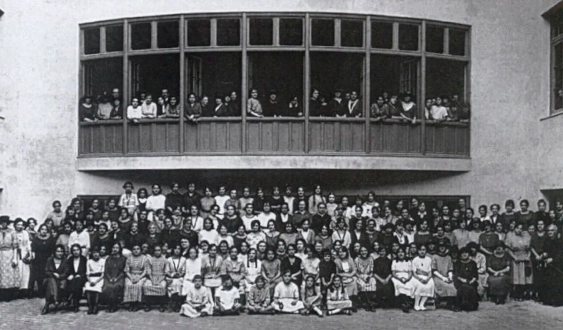
Born into a bourgeois family with Catholic convictions, she received an unusual education for women of her time, which awakened in her a deep social conscience. Francesca Bonnemaison, an educator, launched, together with the Board of Cooperating Ladies, one of the most unique and revolutionary projects of the era: the creation of the first public library in Europe aimed at women. In 1909, at number 3 Carrer Sant Pere Més Baix, she also founded the Institut de Cultura i Biblioteca Popular de la Dona.
The objective of the Institut was clear: to create a safe and accessible space where women could read, learn, train, and broaden their personal and professional horizons. It was not simply about lending books. Francesca Bonnemaison designed a comprehensive educational project. The center offered classes in history, languages, science, accounting, commerce, technical drawing, and sewing, among many other disciplines. Students could attend workshops, talks, discussion groups, and cultural activities specially designed for them.
This proposal was radically modern because it broke with traditional welfare schemes. It was not a space of charity, but of empowerment. Women did not go there to receive help, but to take the reins of their personal and intellectual development. Francesca opted for a practical and transformative feminism, focused on training, labor autonomy, and self-realization.
During its first years of existence, the Institut de Cultura grew rapidly. Women of all ages and social classes passed through its classrooms, many of whom accessed a book, a class, or a space for intellectual expression for the first time.
The Civil War cut short this momentum. The original building suffered severe damage and the institution was temporarily closed. From the 1940s onwards, attempts were made to partially recover the library, although without its original emancipatory focus. It was not until the last decades of the 20th century that its value as a cultural and feminist reference was publicly recognized again.
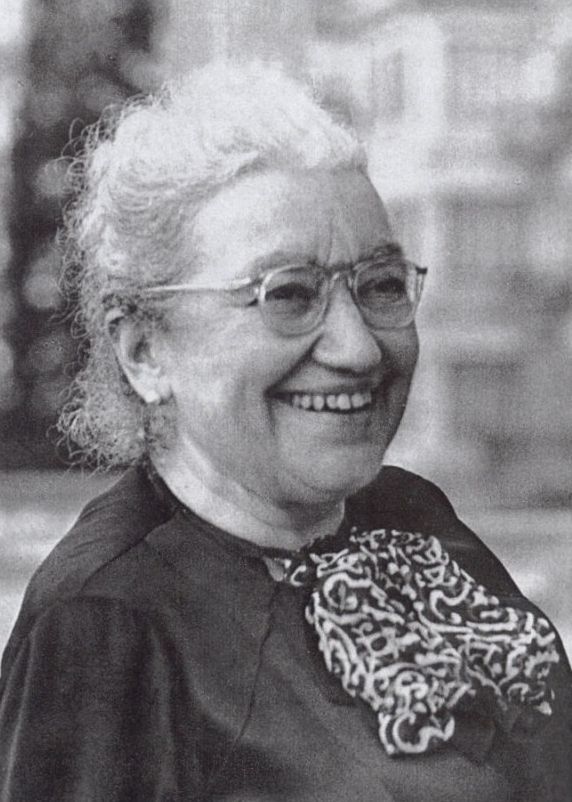
Today, more than a century after its founding, the Francesca Bonnemaison Women's Cultural Center or La Bonne, successor to the Institut de Cultura i Biblioteca Popular de la Dona, remains standing, located in the same building and managed by the Diputació de Barcelona. It has become a center specializing in gender, feminism, and women's history. It organizes exhibitions, debates, reading clubs, seminars, and community activities, and continues to honor the original spirit of its founder: to make culture a tool for freedom for all.
Add The New Barcelona Post as your preferred Google source for free
Stay informed with the latest news.