But before we start walking, let's look back to visualize a Barcelona in full effervescence. We are at the end of the 19th century, a time when the Universal Exhibition of 1888 had been a complete success and the wealthiest social circles began to reveal their artistic concerns. There are plenty of reasons to affirm that art in particular and the desire to conquer the world in general of the Catalan capital were experiencing a remarkable moment, and there are many examples that prove it; architecture became in those years a sign of social status for the prosperous bourgeoisie.
One of the most fragrant whims of the good times the city, and its upper class, was going through, was to own a modernist house, a fact that marked Barcelona's architectural personality. Fortunately, and more than 100 years later, we can attest to this. It is thanks to this fact that today we can find extraordinary examples where the expectations and vanities of the bourgeoisie were reflected in the form of housing.
Minuscule expression of great urbanism
One of the definitions that the RAE gives to the word "pasaje" is the "action of passing from one part to another". And it is exactly for that purpose that these alleyways, designed to solve a problem, emerged in the midst of the urban development of the Catalan capital. Always alongside a grand avenue or a building with high aspirations, and all, or the vast majority, with a high historical load that allows us to draw the urban and social context in which they were created. Barcelona encloses more than three hundred in its grid, and although today we will only walk through one of them, all have a story worth telling.
There are many Barcelonians who remember the Trafalgar street area as an extensive refuge for Chinese textile wholesalers, although much has happened since then and today the revitalization of the area is an open secret in Barcelona. Particularly proud to have contributed to this change, the Catalan group Smart Rooms Company was in charge of giving life, a new life, to the Passatge de les Manufactures which, after a meticulous rehabilitation, culminates an integral project headed by the Yurbban Passage Hotel & Spa, the chain's second establishment. Two years of renovation and almost 20 million euros was the total investment of the firm commitment to recover a unique space that includes the hotel, located in an 1878 building, and one of Barcelona's most historic passages, the Passatge de les Manufactures. A milestone that has managed to bring life and dynamism back to this well-known alley that separates Ciutat Vella from the Eixample.
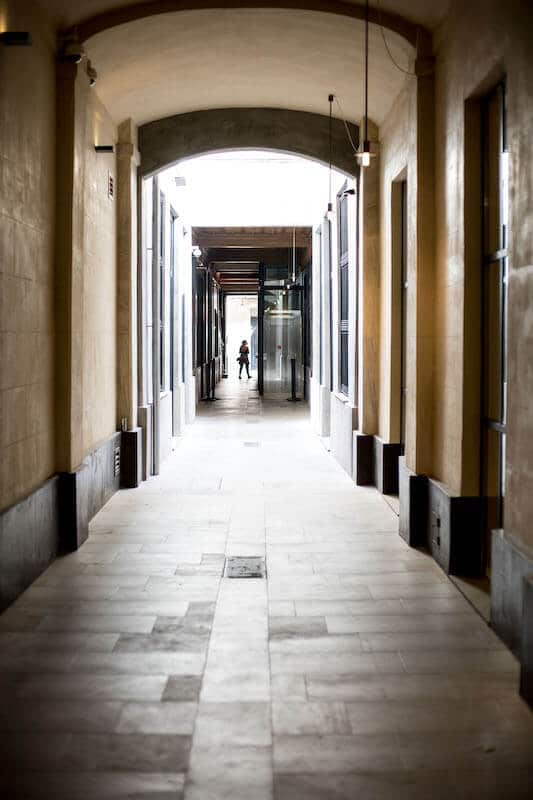
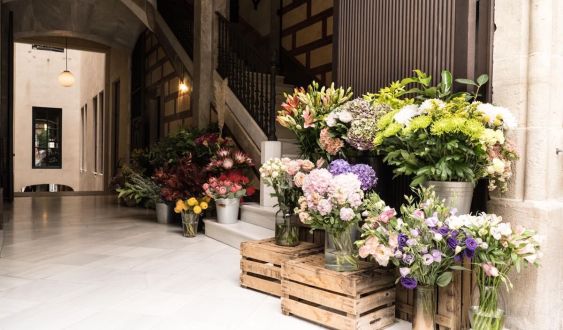
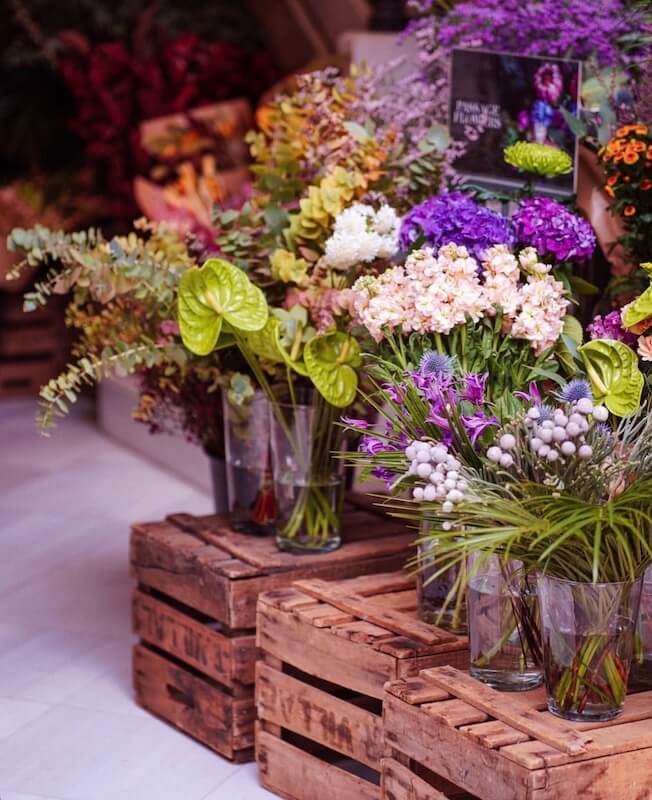
Combining history, gastronomy and art, next to the passage, open to the public, the project is completed with the hotel, a gastronomic gallery headed by a new Flax and Kale location and, providing an undeniable artistic touch, a sculpture by artist Antonio Yranzo. In addition, the passage also houses the hotel's own spa, restaurant, gym and a multi-purpose room. Although what most catches the eye of passers-by in this entire local leisure center is a small flower stand located right at the entrance of the passage.
Instagram fodder, the Passage Flowers florist (Trafalgar, 26) is run by Sonia Subirós and as she herself says: "We select the most beautiful, special and original flowers and, as far as possible, we work with local, organic and proximity flowers." In a firm commitment to local, the Passage Flowers project works jointly with local floriculturists using, as far as possible, traditional techniques for their bouquets that are as unique as they are Instagrammable. Completely open to the neighborhood, this fairytale stand placed next to the splendid marble staircase of the building that now houses the Yurbban Passage hotel, has not only contributed to bringing life back to the rusty passage, but has also made it more beautiful, giving it a unique color and aroma thanks to the floral display that occupies the entrance.
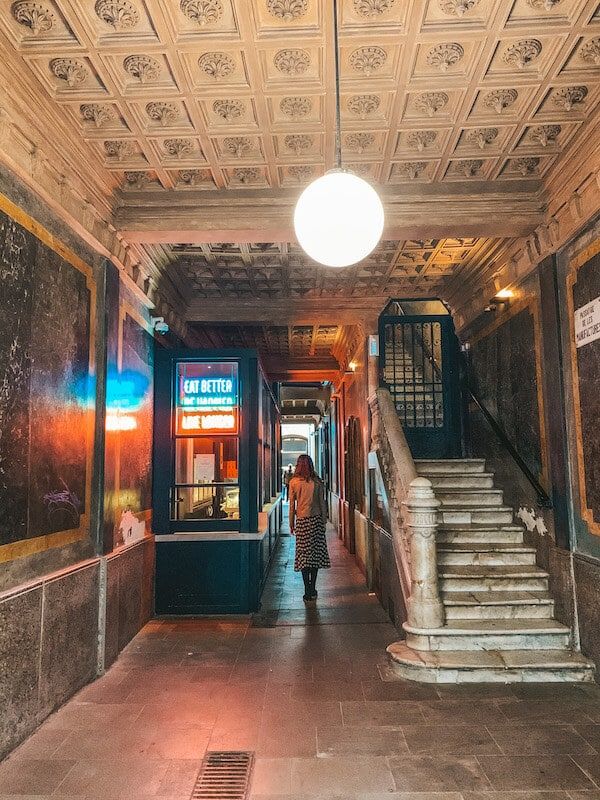
And while the flower stand welcomes at the entrance, the exit of the passage is handled by the penultimate Flax & Kale branch in Barcelona. The flexitarian restaurant has taken advantage of the historical pull of this privileged location to give even more shine, and more flavor, to the matter and create a surprising space that manages to preserve the historical essence of the place, to which it has added some nods to the old commercial stalls that the passage housed since the 19th century. Now diners can enjoy any of the restaurant's healthy specialties—Kale chips or pizzas are two must-haves—in the middle of an astonishingly recovered piece of the city's history.
The Manufactures passage is one of the very few passages we can find in Barcelona and one of the two in the area that link Trafalgar with Sant Pere més Alt. It was Joan Cirici (grandfather of art critic, writer, and politician Alexandre Cirici) who, in 1878, opened this passage between the two streets. The initials of his name and the year of opening are engraved in stone on the arch leading to the Yurbban Passage Hotel & Spa and the alley itself. In short, a unique space now open to the city of Barcelona after years of decline.
Add The New Barcelona Post as your preferred Google source for free
Stay informed with the latest news.