The Ciutat Flamenco Festival returns to Barcelona to present its 33rd edition. We are facing a festival with a long trajectory, promoted by the Taller de Músics, one of the city's reference musical institutions.
Since last year, the artistic direction has been in the hands of Marta Piñol and José Manuel Álvarez, who are very clear about where they want to take the festival: to give more prominence to dance proposals with a current and contemporary perspective. "The objective of the festival and the direction we have taken is to give space to dance proposals with a current or contemporary perspective," explains the co-director.
The commitment to creation and homegrown talent
If there is a characteristic feature that defines this edition, it is the presence of dance in almost the entire program, leaving aside only a couple of concerts. But beyond the stage, there is a clear demand from the direction: to focus on Catalan artists (or those trained in Catalonia) who, to make a living and grow professionally, have often had to pack their bags for Madrid or Seville.
The objective of the festival and the direction we have taken is to give space to dance proposals with a current or contemporary perspective.
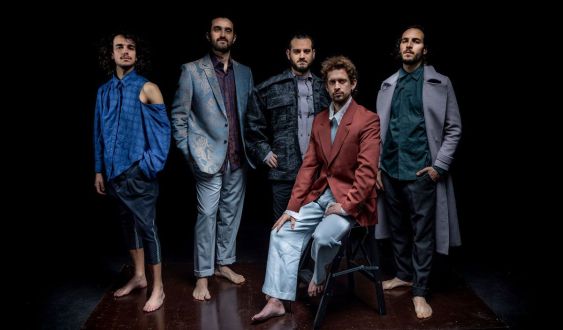
To open the program, the festival features great flamenco names such as José Maldonado, Anna Morales, and Joel Vargas. Alongside them, the lineup is filled with young artists between 18 and 25 years old who present their short pieces. The grand finale will take place at L'Auditori de Barcelona, with four ballaores, a dance group from the fifth year of the Institut del Teatre, the Taller de Músics choir, and guest artists such as Anna Brenes and Chicuelo.
The festival weaves alliances throughout the city. In addition to its complicity with the Taller de Músics, the event consolidates its union with the SAT! Teatre de Sant Andreu (with whom it shares dates and programming with the Dansat Festival), the Institut del Teatre, the creation center El Graner (which brings a process exhibition by Lorena Oliva to La Farinera del Clot), and the Ateneu Popular de Nou Barris.
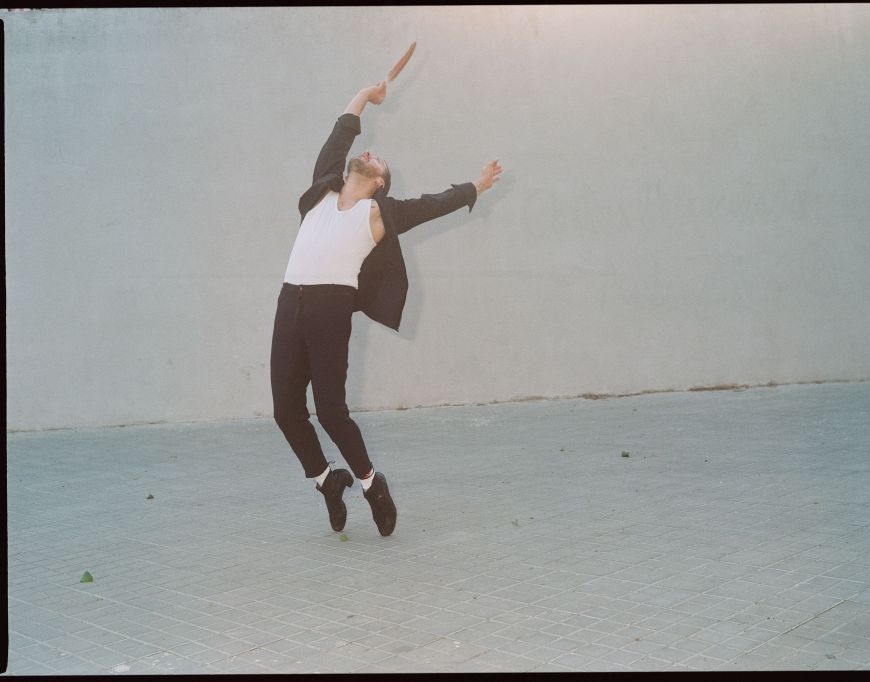
Precisely in Plaça de l'Amistat, outside the Ateneu de Nou Barris, one of the highlights of Friday, October 23, will take place: the Ciutat Batalla, an outdoor and completely free dance competition. Piñol explains that the idea was to broaden the scope to movement arts linked to flamenco and Spanish dance: "We want to assess the level of creation, the choreographic level, and the proposals they can present, as well as their capacity for improvisation with singing, guitar, and percussion."
The competition will feature 10 selected participants who will perform their own three-minute choreography and face phases with live musicians before a jury made up of artists from the festival itself.
Women, precariousness, and artistic identity
The festival will also feature a round table on the reality of the profession. Within the cycle Dimarts de Compàs, Marta Piñol will moderate a round table titled Being an artist today: creativity and research, where creators of her same generation (such as Cris López, Laura Marchal, Carmela Muñoz or Isabelle Laudenbach) will discuss how creation processes are carried out, the role of tradition, or the irruption of technology.
We also asked her about the situation of women in flamenco, and the co-director admits that, in the world of flamenco dance, parity is a fairly consolidated reality, even with more female than male presence. Piñol points out that at the singing level, the visibility of women is high in certain spaces, but that in the field of flamenco guitar, female presence is practically anecdotal: "At the level of guitarists, like Isabel Laudebach who is a guitarist and a woman, they can practically be counted on the fingers of one hand."
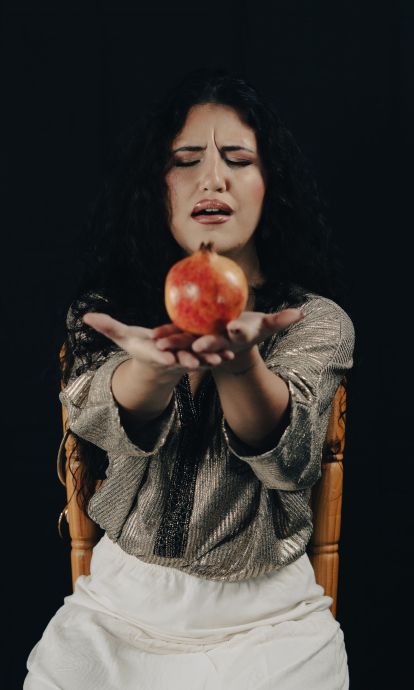
However, Piñol does not hide the downside of the sector: the precariousness of one's own creation: "In the field of companies or stability within exhibition circuits, it is practically nil; one cannot live solely and exclusively from this," laments Piñol, recalling that tablaos, classes, and tours abroad continue to be the daily lifeline for survival.
One cannot live solely and exclusively from this.
The Ciutat Flamenco Festival program extends throughout the city to thus be able to bring contemporary flamenco closer to different audiences and neighborhoods. The festival is committed to decentralizing cultural activity, valuing local facilities and large stages equally.
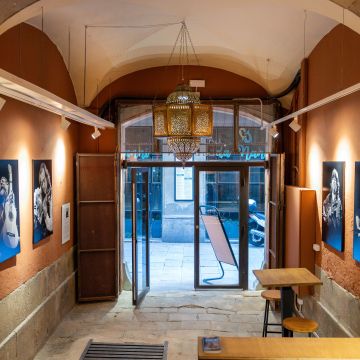
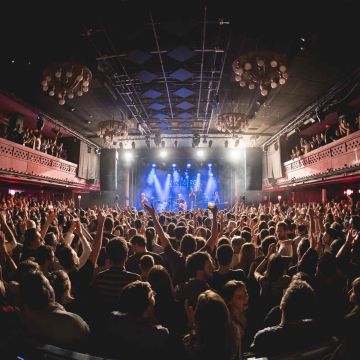
For this reason, from October 16 to 25, the festival will show its program in spaces such as the SAT! Teatre de Sant Andreu, La Nau Bostik, L'Auditori de Barcelona, La Farinera del Clot, L'Ateneu Popular de Nou Barris, the exteriors of the Jardins de la Casa Bloc and the Centre Artesà Tradicionàrius (CAT).
This 33rd edition demonstrates that flamenco in Barcelona has many layers, many young voices and, above all, a great desire to question itself without losing its link with tradition.
Add The New Barcelona Post as your preferred Google source for free
Stay informed with the latest news.