Catalonia has nearly 2,300 startups that generate a turnover of more than 2,330 million euros and employ more than 22,800 people. The entrepreneurial ecosystem continues to expand, and it does so with a major pending issue: the underrepresentation of women in the ecosystem and in practically all its facets persists, with figures stagnant for a decade.
In fact, women represent around 20% of startup founders at both Catalan and national and even European levels, a proportion that has changed little in the last ten years. Furthermore, this 20% takes into account women who undertake solo or with other women, and also in mixed founding teams. In fact, if the number of startups founded only by women is considered, the figures are reduced even further, as only one in ten emerging companies are founded solely by women. There is a positive data: there is an upward trend in this regard, as it has gone from 6% in 2022 to 10% currently. However, the increase has occurred not to the detriment of startups founded by men, but as a result of the reduction of those with mixed teams, which have gone from 35% to 31%. All-male founding teams remain stable around an advantageous 60%, according to the Mapa de l'Emprenedoria 2024 (Entrepreneurship Map 2024), prepared by South Summit in collaboration with IE University.
Thus, nearly two-thirds of the startups promoted in Catalonia —and at the state level— lack women in the founding team, as highlighted by Acció's Senior Startup Manager, Oriol Sans. As studies by the Generalitat's Agency for Business Competitiveness confirm, 72% of Catalan startups have at least one woman among their staff, in a situation where "the representation of women in the entrepreneurial landscape is far from what corresponds to them given their weight in society." On a path that is barely beginning to be traveled, some steps have been taken and, as Sans assures, the hub of startups with the highest percentage of women founders is, precisely, Barcelona, with a timid 21.9%, compared to 18.4% of the average of these cities at European level.
However, companies founded by women fail less than those created only by men, with 28% versus 59%, according to the same study. This reality should favor profitability for investors. But, nevertheless, startups founded by women receive only 2% of private equity investment. The gap has implications in all areas, including the sales of invested startups —operations known as exits—, and it is that female entrepreneurs who have sold their startup represent 24% of the total founders, below the 36% of male entrepreneurs. The differences range from recently created startups to the most consolidated ones and even unicorns: at a European level, 35 startups driven by women have achieved a valuation of one billion dollars, an apparently positive figure until it is framed within the nearly 300 unicorns with male founders that have emerged in Europe. Again, companies driven by women only represent 10% of the total.
The cause of this underrepresentation of women in the ecosystem is multifactorial, and is based on the structural inequalities that continue to begin within the home and that maintain implications in the workplace, as Blanca Ochoa highlights, president and co-founder of the WA4Steam business angels network. Beyond the underlying social causes, one of the first causes is at the same time one of its consequences: the low funding received by startups driven by women. With only this 2% of private equity investment for these companies at a national level, this reality is a constant on a global scale. Internationally, private equity fund investment in women-led startups stood at around 3%. The WA4Steam network was born in 2015 precisely to combat this figure, and brings together women who invest in startups with female leadership in the fields of science or technology.
“There are more and more women entrepreneurs, but there is a long way to go, and we need more women investors so that more women entrepreneurs receive investment,” defends investor and independent director Helena Torras. And it is that, by nature, people tend to bet on our similar ones. This fact leads to trusting people similar to oneself, which in the entrepreneurial landscape translates into that, if the vast majority of investors are men, the vast majority of startups that will receive investment will also be led by men —a fact that can be applied in many other areas, including ethnicity or social class—. For this reason, “it is crucial that there are more women investors, so that there are more funded women entrepreneurs and more success stories in which other women can see themselves reflected.”

Precisely here lies another of the main causes for this gap: the lack of female role models. As highlighted by the co-founder and CEO of the award-winning startup Fabbric, Alba Rocafort, at the beginning of her career she lacked “role models that inspired her to undertake.” Thus, “it is important that there are role models that motivate women to start and create their own startups, and demonstrate that it can be done.”
Thus, the low level of investment received by women entrepreneurs limits the success of their startups, which in turn makes it difficult for more women to join the investment landscape, a fact that leads to an eminently male presence in this field, and we start again. As highlighted by the founder and director of Capital Cell, Daniel Oliver, it is a vicious circle; it is a well-oiled machine that leaves women out. So much so that, although he assures that they are looking for women investors for their equity crowdfunding platform, 80% are still men.

Entrepreneurs and initiatives from all fields are undermining this circle, but it is not only about improving the figures, but about the pace at which work is being done to achieve it: “The debate sometimes is the speed; if more speed can be applied to achieve a more representative figure of society,” Sans highlights.
For this reason, various initiatives attack this vicious circle with the aim of breaking it or, at least, deforming it. From investment funds led by women or focused on female-driven startups to communities of founders, passing through programs and awards that focus on their emerging companies. Initiatives such as WA4Steam, the programs of Barcelona Activa, the Diputació and Acció focused on women, and communities like Sheblooms promote female entrepreneurship from Barcelona, and interrelate with initiatives that have been born beyond Catalonia, such as the Women Startup Awards; the community of Spanish-speaking female entrepreneurs Female Startups Leaders, and the European Women TechEU, among many others.
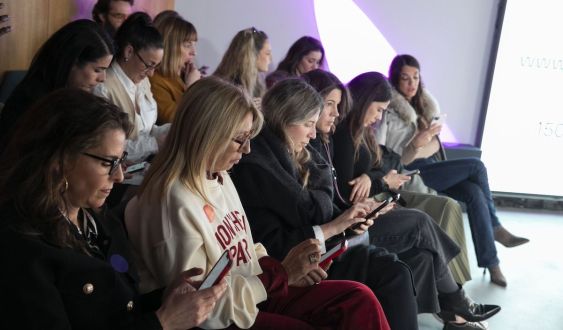
Barcelona contributes to this push for female entrepreneurship with initiatives originated in the city itself and with an international outlook. With the aim of providing founders with key resources to boost and consolidate their projects, with a focus on investment, Sheblooms has a network of 800 investors, as highlighted by the director of the recently created community, Virginie Rogé. The Sheblooms community, which has been operating since the beginning of the year in Barcelona, now has a thousand members. To maximize the investment that reaches startups with a female seal, Sheblooms organizes pitch shows in which entrepreneurs present their projects to investors. As Gerard Oller details from the community, they have already organized a session in Barcelona, where they have their offices, and another in Madrid since February, and they already have two more planned, in Malaga and again in Madrid. The pitch shows are preceded by workshops in which entrepreneurs prepare with mentors and experts in areas such as public speaking and stage presence, like a "training camp" to maximize their chances of attracting investors' interest.
With the aim of mobilizing more investment, Sheblooms explores the possibility of creating its own fund in the medium term. This desire is part of a set of initiatives promoted from the investment sector to try to close the current large gap, such as those promoted by the Ship2B foundation. In fact, the foundation launched the first acceleration program in Spain aimed at women with social entrepreneurship projects, the Women Challenge. It also created the first network of women investors and impact mentors, made up of executives and businesswomen, as explained by the co-founder and managing partner of Ship2B Ventures, Maite Fibla. "These initiatives transformed our way of operating, integrating a gender perspective transversally into all our programs," she adds. As a result, "in the foundation's accelerators, the number of women entrepreneurs practically reaches parity, as does the percentage of mentors and speakers at our events, where female talent has gained voice and visibility," she emphasizes.
Initiatives such as WA4Steam, programs from Barcelona Activa, the Provincial Council, Acció and Ship2B focused on women, and communities like Sheblooms promote female entrepreneurship from Barcelona
Within a predominantly male investment ecosystem, there are some exceptions, such as Barcelona-based Asabys Partners. As highlighted by its Head of Investment and Corporate Development, Maite Malet, the investment firm's portfolio is distributed 50% between men and women, and 41% of the CEOs or founders of its portfolio companies are women. In addition, they also represent more than half of the firm's team, focused on life sciences and healthcare
El Tribunal Superior de Justícia de Catalunya (TSJC) ha avalat la decisió de la Junta Electoral Central (JEC) de retirar l'escó de diputat al president de la Generalitat, Quim Torra, i ha rebutjat la mesura cautelaríssima que havia demanat Torra per mantenir-lo.
En una interlocutòria, la secció cinquena de la sala contenciosa administrativa del TSJC ha desestimat la petició de Torra, que demanava la suspensió de l'acord de la JEC del passat 3 de gener pel qual va ordenar a la Junta Electoral Provincial de Barcelona que retirés la credencial de diputat al president de la Generalitat.
La decisió del TSJC arriba després que la setmana passada la sala contenciosa administrativa del Tribunal Suprem (TS) rebutgés també la petició de Torra de suspendre de forma urgent l'acord de la JEC. El Suprem va argumentar que no era competent per decidir sobre aquesta qüestió, ja que la JEC és un òrgan administratiu i, per tant, la decisió corresponia al TSJC.
El TSJC, en la seva interlocutòria, argumenta que la petició de Torra no compleix els requisits per a l'adopció d'una mesura cautelaríssima, ja que no s'aprecia una "urgència excepcional" que justifiqui la suspensió immediata de l'acord de la JEC. A més, el tribunal considera que la decisió de la JEC es basa en una sentència ferma del TSJC que inhabilita Torra per un any i mig per desobediència, per no haver retirat els llaços grocs de la façana de la Generalitat en període electoral.
La defensa de Torra havia argumentat que la retirada de l'escó suposava un "dany irreparable" per als seus drets polítics i per a la institució de la Presidència de la Generalitat. No obstant això, el TSJC ha rebutjat aquest argument, assenyalant que la inhabilitació de Torra ja és ferma i que la retirada de l'escó és una conseqüència directa d'aquesta inhabilitació.
Amb aquesta decisió, el TSJC avala la decisió de la JEC i obre la porta a la retirada definitiva de l'escó de diputat a Quim Torra. Ara, la Junta Electoral Provincial de Barcelona haurà de complir l'ordre de la JEC i retirar la credencial de diputat al president de la Generalitat. Aquesta decisió podria tenir conseqüències importants per a la política catalana, ja que obriria un nou escenari en la governabilitat de Catalunya.
La defensa de Torra ja ha anunciat que presentarà un recurs de súplica contra la decisió del TSJC, i que esgotarà totes les vies legals per intentar mantenir l'escó. No obstant això, les opcions de Torra s'esgoten, i la seva inhabilitació sembla cada cop més a prop.
"We need to give more voice to women entrepreneurs and investors so that women have more role models, so that they see it is feasible,"Malet emphasizes. In his opinion, another key point is to work to ensure that large companies apply reconciliation policies —aimed, of course, at both women and men—, so that this issue does not represent a hindrance in professional careers or job aspirations.
Initiatives to advance in this direction are not limited to the private sphere, but have been promoted for years by public institutions. “We want to promote women's leadership, and for this we have programs that aim to move towards a scenario that expands equal opportunities,” highlights the executive director of Business and Entrepreneurship at Barcelona Activa, Itziar Blasco. With the Lidera program as its emblem, the development agency of the Catalan capital focuses on both female entrepreneurs and professionals and executives, with mentoring, workshops in specific areas and networking. And it does so with a dual objective: to train professionals, and also to highlight this gender gap, so that “society is aware of the reality we live in, and that there is still a long way to go.”
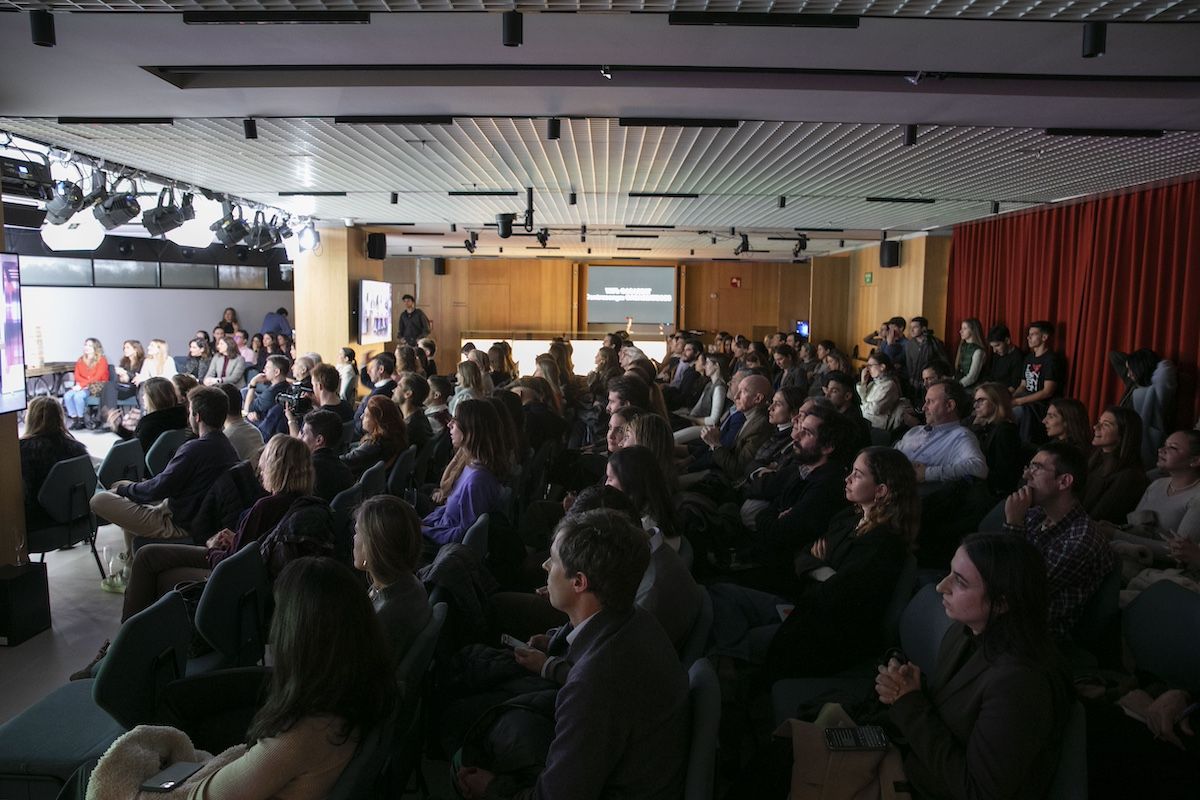
From Acció, the Generalitat also prioritizes female entrepreneurship with programs such as Dona Emprèn, and the Diputació de Barcelona plays its part with policies to foster women's leadership in this field. In addition, the state-owned Enisa has the specific line Emprenedores Digitals. These are measures promoted from various angles and administrative levels, with the common purpose of reversing figures that are diametrically distant from an egalitarian scenario.
"This inequality is not only unfair, but inefficient: it has been shown that diverse teams offer better results in the medium term," Fibla emphasizes from Ship2B Ventures. According to her, the entrepreneurial ecosystem "will only be able to unleash its full potential if it fully incorporates female talent." And this implies "opening access and transforming the culture so that innovation reflects, from its origin, the diversity of the society to which it aspires to provide solutions."
To advance in this direction, “support initiatives are crucial; hopefully they wouldn't have to exist, but the figures show that these initiatives must be promoted and given visibility,” emphasizes Rocafort: “We are far from having a position of equality, and things must change,” claims the co-founder of Fabbric, positioned as one of the referents in the Catalan entrepreneurial scene, along with many other figures, such as biomedical engineer and promoter of Blue Box, Judit Giró; the co-founder of Wivi Vision, Eva García Ramos; the CEO of Keybotic, Irene Gómez; the Doctor in Photonics and CEO of Meetoptics, Bárbara Buades, and the biotechnologist and co-founder of Benviro Patricia Aymà, whose startup —until now called VEnvirontech— has developed a system to convert organic waste into bioplastic.
The list of women entrepreneurs who stand out within the ecosystem is long, and can continue to be expanded with profiles such as that of the founder of Bamboo Energy, Cristina Corchero; the founder of Punto Health, Anna Muñoz; the founders of Poseidona, Sònia Hurtado and María Cermeño, and the founder of Theker Robotics, Carla Gómez, among many others. They are founders and leaders of startups from a wide range of sectors that highlight the role of women in this field. At the same time, they demonstrate the persistent gap that remains in an entrepreneurial ecosystem that deploys initiatives to reduce it and move towards an equality that, for now, continues to be far off.
Add The New Barcelona Post as your preferred Google source for free
Stay informed with the latest news.