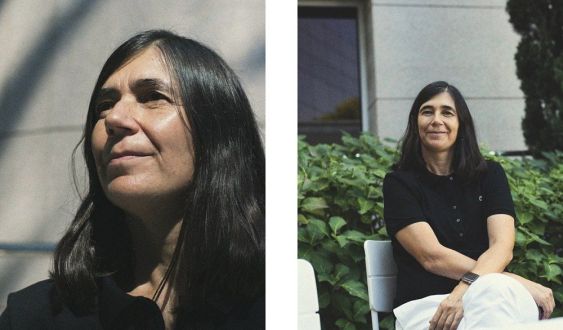
We have just been at the European Lung Cancer Week, October 19 will be World Breast Cancer Day and September 24 is World Cancer Research Day. What is the purpose of these dates? They help us reflect on the importance of research and spread some important facts: that there are increasingly more women with lung cancer, that smoking is much more harmful for women than for men due to hormones, that mammograms and ultrasounds must be done to detect breast cancer in time…
The CNIO's objectives are the prevention, diagnosis, and treatment of cancer. In which area is the most progress being made? In treatment. We have a unique drug development program, and we collaborate with the pharmaceutical industry to bring our molecules to market. In addition, one of our spinoffs (companies based on CNIO discoveries), Bioncotech, has generated an antitumor product that has already been applied in clinical trials with cancer patients.
Do you think something like immunotherapy, which allowed for great progress 10 years ago, is about to appear? The future is unpredictable. Immunotherapy was discovered by researchers who were not working on the trendy topics of oncological research. And the same happened with CRISPR technology: a researcher from Alicante was studying bacteria that grow in high salt concentrations and, suddenly, stumbled upon this great tool (a cellular cut-and-paste) that has been the greatest revolution in biotechnology in recent years and, furthermore, opens the door to new therapies. This teaches us an important lesson: that something that revolutionizes humanity can come out of any research. The good news is that there are many researchers investigating even the most recondite aspects of cancer. But, of course, we must support research in our country so that we can compete with the best.
How did you decide to dedicate yourself to fighting such a big monster, the second cause of death in the world? I like to understand how life works, but oriented towards diseases like cancer and those associated with aging. Since I started studying biology, these are the topics that interest me most.
Is aging the origin of cancer? Yes. Most tumors—breast, lung, pancreas, prostate…—are associated with aging. They are very rare when we are young, and it is as our cells age and accumulate damage that the probability of having them greatly increases.
Can we do something to delay or even eliminate aging and cancer? There is a WHO decalogue with common sense advice: do physical exercise, eat more fruits and vegetables and less red meat… As for aging, at CNIO we study the role of structures called telomeres in its origin, and we have managed to activate telomerase in mice, thus extending their lives and delaying pathologies associated with old age, such as Parkinson's, Alzheimer's, or pulmonary fibrosis. That is, we have managed to slow down aging! Although all these studies have so far been carried out in mice and cannot yet be applied to humans.
You have been studying telomeres for years as one of the key points to stop cancer. What exactly are they? They are the protective element at the end of chromosomes. They protect our genetic material. If we imagine DNA as a shoelace, telomeres would be the plastic at the end of the lace. If that plastic wears out, the lace will become unusable. In healthy cells, telomeres wear out each time they multiply, which is necessary to regenerate tissues. Thus, as we live, our cells age and die. Cancer cells, on the other hand, are immortal because through the aforementioned telomerase, which is a molecular machine that lengthens telomeres, they are able to multiply indefinitely, as long as they have food. That is why cancer has also taught us a basic mechanism of aging.
Is the goal to destroy these telomeres in tumor cells? Exactly. And at CNIO we have already found chemical molecules that destroy them. And thanks to the support of CaixaImpulse, we are developing the product to license it to a pharmaceutical company so that it can reach patients.
What do you like most about being a researcher? For me, research is the best thing in the world. Discovering how life works is fascinating. It is my passion. I don't consider it work. And if I were born again, I would be a researcher again.
But your profile is special, because you have always championed being an art lover. What do you think art brings to science? No, I am not special. People who dedicate themselves to thinking and trying to discover what is still unknown like everything: art, cinema… I am no exception. But I do believe that art is a tool that can serve to transmit the importance of science to society. That is why at CNIO we have the Art and Science initiative, with which each year we form a pair between a scientist and an artist so that the artist creates new work inspired by the scientist's work. The benefits generated are invested in research through our philanthropy platform "Friends of CNIO".
What art or artists do you admire? I greatly admire the sculptor Oteiza, he moves me deeply, because his is a clear example of art as a result of research. In that sense, I also like Miquel Barceló, José María Sicilia, Agnes Martin… —to mention some classics—, although I love discovering new artists, especially women artists.
Speaking of people you admire, you have met great female scientists along the way… Many and very important ones! From Margarita Salas —my thesis director and one of the pioneers in molecular biology in Spain, who has been a great teacher and mentor— to Carol W. Greider —Nobel Prize winner in 2009 for discovering the telomerase enzyme, with whom I did my specialization in the United States—, passing through Elizabeth Blackburn —her mentor— or Spanish scientists like Ángela Nieto and Fàtima Bosch. All of them, top-level scientists whom I can always turn to for advice. There are more and more women researching, although fewer research directors. But this will necessarily change, because otherwise we will be losing a lot of talent.
You are a Ramón y Cajal National Research Award winner, you publish in Nature and Science, you are recognized worldwide but…, why would you like to be remembered? For the research. For having found the role of telomeres in cancer and aging. That is what I am most proud of.
And what headline would you like to see in the newspapers tomorrow? That metastases, the process causing death from cancer, have been stopped. Therein lies, I believe, one of the keys to having more success against advanced tumors in the future.
Interview: Ana Portolés Photography: Daniel de Jorge
You can read more stories like these in ALMA, the social social network, a digital space dedicated to the social sphere that brings a new perspective to the present and future of society, based on an optimistic and diverse voice, and all the initiatives promoted by the "la Caixa" Social Project.
Add The New Barcelona Post as your preferred Google source for free
Stay informed with the latest news.