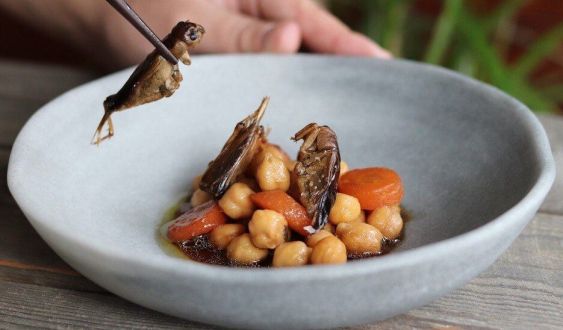
The FAO is the United Nations Food and Agriculture Organization. Its mission is to contribute to a world where food security prevails, that is, where everyone can enjoy healthy and sufficient nutrition. A few years ago, it began issuing recommendations to incorporate insects as a source of protein in the regular diet globally. A proposal that initially caused a stir, especially in the Western world, where this habit is considered exotic. But it is worth remembering that the ingestion of insects or entomophagy is already part of the regular diet of some 2 billion people, especially in regions of Asia, Africa, and Latin America.
In fact, we all eat insects regularly, even if we are not aware of it. Many commonly consumed foods naturally contain insect fragments, and regulations do not consider this a problem or a decrease in their quality. Cereal flours, citrus fruits, chocolate, canned corn, cinnamon, nutmeg, or thyme that we consume incorporate insects that we ingest unknowingly. It is estimated that we swallow about 500 grams of insects annually without being aware of it. And nothing happens. In fact, insects pose a reduced risk of disease transmission compared to any other animal protein that is part of our diet.
In Europe, eating insects is generally repulsive, although there are traditional products that include them. The traditional Sardinian and Corsican cheese casu marzu is a variety of pecorino cheese that contains thousands of live fly larvae that producers add to break down fatty acids and improve fermentation. Until now, its sale was prohibited in Italy, although its artisanal production was tolerated. The entry into force of the new European legislation may open the doors to the legal sale of this product, as well as many others that use insects as an ingredient.
Globally, more than 1,900 species of insects are consumed. According to FAO data, the most consumed are beetles (31%), caterpillars (18%), and bees, wasps, and ants (14%). These are followed by locusts and crickets (13%), cicadas, cochineals, and bed bugs (10%), termites (3%), dragonflies (3%), flies (2%), and other species (5%). Most are collected directly from the environment, although techniques for their captive breeding are constantly improving.
Why does the FAO insist on recommending insect consumption? Basically for reasons of sustainability and efficiency. As cold-blooded animals, they are very efficient in converting feed into meat. On average, insects can convert 2 kg of feed into 1 kg of insect mass, while conventional livestock requires up to 8 kg of feed to produce 1 kg of body weight gain. Insects can feed on biological waste, which they transform into high-quality protein, and use much less water in the process, which also generates less waste. These advantages will become increasingly relevant, especially considering that the planet's population will reach 9 billion inhabitants by 2050, and that the FAO estimates that animal protein production will have to increase by 60% with increasingly scarce natural resources.
The Petràs mushroom stall, at the Boqueria market, was a pioneer in Barcelona in the commercialization of edible insects. In 2008 they had to cease their commercialization, because there was no European or state regulation on the matter and they received warnings from the authorities. But thanks to the new law approved by the European Parliament in 2015, and which came into force at the beginning of 2018, the import and cultivation of exotic products and the registration and legalization of new foods has been facilitated. Thus, at Petràs and in its online store you can once again find roasted and vacuum-packed worms, crickets, scorpions and cockroaches. They are not the only ones joining the trend. The Carrefour supermarket chain has also started to commercialize a range of insect-based snacks: chocolate or fruit bars with crickets, crickets with smoked onion, spiced worms or with garlic and fine herbs... The online store Don Grillo will also be launched imminently, offering a wide range of products, some produced within the European Union. These are specialties that are not yet formally included in the list of new foods approved by the European Union, but which are currently tolerated. It does not seem, however, that these novelties can effectively replace other animal sources of protein: Carrefour's insect products cost between 300 and 500 euros per kilo. For now, the insects we can acquire in our country serve more to satisfy the snobbish curiosity of the Western consumer than to modify our nutritional pyramid.
But the eventual rise in demand can also generate new business areas. At the moment there is no authorized farm in Spain for the production of insects for human consumption. However, there are already startups like Nutrinsect, led by the Catalan José Vidal Obon, which plans to open an insect farm in Navarra, with the support of the agri-food accelerator Orizont, destined to produce feed mainly for animal consumption, and which will require an investment of about five million euros. It has been seven years since the use of seven farm insects as a base for pet food was authorized in the European Union. Since 2017, their use has been permitted for fish and aquaculture seafood feed, since the beginning of this year for human consumption, and in the next two years it will be extended to poultry and pig feed. Subsequently, it will be incorporated into cattle feed. Nutrinsect will breed common crickets (acheta vulgaris), mealworms (tenebrio molitor) and black soldier fly (hermetia) in larval stage. Its goal is to produce 4,000 tons annually of feed for aquaculture use and 1,000 tons for sports nutrition supplements, in the form of energy bars or snacks.
A final question is whether insects will end up conquering the field of haute cuisine. In Asia, renowned restaurants include dishes with insects on their menus. In Europe, prudence still prevails. Madrid's Dabiz Muñoz (Diverxo) has presented some recipes that included live Japanese Toge ants, but it is not usually found on the menu of his restaurants. The Danish restaurant Noma, which has revolutionized the world of gastronomy in recent years at the hands of its chef Rene Redzepi, has included dishes with insects, live or dead, on some dishes on its menu until last year. Redzepi also leads the Nordic Food Lab, a kind of gastronomic think tank that has been researching insects since 2013. The results may be seen shortly, if the new European legislation finally overcomes the shyness of great chefs in this field. But for now, if we see a beetle on the plate, it's better to ask for the complaint form.
Add The New Barcelona Post as your preferred Google source for free
Stay informed with the latest news.