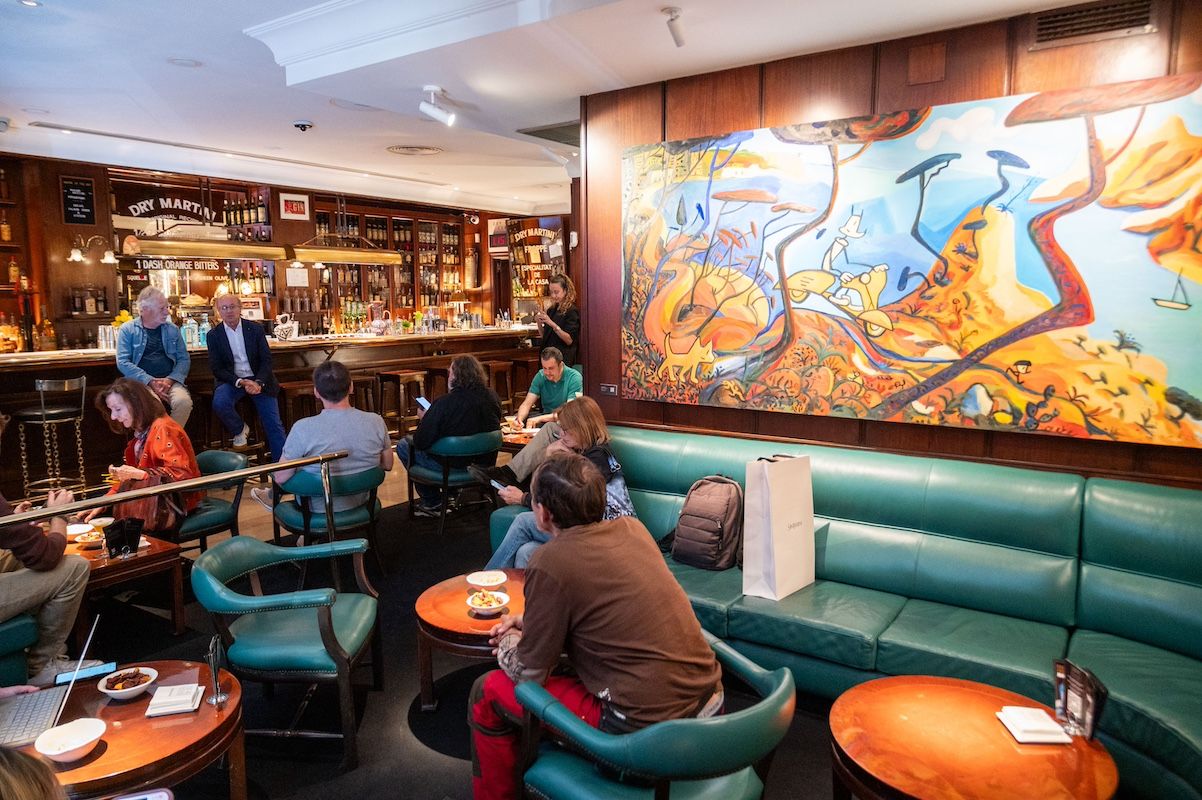
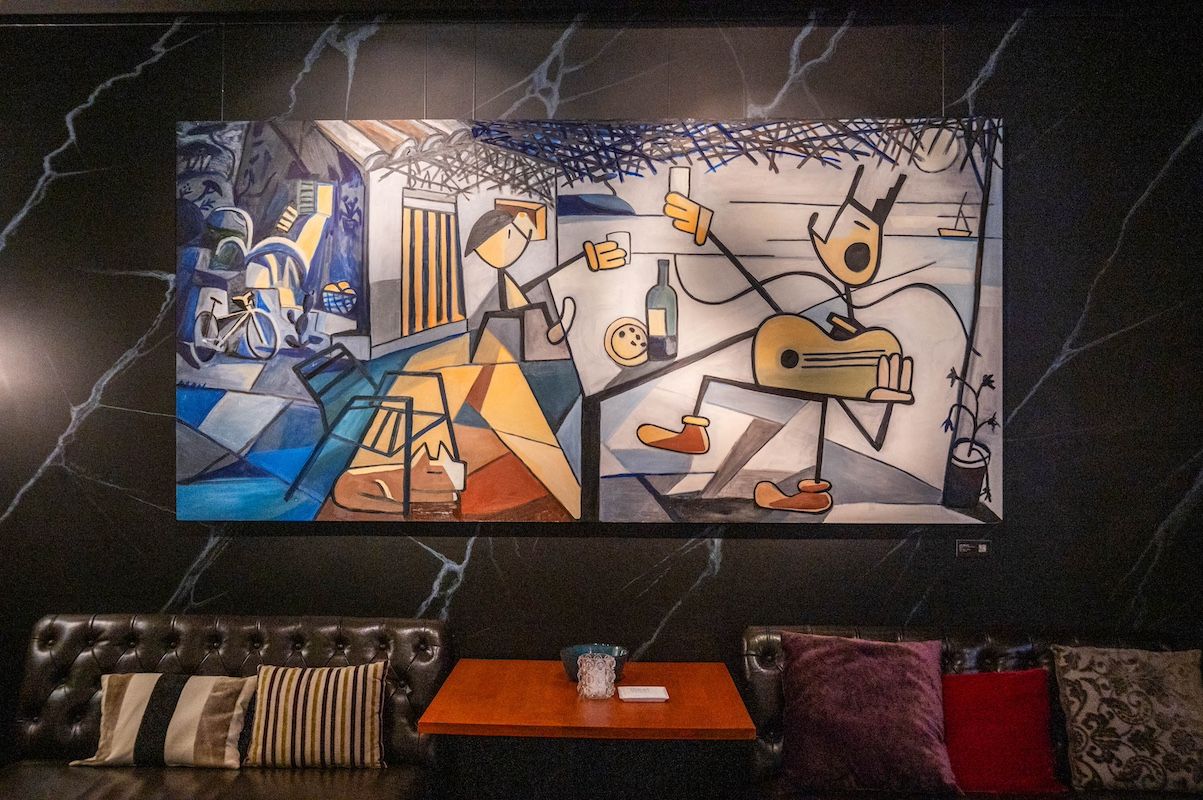
Conveniently explained through QR codes, throughout the establishment we find exaggeratedly designed, comic-like pitchers; large, casual and summery, cheerful, colorful paintings; smaller ones, in black and white, more detective-like and intriguing; jars, bowls and cups with white backgrounds and colored strokes; dogs ---yes, of course, many dogs---; square plates in the shape of a framed picture; everyday or movie scenes; cards, glasses, bottles, lights, backlights, in the Speakeasy restaurant; two impressive murals in the Marie Brizard room, one clearly cubist and the other closer to a comic strip; screens with animations; sculptures that welcome at the entrance; and even uniforms for the waiters with Mariscal's designs. A complete tribute.
We will also find a themed cocktail, the Mariscal cocktail, with an explanation of the creative process included: search for vibrant colors, elegant organic details, a Mediterranean citrus base with local green notes, with subtle warmth and sweetness and a touch of exotic fruit. Joy, optimism and "spark". In short: clementine, yuzu, yellow lemon, bergamot, chili liqueur and smoked whisky. I admit that the combination has an undeniable Mariscal-esque aftertaste.
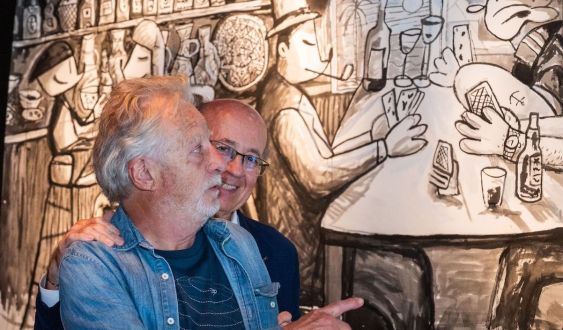
Javier de las Muelas explains that the custom of bars, the bar culture, is very "ours". He specifies that this means very Spanish, that is, very much his own, and he vindicates it as a tradition that tries to be imitated under the concept of tardeo, but which had already been invented a long time ago. He met Mariscal when they were young, when the latter was studying medicine and had just arrived from Valencia. De las Muelas refers to the time of the first Gimlet in El Born, and to his intention then to bring cocktail culture closer to the youth of the time. Mariscal supports this by remarking that De las Muelas saved him from vulgarity in drinking: that he taught that generation to drink correctly, that they were "drugged hippies" (sic), and that with him they learned to limit themselves to getting "the point". Nowadays (sic), it is as frowned upon to do drugs (sic) as it is to say that a girl has "good melons" (sic).
De las Muelas was surprised to see so much work stored in Mariscal's workshop, and decided to place it all in his establishmentThe designer of Cobi, who aroused so many conflicting tastes (mine doesn't matter here), defines Barcelona as a city of freedom.A cultured and very mixed city, where you can think as you wish.I understand what you mean when you state that people can be pro-independence and nothing happens, although objectively speaking it is not true, but the appeal to the libertarian, liberated, free, liberating spirit that the city preserves despite the contexts is understood. The nextpresidentof the Generalitat, he affirms, could be "a dark-skinned man from Empordà" (sic).
Regarding the exhibition at the Dry (a "cathedral" of bar culture), De las Muelas was surprised to see so much work stored in Mariscal's workshop, and decided to place it all in his establishment. The idea arose on the day of the presentation of the exhibition Hola Barcelona, last year, with portraits by photographer Maria Espeus about Barcelona in the eighties. These are works that already existed then, although a couple of them have been made by the author during the last year. "Painting and drawing are very mixed," says the artist, and "lately I'm painting a lot, because I have a lot of time."
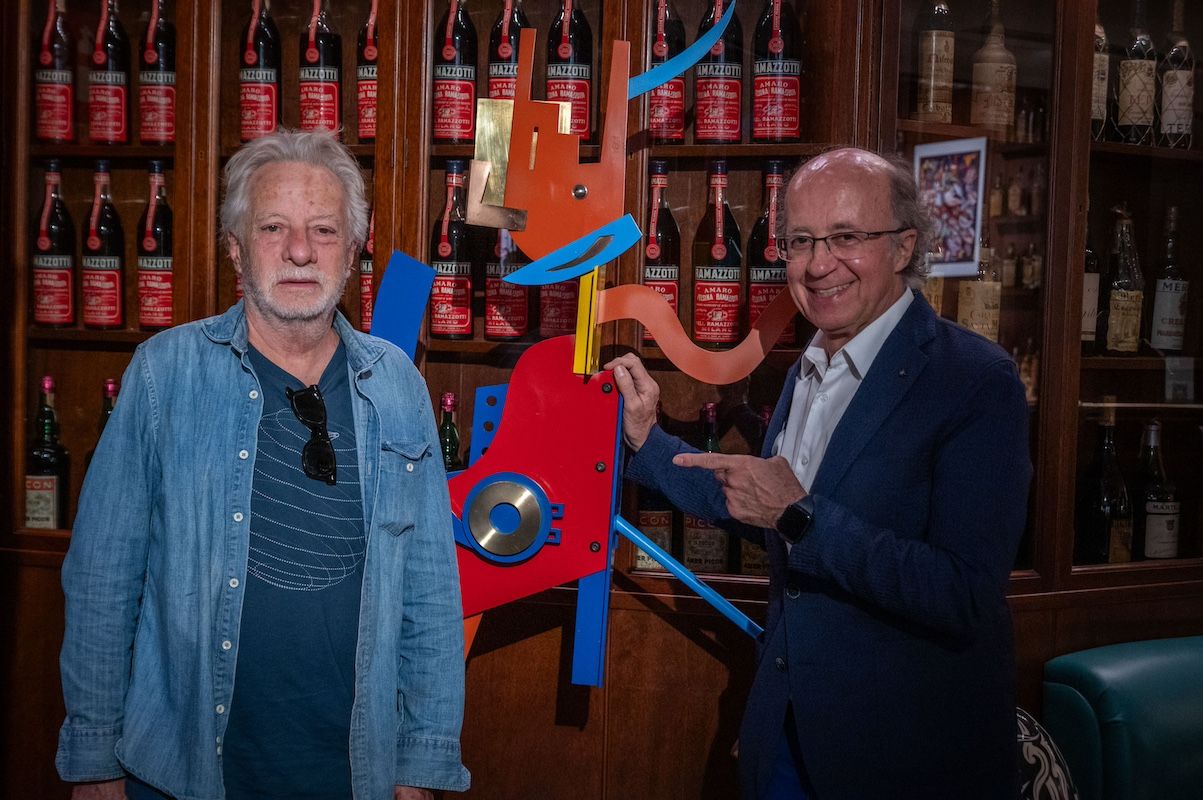
Mariscal vindicates the eukaryotic cell, which is the mother of all (whatever the Bible says, he makes clear), and the petty thieves he portrays but who have much more goodness than Disney's Scrooge McDuck, for whom he has a special dislike. But he also vindicates himself as a cubist artist, or inspired by cubism and pop art, as well as by ceramic techniques that have been used for thousands of years and that already existed before Homo sapiens.
De las Muelas, for his part, vindicates the everyday nature of Mariscal's scenes and objects: plates, chess sets, in fact all that is now seen in museum shops, he had already done before. And the Dry ritual has adapted: the famous cocktail is served with a pitcher and on a tray made by the artist. One would say that entering Dry Martini now is like getting on a time machine to '92, but that only means that the author's brand is still the same as thirty years ago. Mariscal may be liked or not, but he is recognized at first sight. The lifelong friendship, too.
Add The New Barcelona Post as your preferred Google source for free
Stay informed with the latest news.
