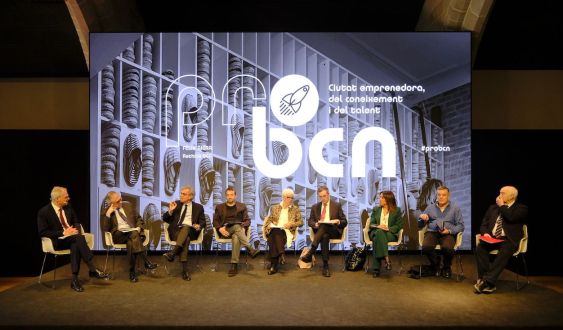
A hundred civil society entities have participated in the elaboration of a manual for the candidates for mayor of Barcelona in which they have gathered their opinions on the city they want them to build in the next term. The most repeated request in its pages is for more public-private collaboration, demanded by the different sectors that have been analyzed: infrastructure, economic activity, culture, and the third sector. "We will achieve it, I am convinced," said Eduard Torres, president of Turisme de Barcelona, one of the members of ProBCN.
Starting with infrastructure, which includes mobility and housing, it is requested that Barcelona have a metropolitan and sustainable perspective, but ensuring that it does so economically, socially, and environmentally. The person in charge of explaining this block of duties that civil society places on the future mayor has been the general director of the Institut Cerdà, Carles Cabrera. Although Cabrera has demanded that public transport be the central axis of mobility, he has emphasized the need to facilitate the circulation of all vehicles and take advantage of the benefits that each one offers. He has also asked for a solution for Rodalies and Barcelona Airport, and to finalize the Mediterranean Corridor.
In the economic leg, led by Rethink BCN and Tech Barcelona, the importance of generating consensus in the city has been emphasized. "We must improve communication between companies and administrations," defended Fèlix Riera, the director of Rethink BCN, "identifying companies as key to deciding policies." Miquel Martí, the CEO of Tech Barcelona, praised the "uncommon" balance between the public and private sectors at a European level that exists in the Catalan capital, but advocated for moving forward: "We are halfway there. If we don't keep swimming, we won't compete." In his opinion, the local entrepreneurial model must be based on promoting the brand, "it is the best asset we have," talent, and the existing ecosystem.
The economic sphere has been complemented with an analysis of trade and tourism. The general director of Barcelona Oberta, Núria Paricio, has reiterated the request for more public-private collaboration, adding that she also believes an affordable and well-connected city is required, warning that there are shops that can lose 40% of their customers because they cannot easily access the city by car. Likewise, Paricio has asked to value the terraces of the Catalan capital: "They are part of our DNA." For his part, the president of Turisme de Barcelona, Eduard Torres, has opted to attract more international events and provide a solution to city spaces such as Montjuïc, La Rambla, Paral·lel, and the surroundings of the Sagrada Família. He has also defended that there should be more points where tourist buses can drop off visitors.
From the cultural sector, surprised to be present in a debate like this, the president of the Association of Theater Companies of Catalonia (Adetca), Isabel Vidal, has demanded that "culture be a strategic and not a tactical pillar", with the public and private sectors joining efforts to promote initiatives that combine tradition and innovation, respect local identity, and offer a varied range.
The last has been the third sector, represented by Enric Canet, spokesperson for Casal dels Infants. "There is another city," he recalled, denouncing that market laws generate inequalities. "I ask for your sensitivity," he stressed, "that people sleeping on the street is everyone's fault." Canet added that it is necessary to move towards a more accessible city, both for people with disabilities and for vulnerable people, warning that digitalization is opening new gaps.
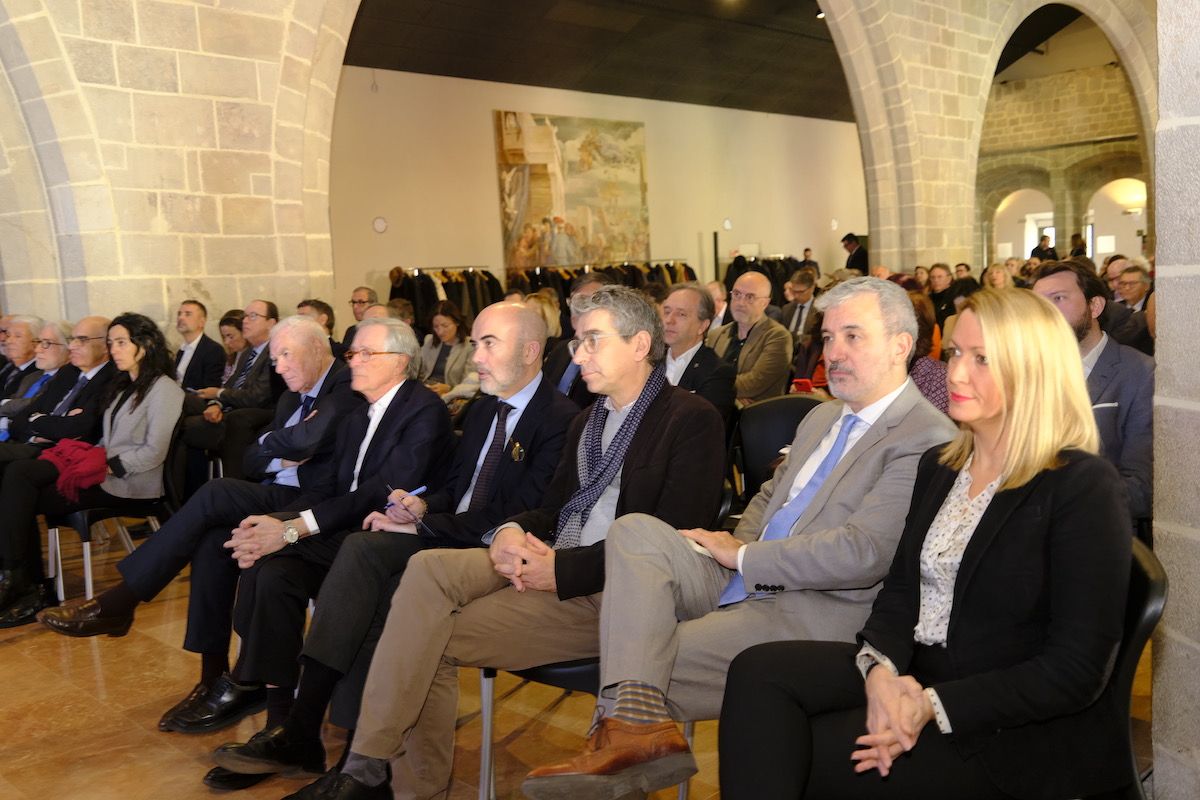
The presentation event was attended by Deputy Mayor Jordi Martí (Comuns) and mayoral candidates Ernest Maragall (ERC), Jaume Collboni (PSC), Xavier Trias (Junts), and Daniel Sirera (PP), to whom the document containing all the requests made was delivered. Among the attendees were also the president of the Barcelona Chamber of Commerce, Mónica Roca, the president of the Hotel Guild, Jordi Clos, the president of Foment del Treball, Josep Sánchez Llibre, the president of Saba, Salvador Alemany, the president of the Passeig de Gràcia Association, Luis Sans, the president of Amics de la Rambla, Fermin Villar, and the deputy general director of the Port of Barcelona, Santiago García-Milà.
The ProBCN initiative has been led by the Barcelona Promotion Foundation, dependent on the Barcelona Chamber of Commerce. Some of the collaborating entities are the Catalan Film Academy, Comertia, Apartur, the Association of Real Estate Developers and Builders of Catalonia (APCE), Barcelona Comerç, Barcelona Global, Cáritas, Creu Roja Catalunya, Femcat, the Hàbitat 3 foundation, the Guild of Publishers of Catalonia, the Guild of Restoration of Barcelona, Pimec and the RACC.
Add The New Barcelona Post as your preferred Google source for free
Stay informed with the latest news.
