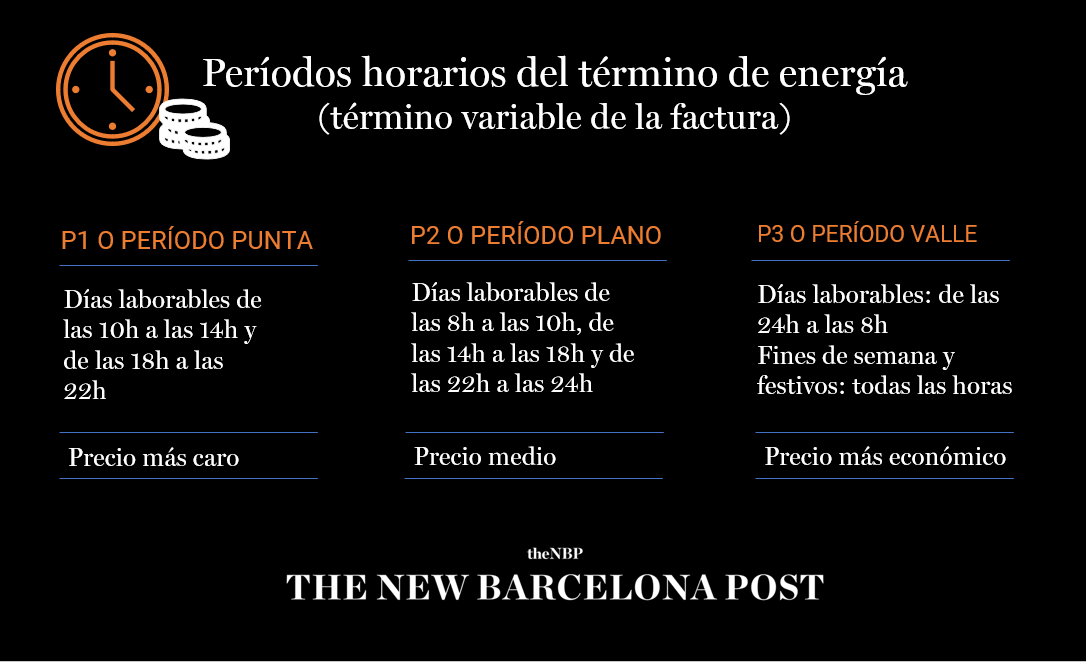
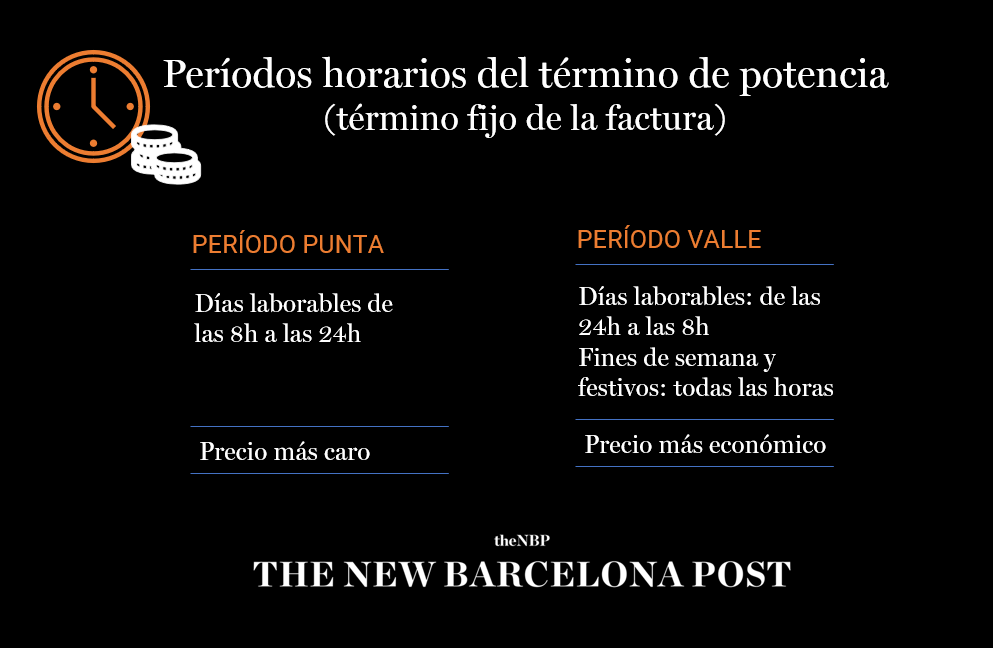
As of June 1, a state tariff change in the electricity bill comes into effect. From then on, the energy consumed will be calculated based on three time periods. There will be a more expensive one, one with an average price, and a more economical tariff. The contracted power, associated with the fixed term of the bill, can also vary. Instead of a single power, two can be had for two different periods.
This tariff reform, approved by the Ministry for Ecological Transition and the Demographic Challenge of the Government, jointly with the National Commission of Markets and Competition (CNMC), will affect all people with a domestic supply contract. If the supply modality is with PVPC (Voluntary Price for the Small Consumer), the changes will be applied automatically.
People who have contracted a company from the free market and who want to benefit from the changes will have to contact their company to see if it can offer this new tariff, or compare with other companies that offer it.
Since April 2014, citizens, as domestic consumers, that is, with supplies below 10 kW of power, have the possibility of contracting tariffs with variable electricity prices according to the hours in which they consume energy.
In addition, from next June, all people will pay variable prices for tolls and electricity charges on their bills depending on the day and time of consumption.
On the electricity bill, consumers can find several concepts: the fixed power term, which depends on the contracted power; the energy term, which corresponds to the consumption made at all times; the cost of renting measurement equipment or meters; and, finally, taxes.
[separator type="thin"]
[separator type="thin"]
Tips for changing consumption patterns, saving energy and money
The new time periods aim to promote the shifting of energy consumption towards times when networks are less congested.
To take economic advantage of this change, it is advisable, as far as possible, to reduce the use of the appliances that consume the most energy, such as heating, ceramic hob, dishwasher or dryer, during more expensive periods. These appliances can be programmed for the flat period, which may have schedules more compatible with our daily routines. But the savings on the bill will be greater if the appliances that consume the most are used during off-peak hours or on weekends, provided that community needs and conditions allow it.
In relation to the fixed amount of the electricity bill, the new tariff reform can be especially advantageous for people who charge their electric vehicle at night, since they will be able to do so at the most economical price, given that, with the two defined periods, more power can be contracted at night.
To better manage electricity consumption at home, there are a series of resources to take into account. For example, it is important to know the power that needs to be contracted, adjust it well to individual needs, and know how it can be optimized.
On the other hand, following good consumption habits can also save energy and, in turn, benefit the environment and the wallet. Some tips include taking advantage of natural light, using low-consumption, fluorescent or LED bulbs, thermally insulating doors and windows, installing thermostats to regulate temperature, buying efficient appliances adapted to our needs, and using ecological programs whenever possible, among others.
All information about tariff changes, electricity contracting, and energy-saving tips can be found on the website of the Catalan Energy Institute and its social networks @energiacat.
Add The New Barcelona Post as your preferred Google source for free
Stay informed with the latest news.
