[dropcap letter="U"]
ne third of births in Catalonia are to foreign mothers, and these mothers have more children than native women, even with lower incomes. The European Central Bank warns that spending associated with aging will pose a problem that, if not corrected, will compromise the sustainability of public finances. Spain, according to data from the National Institute of Statistics, had a negative natural population growth in 2017, registering 31,245 more deaths than births. The birth rate stood at 8.4 births per thousand inhabitants, four tenths less than those registered in 2016.
The economist and political scientist Manuel Blanco has dedicated a large part of his work to the demographic problem in Spain and has warned about the abandonment of villages in Galicia, noting that, although the countdown to stop it has begun, Spain seems not to foresee the impact of not being able to maintain pensions. The situation could be expressed differently: to sustain the current pension system, pensioners should only live until they are 76 years old. The problem highlights how misguided the governments' priority agenda is. This issue implies rethinking immigration policy, making it easier for women to have children without jeopardizing their workplace or career advancement, it means proposing a new approach to managing the progressive use of robotics in the business world, and the need to observe a new form of territory management so that it does not empty out and concentrate only in urban areas. The decline in fertility leads societies to be more conservative, less dynamic, and less open to change. Antonio Garrigues Walker warned in an article published in El País: "an aging country loses its grip, intellectual curiosity, sense of risk, ambition." Rejuvenating the country implies investing in nurseries, promoting incentives to increase the birth rate, and breaking with the idea that only a selfish society can survive in a globalized world.
Catalonia, which has been raising the debate about its identity in recent years, must observe in the demographic challenge a new front that will imply taking measures so as not to turn its aspirations into a vain and unrealistic effort. All of Europe is debating how to face the demographic problem while being unable to efficiently face the problem of immigration and refugees. The International Monetary Fund sees the entry of 5.5 million foreigners into Spain as necessary by 2050. This projection affects the European Union and all societies and, consequently, our way of life. Without a rigorous, ambitious, achievable plan with broad political consensus in favor of promoting birth rates and defending issues such as pensions, identity, and the sustainability of institutions, the foundations of the state will be put at risk. It is a challenge that affects future generations and it is the state's responsibility to address it as soon as possible.
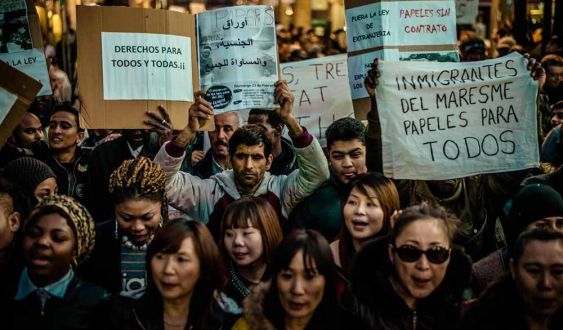
Featured image: Immigrants demonstrate for immigration rights in Barcelona. Photo by Matthi / Alamy Live News
Add The New Barcelona Post as your preferred Google source for free
Stay informed with the latest news.