The circular bioeconomy employs biological and renewable resources for the production of goods and services in all economic sectors, reducing the dependence of products on oil or coal and promoting biodiversity. It is a new economic model and job creation in accordance with the sustainable development goals, SDGs, indicated by the United Nations for the year 2030.
The circular bioeconomy represents the evolution of three concepts that have already become familiar: recycle, reduce, and reuse. It is about placing the economy and society itself at the center of these three concepts, making the sustainable management of forests and agricultural, livestock, and maritime systems a fundamental value for generating well-being and prosperity.
The Departament d'Acció Climàtica, Alimentació i Agenda Rural, in collaboration with the other involved departments of the Generalitat de Catalunya, has launched the Catalonia Bioeconomy Strategy. A strategy for the period 2021-2030 that will promote the transition towards an economic model based on the optimal use of renewable natural resources (which are still not used today) to create products with higher added value. This will improve the competitiveness and sustainability of our primary sector: forestry, agri-food, and maritime, and will boost the generation of knowledge as a driver of social, cultural, and economic change.
The main objective is to promote the growth and sustainable development of the Catalan economy by fostering the production of renewable and local biological resources. Thus, it aims to give a second life to products from the primary sector and ensure the sustainable provision of goods and services. Moving towards a circular bioeconomy is the best response to the already urgent needs for adaptation and mitigation of the climate emergency we are experiencing.
The optimal use of these resources allows for the generation of new environmentally sustainable products such as clothing made from materials derived from algae, crop residues, or wood; sports drinks based on whey leftover from cheese industries; components made from rice straw for automobiles, or new dyes and preservatives obtained from wine lees, among other examples.
Forests: protecting biodiversity and generating wealth
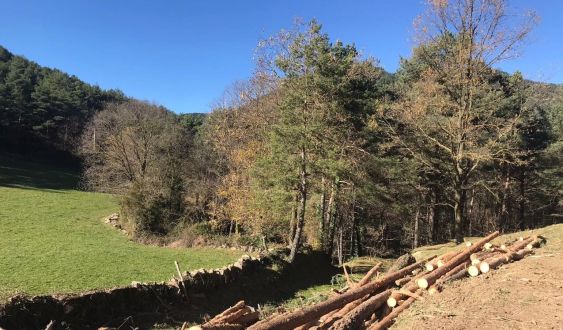
Catalunya is a territory with large forest areas. Through forest management based on the circular bioeconomy, answers can be found to questions of great environmental importance such as reducing the risk of fires, controlling erosion, or regulating water throughout the year. Ultimately, avoiding fires and droughts as much as possible.
In addition to the conservation of biological diversity, future households will directly benefit. For example, the manufacturing of laminated wood represents an opportunity to improve energy efficiency and reduce CO2 emissions in the construction sector. For every ton of wood that replaces cement, the emission of 2 tons of CO2 into the atmosphere is avoided.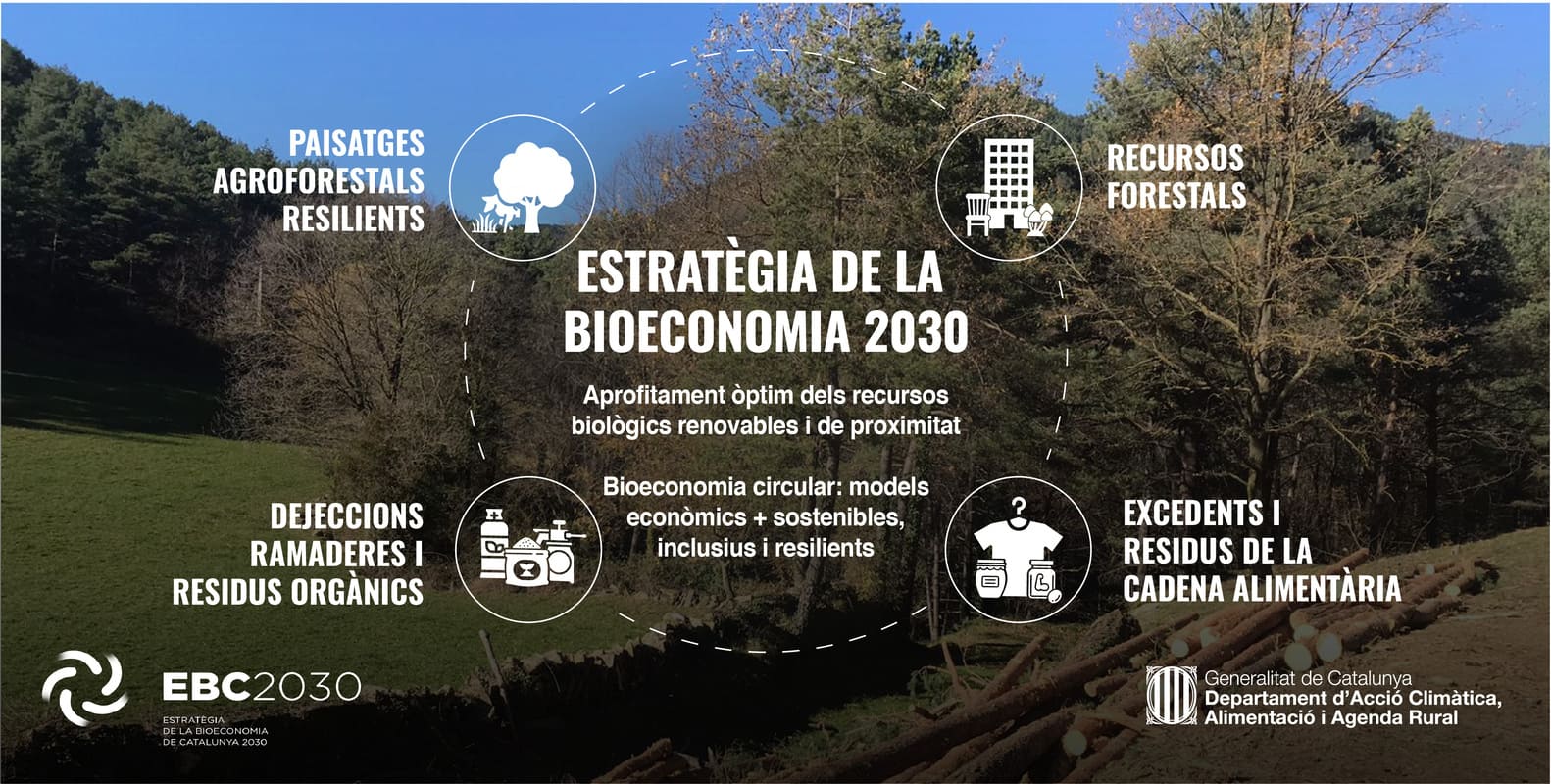
From diverse projects to the Bioeconomy Hub: adding to multiply
The circular bioeconomy projects of the European Horizon 2020 Program totaled 131 projects in Catalunya, a figure that places our country in fourth place in the ranking of participating European territories. Now, the aim is to make Catalunya a reference country in southern Europe in the transition towards more sustainable, more economically and socially inclusive, and more resilient models, better prepared for climate change.
In Catalunya, the bioeconomy represented 4.5% of GDP three years ago and employed 192,000 people, 5.2% of total jobs. With the strategy promoted by the Government of the Generalitat, these figures are expected to increase in the coming years with the creation of quality jobs and the improvement of the management of natural and agricultural areas, while establishing links between the various economic, environmental, and social sectors. This will be possible through the creation of the Circular Bioeconomy Hub, which will promote many circular initiatives aimed at leveraging available biomass and generating energy and new products and materials. This will develop a business fabric based on the circular bioeconomy throughout the territory, with special attention to the primary sector, which will involve the participation of universities and research centers for knowledge transfer.
Among other concrete objectives, the Government aims to increase jobs in our primary sector by 10%; increase the incorporation of young people into the rural and maritime world by 15%; recover the management of at least 10% of agricultural areas that have been abandoned in the last 30 years, and reduce by 30% emissions linked to the management of livestock waste and food waste.
Add The New Barcelona Post as your preferred Google source for free
Stay informed with the latest news.
