In recent years, Catalan cinema has managed to carve out a niche for itself in the international film industry, standing out and receiving recognition at the most prestigious awards, such as La Berlinale or the Cannes Film Festival. A recognition for Catalan productions that has also reached cinemas and platforms which, recently boosted by blockbuster films such as El 47 or Casa en Flames, in 2024 registered a record of almost 987,000 Catalan cinema viewers. These are record figures that the audiovisual sector trusts will not be a flash in the pan and that can be maintained and even surpassed in the coming years.
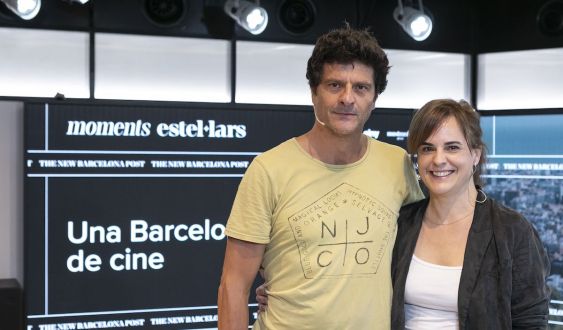
"20 years ago, we could not have imagined even in our wildest dreams that two Catalan productions would shine at the most prestigious festival in the film industry, the Cannes International Film Festival," emphasized the director of the Master in Creation Documentary at UPF-BSM, Eva Vila, in the session A Barcelona of Cinema, organized by The New Barcelona Post as part of the Moments Estel·lars series. Awards where the Catalan co-production Sirat, by Oliver Laxe, won the jury prize and where the new film by director Carla Simón, Romería, also stood out in the official selection.
Vila, also director of feature films such as Bajarí or Penélope, highlighted that the fact that Catalan cinema is experiencing a sweet moment "is no coincidence, but rather the result of a prolific generation," she stated in a session moderated by journalist and UPF-BSM professor Toni Aira, and organized with the collaboration of Casa Seat, Barcelona Global and Must Media Group.
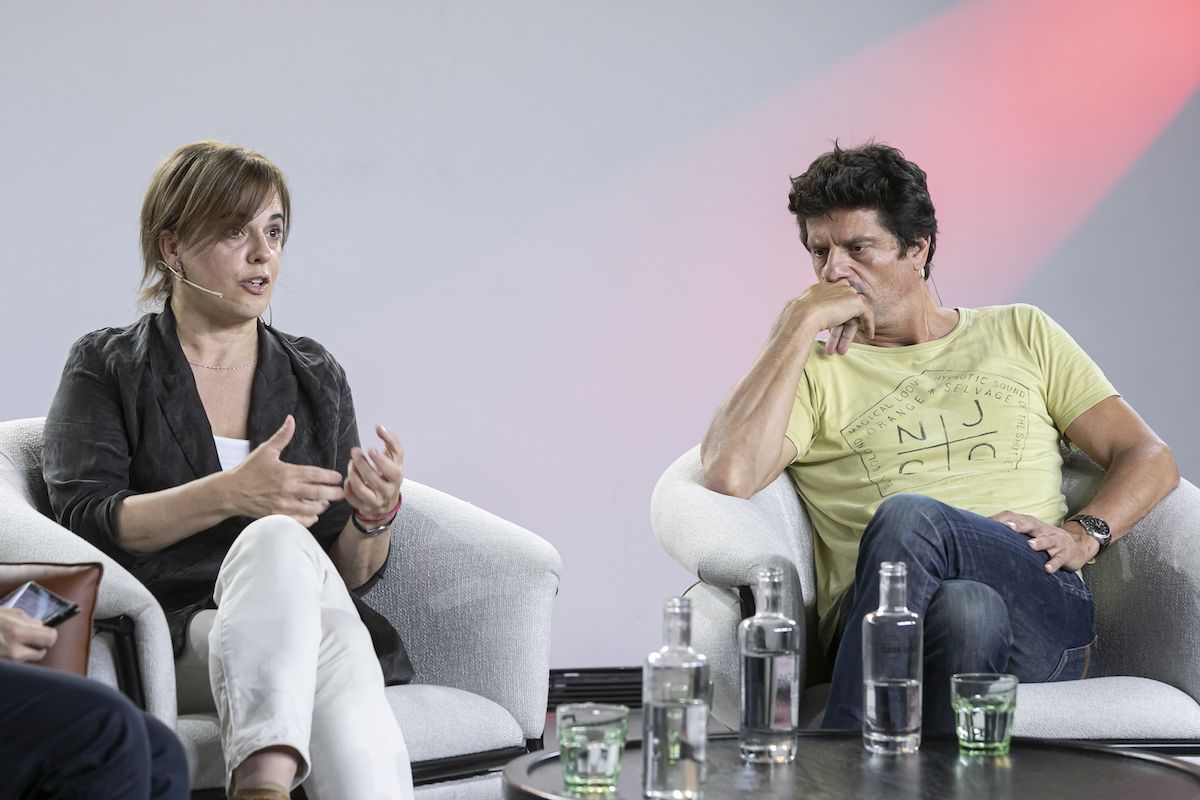
Even so, Vila acknowledged that there is still a lack of self-esteem among producers and the public, and claimed that "it must be believed even more that producing cinema from Catalonia is not only possible, but that these productions have meaning and a prominent role in the world." For his part, the director and screenwriter of television series and cinema Joel Joan lamented that, despite the awards that Catalan productions have won in recent years, Catalan cinema still has difficulties in crossing the big screen and seducing the general public.
"We have always been very obsessed with the idea of collecting international awards, but we must not forget to reach the public, because we need people to go to the cinema and pay for tickets," recalled the actor from series like Plats Bruts, which made him famous in the early 2000s. Joel Joan also stated that the big names in Catalan cinema can become "specific and very exceptional cases" if there is no active support from public administrations, which, according to the actor, should promote the granting of aid to record films in the Catalan language.
In this regard, Joel Joan lamented "the prejudices of big producers, who think they will reach a smaller audience if they film movies in Catalan." "In Catalonia, we are afraid to be who we are because we are terrified of not being liked, but we also have to have the capacity to release politically incorrect productions," added the actor.

The actor, who recently wrote and starred in the play Escape Room 2 ---and who is now preparing the adaptation of the second part of this film to the big screen--- criticized that, just because a production recorded in two languages speaks more than 50% in Catalan, this production is already considered an original version in Catalan. Joel Joan defended that, in his opinion, for a production to be considered Catalan cinema, it should be entirely in Catalan.
For her part, Vila defended that "the big festivals want films shot in Catalan," but also argued that a production can be considered Catalan without the need for Catalan to be spoken, as is the case with her documentary Bajarí, which approaches and portrays Gypsy culture in Catalonia, a production where mostly Spanish is spoken and with which, according to Vila, she managed to "export Barcelona to the world." The film director, co-founder of Araki Films, also expressed that it is positive for Catalan cinema that films can be co-produced internationally to elevate their success and prestige.
Despite the challenge for Catalan cinema to reach the general public, Vila has shown optimism not only with the present, but also with the future of the film industry in Catalonia, driven by the existence "of an excellent youth academy, like Barça has, with very talented young people". A youth academy that is created from the work of institutions such as the Escola Superior de Cinema i Audiovisuals de Catalunya (ESCAC) or the Barcelona School of Management (UPF-BSM), which promotes the Master in Creative Documentary, to which Vila has been linked since 2003, and of which she is currently director, senior lecturer and co-director of the Labed editing laboratory.
Within the framework of the UPF-BSM program, launched in 1998 by film director Joaquim Jordà and professor Jordi Balló ---National Culture Award in 2005 in the cinema category---, up to 33 productions have emerged, with recognized feature films such as Mones com la Becky, En Construcción or De nens. Vila, who is a member of Dones Visuals and the Association of Women Filmmakers and Audiovisual Media, has highlighted the sensitivity of these young filmmakers in portraying the different stories and narratives that coexist in the city of Barcelona ---a city that also becomes a protagonist in Vila's productions---.
"A portrait of the city with great sensitivity to address its future challenges, such as sustainability, climate change, the way we relate to each other or take care of each other," Vila emphasized. A sensitivity that, according to the film director, manages to "cross the screen, comfort us and move us, because the viewer identifies with the characters they see on the big screen."
For his part, Joel Joan has argued that, without ceasing to produce documentary cinema, another key to reaching the general public is the creation of other genres, such as horror, comedy or action in Catalan. "We tend to despise comedy, but it is a great vehicle that allows us to address serious topics and make the viewer reflect," he emphasized.
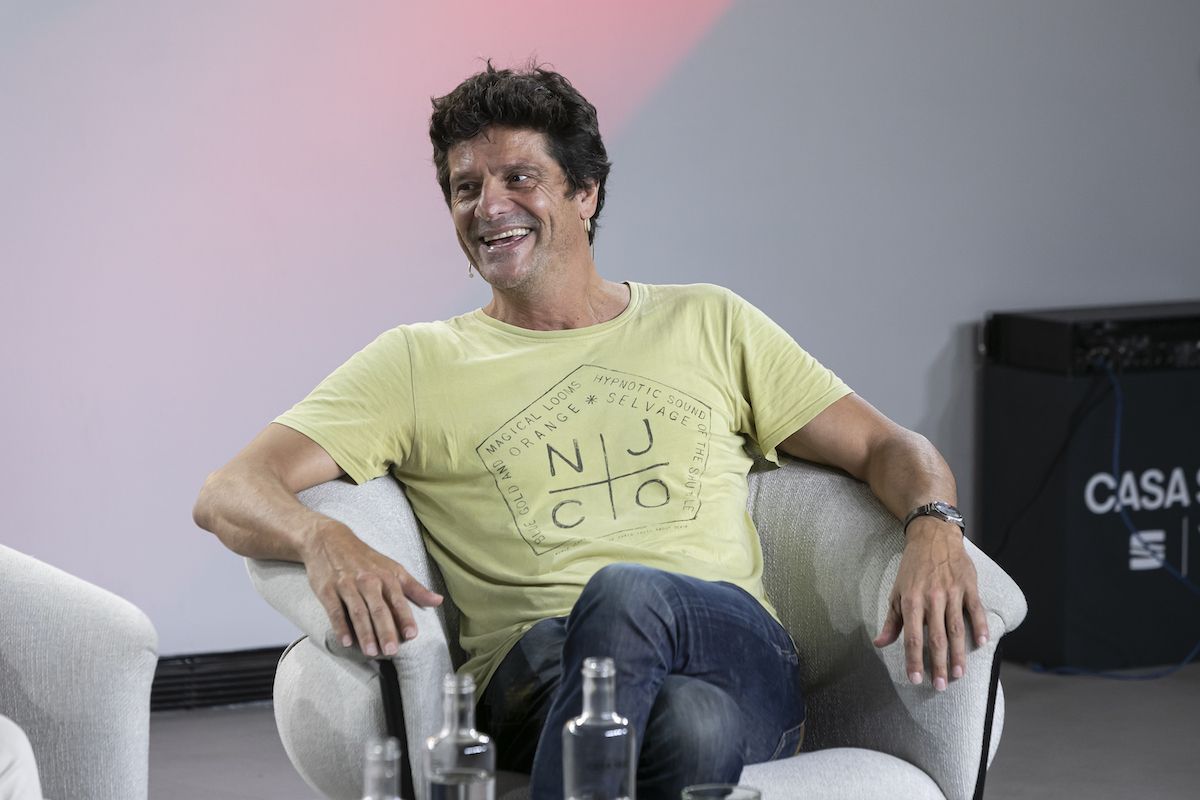
"We have to be able to produce, in the Catalan language, series and feature films that want to seduce the general public, and that don't have to apologize for their intention to reach viewers," the actor expressed. It was precisely this desire to produce other genres that prompted Joel Joan not only to star in productions, but also to write and direct them. "I wanted to be an actor, I planned to become the new Brad Pitt," the actor jokes. But it was the lack of comedy references in the Catalan language, and inspired by foreign series like Seinfeld, that prompted him to found his own production company, Arriska Films, and to premiere the series Porca misèria.
"For this very reason, I also promoted the Acadèmia del Cinema Català so that, at least for one night, Catalan productions could be recognized and promoted and, at the same time, reach the general public," expressed the first president of the institution, who led it from its foundation in 2008 until 2013. A challenge to captivate the general public, beyond continuing to attract attention at international awards that, even today, almost two decades after the academy's creation, the film industry must address from all genres and generations of filmmakers, producing everything from non-fiction feature films to comedies or horror films.
Add The New Barcelona Post as your preferred Google source for free
Stay informed with the latest news.