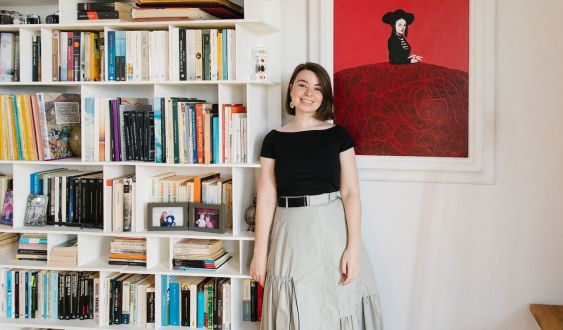
When, shortly after her grandfather's death, Carlota Font Castelló saw how cancer snatched the life of her friend Irene, she had her first contact with death. With that programmed obsolescence with which we come into the world: that inevitable end that reminds us that we are here for a limited time and that, as far as possible, we had better try to do what we really like.
"Shortly before she died, one day I spoke with Irene and she encouraged me to write," she explains, leaning on the bar, as she orders a hot chocolate that anticipates the imminent arrival of autumn, and lets the noises of the Bar accompany the conversation. "She told me 'do it,' and I did it." Trying to live the life we want to live is, often, also a way of honoring our loved ones who are no longer with us. Thus, this Barcelona native born in '98 finally decided to put into practice the passion she had nurtured since childhood. "Since I was eleven, I was already participating in the Floral Games. I have always liked to write and, above all and for that, to read. Always read a lot!"
She enrolled in the Ateneu Writing School and there she began to shape her first novel, which now, three years later, sees the light. Es lloga habitació (La Campana) has a lot of autobiographical and experiential content. "Not only with respect to things that have happened to me or that I have seen, but also in my family environment or people my age with whom I have a relationship." She sips a drink of chocolate, smiles, and adds: "In the end, writing is like living lives that, otherwise, I would not live."
All of that, added to an enormous amount of passionately treasured readings, constitutes the breeding ground for narrating the story of Abril, who is going through an existential crossroads with the recent death of her grandfather, the abrupt separation from her boyfriend, an annoying and coke-addicted boss, and the life of a precarious young woman from Barcelona who cannot afford to pay rent that could lead her to an unwanted return to the family home. A short and concise novel, and the first achievement of a dream that the author, who is already thinking about her next work, is going to fulfill. There is only one life, and it does not last forever.
The push of restlessness
Carlota Font Castelló considers herself "an essentially restless person, always eager to study, learn, and discover new things." This drive was what led her, at just eighteen years old, to want to leave Barcelona and go live elsewhere, "to another city, another reality." She was lucky to have unconditional family support and, attracted by the quality of its literary and cultural studies, as well as by cultural affinity due to having a part of her family being Dutch, she moved to Amsterdam.
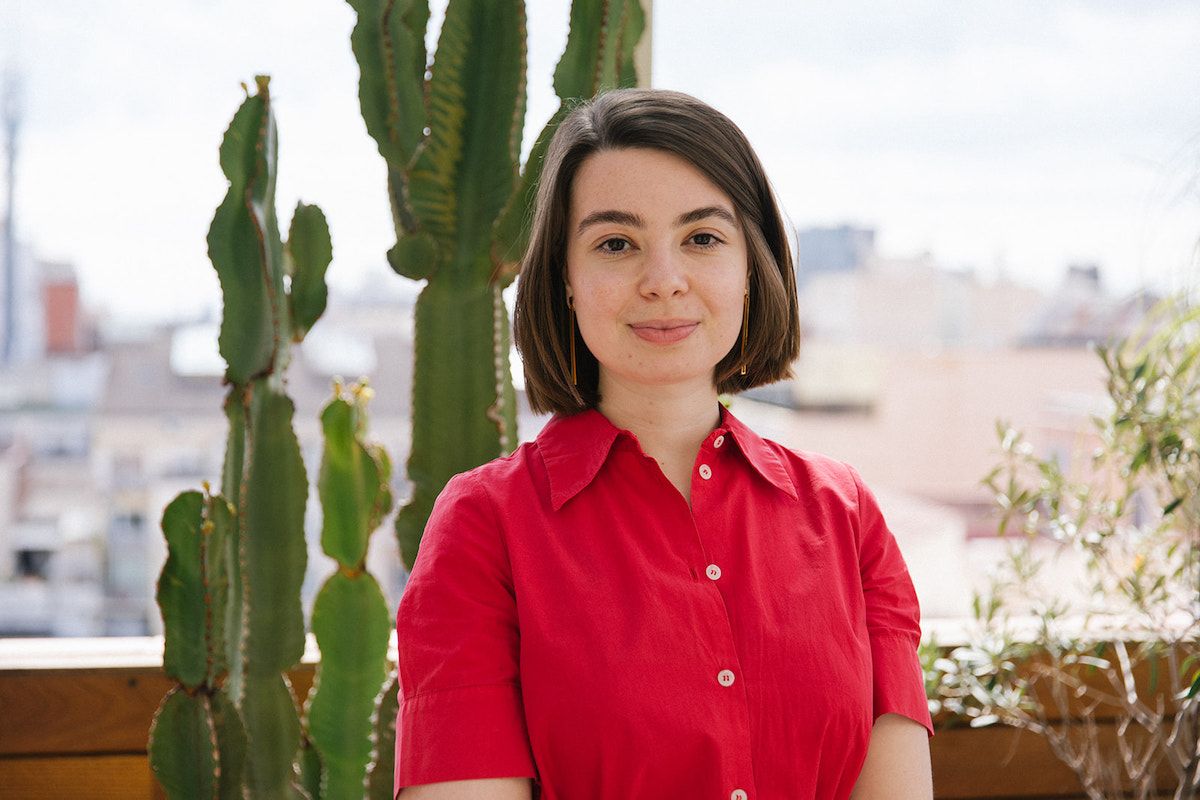
"I was there for four and a half years during which I learned Dutch and experienced things that, had I not lived them, would make me a different person from who I am," she explains. After spending the pandemic in that country, and feeling far from her family and loved ones, she decided to return here, "with the idea of living my city now as an adult woman."
--- But you are still very young!
The writer laughs and doesn't say it, although it's clear that experience made her grow and mature. Probably for that reason, she does confess that in the future she doesn't rule out going to live somewhere else ---"exploring some new place"---, in tune with her restless soul, aware that the most important thing in this life is, precisely, to live it. Meanwhile, she earns a living in the museum and art gallery sector, from which she highlights "that powerful part it has of narration, because an exhibition or the collection of a museum is, basically, a unique story you are telling the public."
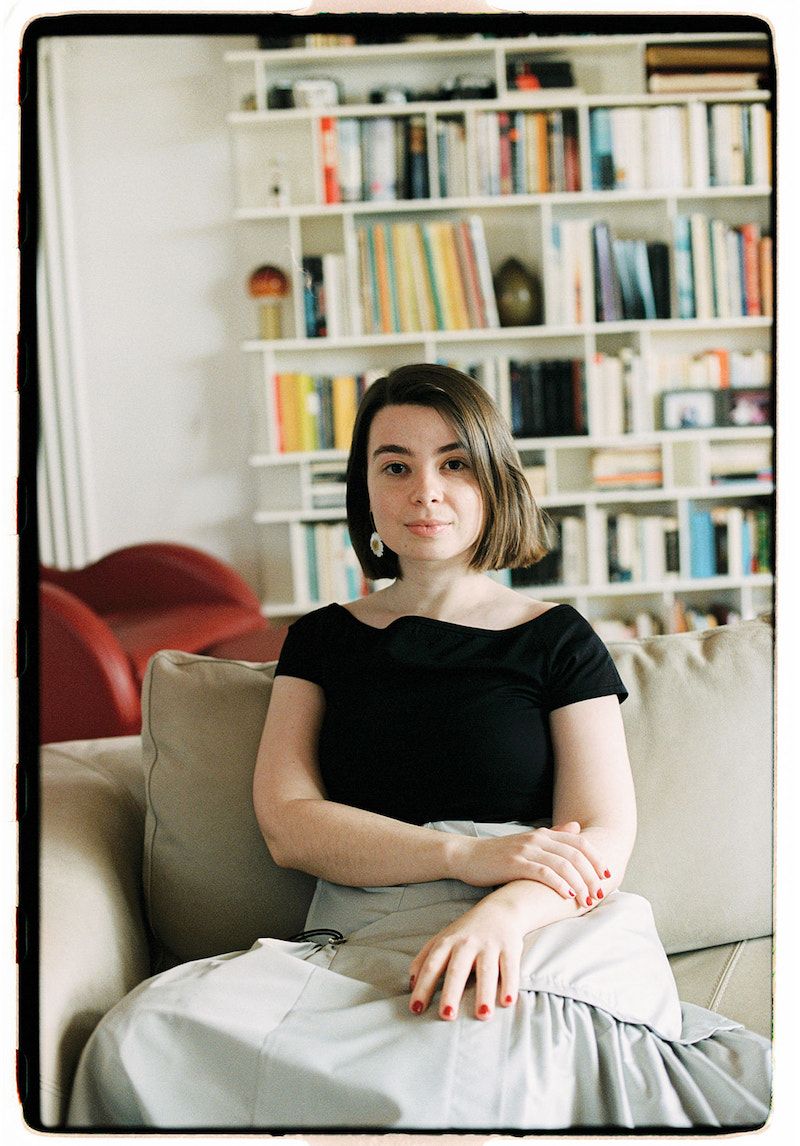
That singular light
"I love Barcelona, it's my city and it's not perfect, I know, but I think it would be even worse if it were." The local is in love with her city, especially its light. "I haven't seen it anywhere else, I've traveled to several places and haven't found it in any. And, of course, the years I spent in Holland I missed it very much."
For her, it is reasonable that, attracted by that light and all the other aspects of its vast offerings, tourists come from all over to visit the city, "Barcelona must welcome them, of course, but there are areas that we should take more care of and not sell them so much to tourism," she laments regarding those more crowded areas where all local essence is lost, while finishing the last sip of her hot chocolate.

--- What is not at all touristy and maintains all its character is this Bar. If you want, you can corroborate it yourself by trying something from our menu, it's about time to eat.
A very cheerful expression colors the face of Carlota Font Castelló, who opts for some tapas, "to share". Because, behind that exchange of portions and delicacies, there are other more transcendent exchanges. Of ideas, of experiences, of memories. Other lives, other voices, which can end up being the ingredients of a good story.
Add The New Barcelona Post as your preferred Google source for free
Stay informed with the latest news.
