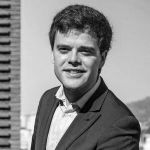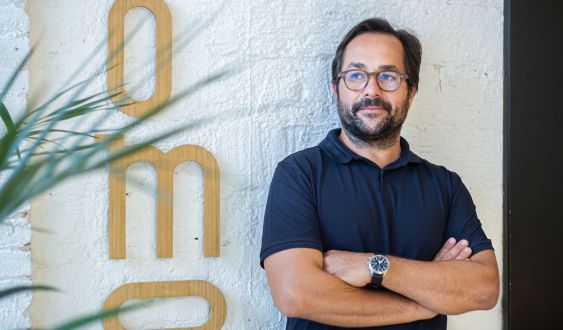
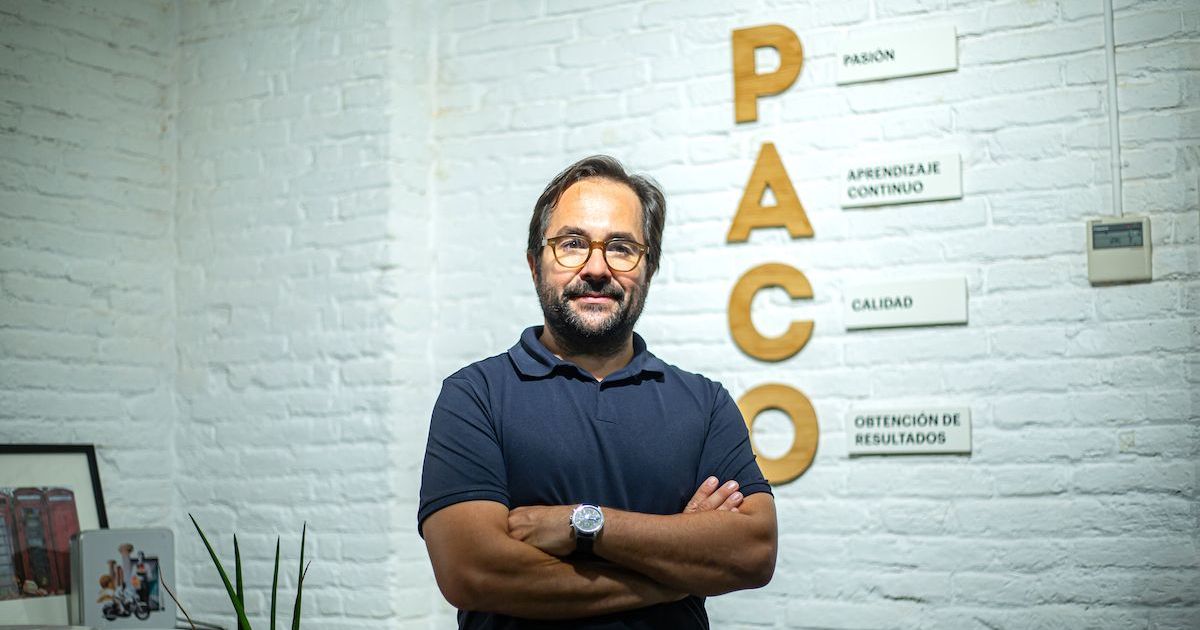
Borja Molina-Martell is the founder and partner of Grupo Nomo. From a family of textile workers and restaurateurs. He assures that he was not a good student, but he studied Business Administration with the firm objective of dedicating a large part of his life to what he was best at: building a business. First, it was roses, then advertising tablecloths, and finally, Japanese restoration. Nomo Barcelona was born in 2007, shortly before the great financial storm. "We have always chosen very bad times to open restaurants," he admits with a half-smile.
In fact, Nomo Madrid opened in 2020, shortly before the start of the pandemic. Nomo is a family group made up of 300 people, a dozen restaurants spread across Barcelona, Girona, Costa Brava, and Madrid, and also a NomoMoto delivery line that accounts for 25% of its turnover. He is a Barça fan, but serves sushi at the Bernabeu. His best philosophy is Kaizen, based on continuous improvement and the power of small big changes. No shortcuts to success. In the Grupo Nomo offices, there is a poster of the Paco Method: Passion, Learning, Quality, and Obtaining results.
— You studied Business Administration.
— I wasn't a very good student, I wasn't very clear about what I wanted to do. I was an entrepreneur, so I studied Business Administration at IQS.
— You sold roses for Sant Jordi.
— I bought roses, set up stalls, and also delivered them to homes. I also had another company for tablecloths with advertising. I was good at building businesses.
— Let's go back to advertising.
— We created a company with friends to give away paper tablecloths with advertising to restaurants. We had a collaboration agreement with Intermón Oxfam and achieved a monthly milestone of 500,000 users. We looked for advertisers, found a very good one, but we left it for after Christmas.
"My grandfather always said that people ate to live and that he lived to eat"
— New year, new life.
— The project died… We weren't sufficiently behind it. I then made the entire business plan to set up a Japanese restaurant, but finally, I joined Deloitte where I only lasted 10 months. That wasn't for me, and I went back to thinking about the restaurant idea.
— Where does your passion for restoration come from?
— I worked for a while in my aunt's restaurants in Mojacar. My grandfather always said that people ate to live and that he lived to eat. So I realized that Japanese cuisine was not a fad and that, therefore, it had come to stay.
— Your father was Nomo's first guarantor.
— My father told me he would give me all his support and that I should carry out the project with my brothers.
"Nomo would not exist without my parents. Everyone said I would screw it up, but I had to try it and they trusted me."
— What is his legacy?
— His legacy is everything! My father has been a very hardworking entrepreneur who has always led by example. He was a fair and consistent leader, a great advocate for continuous improvement. My father backed us, even though I had just closed a project. I will always be grateful to him. Nomo would not exist if it weren't for my parents. Everyone said I would screw it up, but I had to try it and they trusted me.
— Failure can be a learning experience for success.
— From the failure of the tablecloths, I learned that just because someone is a friend, they don't also have to be a partner. In fact, it's much better to look for a partner who is complementary. I also learned the importance of being consistent, since we made the big mistake of relaxing without having succeeded.
— The big mistake of relaxing too soon.
— Failing is part of the journey, and when you fall, you have to get up. If everything always goes smoothly, it's no fun, because then anyone could do it. You shouldn't be afraid to fail, and if you fail, you're not a failure. You learn through mistakes.
"We have always chosen very bad times to open restaurants"
— Your brother Juan lived in London and switched from textile manufacturing to Japanese cuisine.
— My brother studied marketing and we were able to create a large community on Facebook and Instagram. We looked at the Wasabi sushi chain, which is very large and has a very good quality-price relationship. Everything focused on delivery and take away with a brutal rotation and a very adjusted price. At that time, delivery only existed for pizzas, and we had the idea of creating a quality Japanese restaurant with the aim of having more rotation than brand.
— Nomo Barcelona was born in 2007.
— I signed the first location in Gran de Gràcia in January 2007 and opened in December of that same year. In a few months, we were hit squarely by the Lehman Brothers crisis. We have always chosen very bad times to open restaurants. Spoiler: We landed in Madrid just before the pandemic.
— The writer Charles Dickens said it was "the best and the worst of times."
— In the worst of times, I hired Naoyuki Haginoya as a chef and now he is a partner. His great responsibility was to get the best product. I remember that in our first restaurant there was no reservation, no coffee, and we wanted to have a lot of turnover.
"We wanted to democratize Japanese cuisine with a Catalan touch"
— How did the economic crisis affect you?
— The crisis even benefited us because the customer ate in a good place, with a good product, and had very good service at a reasonable price.
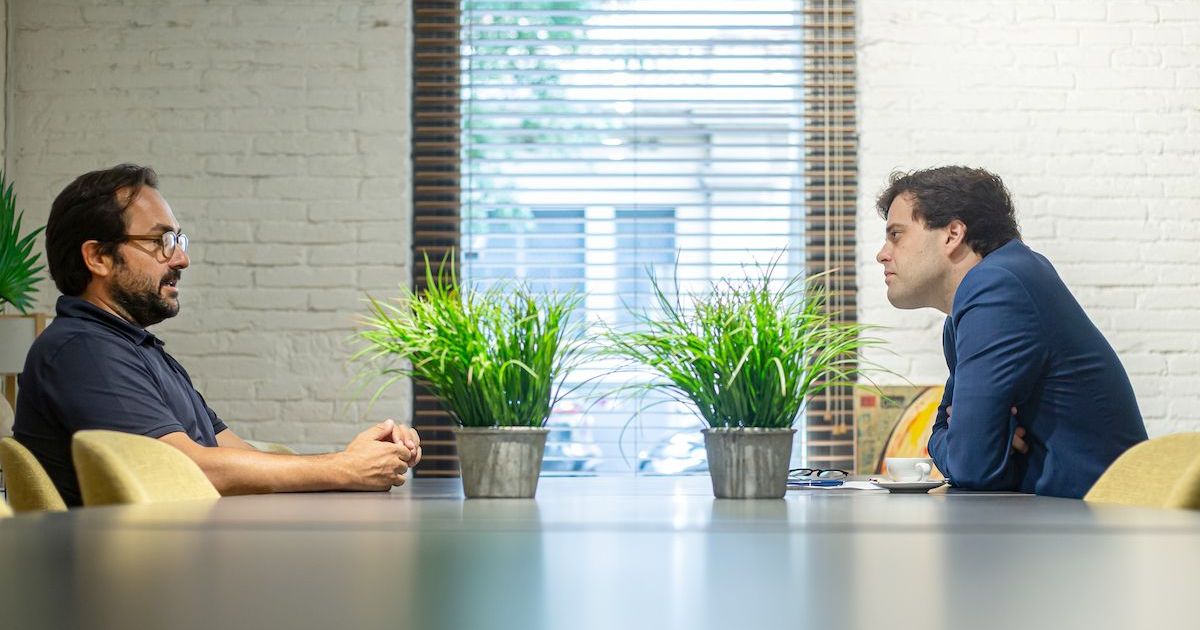
— A mission: good, nice, and cheap. How do you combine Catalan and Japanese?
— Nao fused Japanese technique with local product and was a pioneer with brie or foie nigiri. We wanted to democratize Japanese cuisine with a Catalan touch.
— What was your day-to-day like then?
— First, I did everything and then my brother and I divided some areas. In 2014, we hired an external coach to stop being one of those entrepreneurs who do everything. We needed a structure, a strategic plan, and to learn how to communicate things.
"We think like customers and then we put numbers to see if all this makes sense. You have to bet on quality, which is the key to long-term success, and not take shortcuts"
— What is your day-to-day like now?
— My job is to be on top of things and provide the tools to put ideas into practice. At Nomo, we are almost 300 people and a dozen executives who design a strategic plan. My daily focus is to create the company's strategy for three years ahead, which is also reviewable every year, and to be very clear about where we are going.
— Where are we going?
— Our first idea was to set up a restaurant where we would be regular customers. We think like customers and then we put numbers to see if all this makes sense. For example, the Nomo Clan plan to build loyalty, reward, and understand our customers' consumption habits.
— What is the recipe for Nomo's success?
— The first action is to think like a customer. You have to bet on quality, which is the key to long-term success, rather than being the cheapest, which is very difficult. Success is not taking shortcuts.
— Chef Joan Roca says that "in the kitchen, innovation comes with the humanist revolution."
— If Nomo exists and works, it's thanks to the workers. We have a department that cares only about people. We are doing a pilot test in Nomo Sarriá with some psychologists to see what the mood of the clients is when they enter.
"Everything goes much better if you have empathy with the workers and with the clients. We are a business family and a family business"
— Interesting!
— Everything goes much better if you have empathy with the workers and with the clients. We are a family. In March of the pandemic, we closed all restaurants and delivery, but we continued paying the salaries of the entire team. Every month we interview a couple of people as a Nomo success story.
— Family business or business family?
— That's a good question... We are a business family and a family business. My father had a family business and I have tried to make Nomo a business family. We are family and we have to take care of it, I would like Nomo to stay in the family but not just for the sake of being family.
— Earning your way into the company.
— Everyone has to be prepared and whoever works in the company has to earn it. We have hired an external coach to work and talk things through, without getting angry or arguing. The tension never reaches a peak.
— Talking, almost anything is possible.
— We started very young, but after a while, economic and personal needs changed. That's why we have to sit down and think about what each person expects from the company in the next 10 years. We get external help and do the exercise of putting ourselves in the other's shoes and understanding both the company and the family 10 or 20 years from now. I think about when my son enters the company...
— You will soon celebrate 20 years. How do you imagine the company 10 or 20 years from now?
— In 20 years, I don't know if I'll still be here, probably yes. I would like to leave Spain and open a Nomo in London. The idea was born in London and I think it would be the best way to close the circle. Before that, however, we have a lot of space to open many Nomo in the territory. We really like to achieve new challenges, as long as we are accompanied by the enthusiasm and passion for doing things as a team.
— What is your work philosophy?
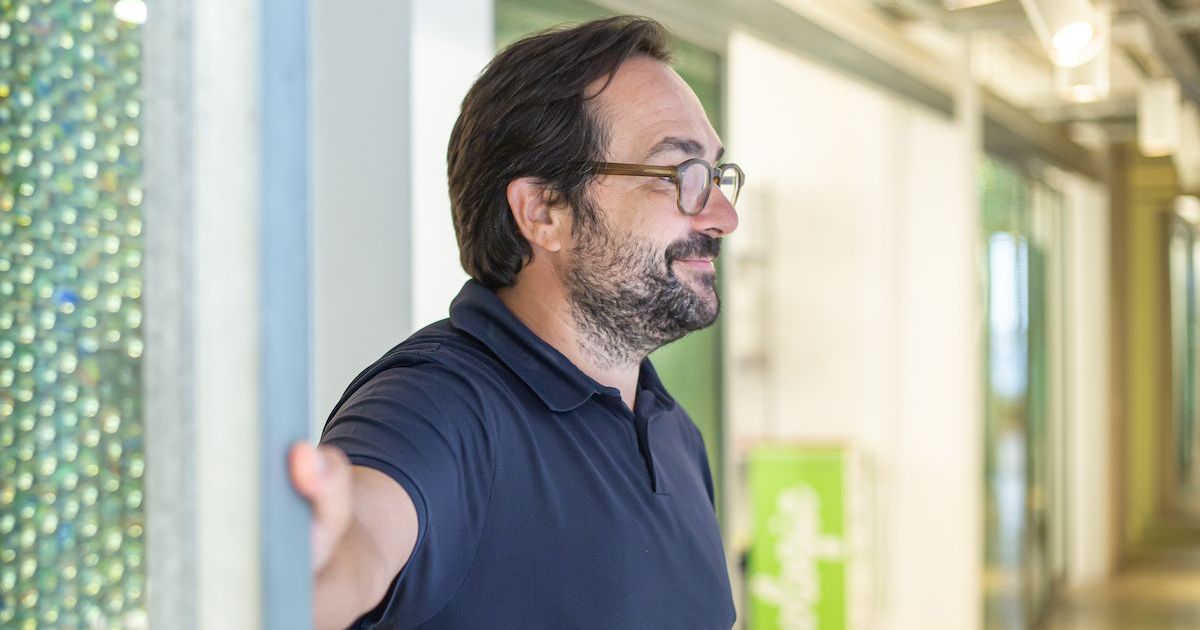
— It's called Kaisen and it's based on continuous improvement. We are obsessed with everything we can apply to improve every month. The small change ends up being a big change. Some time ago it seemed unthinkable to get to where we are today, but we have achieved it. Before we celebrated every billing success and now we find it almost normal. Imagine what we can achieve in 20 years, but it's better never to lose awareness of everything that is achieved.
"The Kaisen philosophy is based on continuous improvement. We are obsessed with everything we can apply to improve every month. The small change ends up being a big change"
— What does the Paco Method consist of?
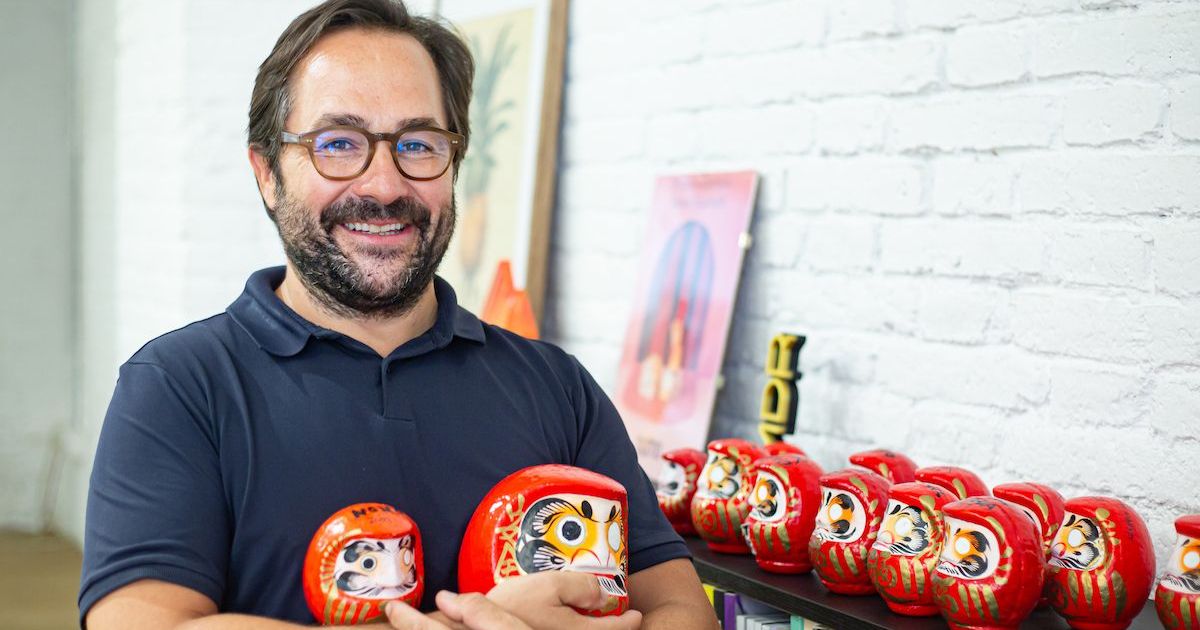
— These are the values and keys to success that I apply in both personal and professional life. There is a very large poster of the Paco Method in our offices: Passion (P), Learning (A), Quality (C) and Obtaining Results (O). Every day I listen to new CEO podcasts while I go for a run and I learn a lot. Numbers are very important, but you shouldn't obsess over them and remember that they are a thermometer.
— I've been told that you serve sushi at the Bernabeu.
— In 2019 we wanted to make the leap to Madrid. The pandemic caught us in the middle of construction and we opened in July 2020. Five years later, the balance is very positive despite the fact that we have suffered a lot. We opened a restaurant in a new city, we had to travel with a covid certificate and managing the teams was very difficult for us because they had the feeling that it was a large company.
"I love Barcelona! We are leaders in restoration, leisure and art, despite the fact that the city has not shone as much as it should. We have to work together and reposition Barcelona!"
— How did you solve it?
— We sent people from here to there and from there to here so that they would understand the Nomo philosophy. And yes, we also have sushi bars at the Bernabeu.
— And the Camp Nou sushi?
— I'm a Barça fan and we applied to make the sushi bars for the Camp Nou stands. The truth is that we would love to be there!
— How do you see the city of Barcelona?
— I love Barcelona! We are leaders in restoration, leisure and art, despite the fact that an image of insecurity has been projected. The city has not shone as much as it should. Associations are very eager to do things and I am very optimistic about Barcelona because there is a lot of talent. We have to work together and reposition the city!
— What would you ask of the public administration?
— Above all, that they listen to us. Public and private work very well, each with their interests, and reach agreements. The discourse of employers against workers or vice versa has always been tried to be sold, but the objective is common. Perhaps we clash at some point, but we can resolve it. It's much better when we work together.
— The previous interviewee Xavier Asensi asks you the following questions: What would be the biggest difficulty, or concern, when deciding whether or not to open a new restaurant? What is decisive for choosing locations?
— The key is always to find a location. We have two types of locations: city locations and out-of-city locations. Outside the city, it has to be an emblematic place like the San Sebastián Lighthouse or the Nomo Náutico. These are accessible premises of about 300 square meters, with charm and a terrace. We look for locations where the per capita income is in line with our average ticket. The place has to be quite impressive and make people not mind traveling.
— I understand that the restaurant experience is important to you, what do you do to ensure that the online shopping experience tries to maintain the same level and quality seal?
— We developed our own website in 2011, we had phone operators in the restaurants so they would understand everything they recommended well and thus be able to have a similar experience. We have chosen dishes that travel well, the packaging is designed to maintain the temperature of each dish. Everything is custom-made.
SEVEN OF LIFE
Role model: My parents.
Book: How to win friends and Influence People by Dale Carnegie.
Movie: Before Sunrise directed by Richard Linklater.
Song: Todo cambia by Mercedes Sosa.
Favorite spot: Menorca.
Life motto: Do your own thing, without bothering others.
Dream: Family health.
Add The New Barcelona Post as your preferred Google source for free
Stay informed with the latest news.