Barcelona will host a branch of the Fraunhofer Institute, Europe's largest organization dedicated to applied research. The implementation of Fraunhofer-Gesellschaft in Catalonia has the collaboration of the Generalitat, the Barcelona City Council, and the Government. This is a historic agreement that includes the creation of the Fraunhofer Spain institution ---as a foundation--- and the launch of a research center in bioengineering applied to health (Center Fraunhofer for Applied Theragnostics (Fraunhofer CAT), in collaboration with the Institute for Bioengineering of Catalonia (IBEC).
The arrival of Fraunhofer in the Catalan capital through this international alliance based in Barcelona will decisively contribute to the internationalization of applied research and improve the connection between academia and productive sectors. In this sense, the Fraunhofer-CAT program will promote applied knowledge and technology towards a new process of development, modeling, and optimization of humanized biomodels designed to develop better diagnostic, prognostic, and therapy selection systems to boost precision medicine and advanced therapies.
This is an opportunity to develop, from Barcelona and Catalonia, a medical bioengineering hub with projection throughout Southern Europe. In fact, it will decisively boost the internationalization of the Institute for Bioengineering of Catalonia (IBEC), a leading research center in Spain, and through it, will allow connecting the Catalan research ecosystem with the international ecosystem, reports ACN.

The international alliance with Fraunhofer and the joint creation of Fraunhofer-CAT will also contribute to making a qualitative leap in the transfer of knowledge to industry and will accelerate the translation of existing academic research results to society.
Strategic alliance to generate Fraunhofer-CAT
The IBEC is a leading research center both in Spain and in Catalunya that has developed cutting-edge knowledge and innovative technologies applicable to precision medicine and advanced therapies in the last 15 years. These are extraordinarily competitive fields at the international level and of great complexity to advance knowledge towards solutions that can be integrated into clinical practice, as they have an impact at a global level.
This positive trajectory will make a qualitative leap with the arrival of Fraunhofer. The alliance with Fraunhofer will allow Catalunya to have an entity designed to generate added value to the science developed by IBEC, jointly promote applied research activity, group the industrial property of IBEC with that of the homonymous Fraunhofer center (the Fraunhofer IBMT, with a total budget of 18.7 million in 2021) under the umbrella of the local Fraunhofer CAT center and participate in the global network that Fraunhofer currently has at the international level.
Benefits of establishing the Fraunhofer alliance in Barcelona
In general, multiple benefits can be considered from the establishment of the Fraunhofer alliance in Barcelona. The positioning stands out as a catalyst of an innovation ecosystem that links the academic research and industrial sectors, or the acceleration of the translation of existing academic research results into society. Notable activities in this area are the development of prototypes and proof of concept; research and development of technologies based on bioengineering, and the creation of new technology companies.
The connection of the German and Spanish industrial, innovation and research ecosystems, the acceleration of the internationalization of the biomedical technology sector, and the contribution to the development of a medical bioengineering hub based in Barcelona with projection throughout southern Europe will also be improved.
Finally, the development of devices and technology for innovation and biomedical translation projects focused on meeting health needs is planned, with special emphasis on emerging fields such as engineering and exploitation of biomodel technology, organs on a chip and organoids, to model diseases and accelerate trials of new drugs; cellular and genetic engineering for technologies in cell therapy; technologies for cell cultures and biomimetic materials for regenerative medicine; 3D bioprinting for precision medicine and advanced therapies; technologies of pluripotent stem cells for advanced therapies; and systems based on microfluidics and nanotechnology for encapsulation of cells, drugs and DNA.
The Fraunhofer society, the largest in Europe in applied research
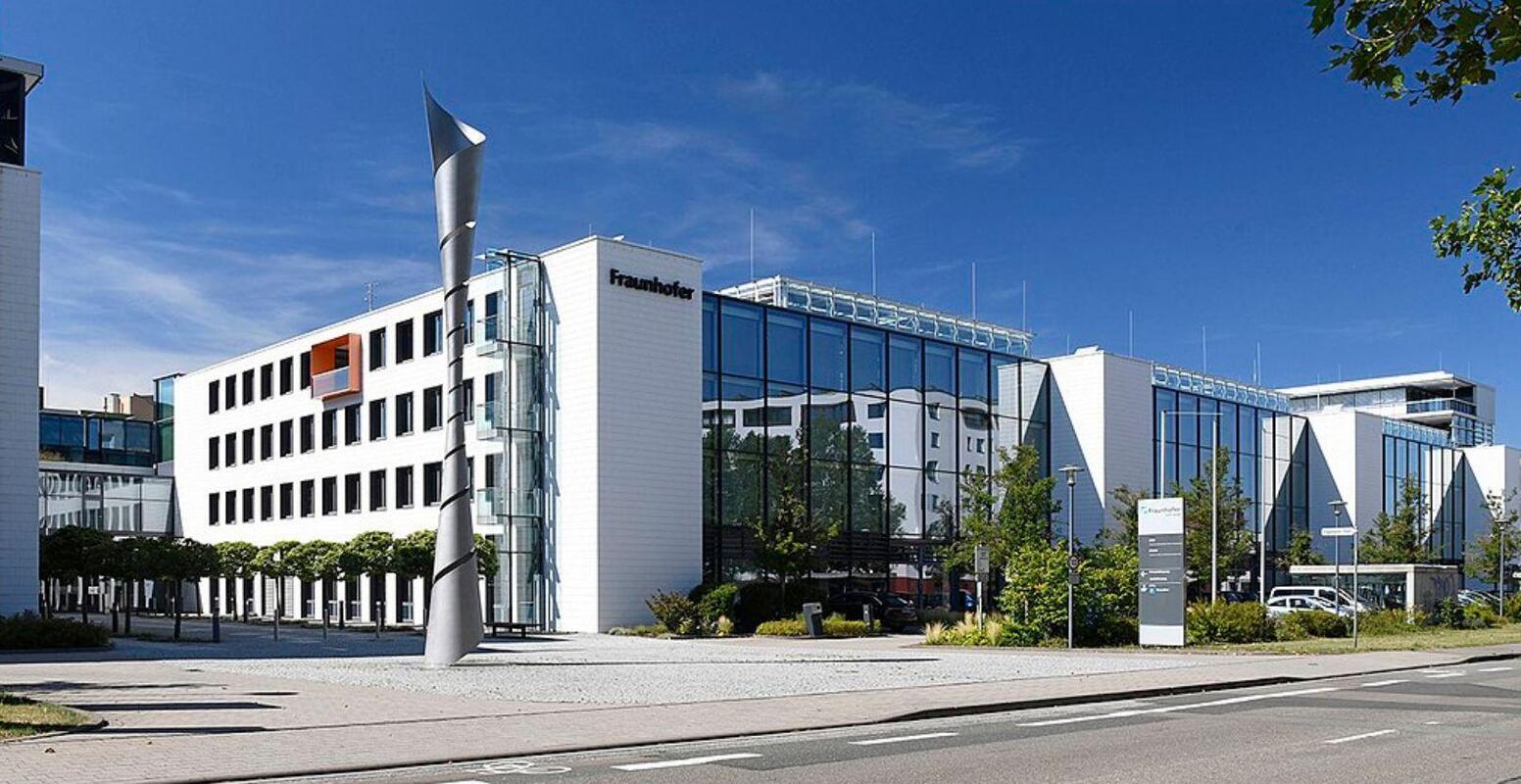
The Fraunhofer-Gesellschaft is a German public institution under the responsibility of the Federal Ministry of Research and Education (BMBF) that consists of 74 applied research institutes, specialized in various areas of knowledge with the common objective of transferring research results to products and services useful for society. It carries out applied research under contract with both the public and private sectors. It currently has 26,600 employees, of which 10,300 are scientific staff. Its annual budget is 2.6 billion euros, of which 2.3 come from research contracting through competitive sources. The basic funding, which is approximately one third of the total, is provided by the German federal government and the lands where the Fraunhofer centers are located.
Their areas of knowledge, always focused on the needs of people and society, are: health and environment, security and protection, communication and knowledge, mobility and transport, energy and resources, and production and service supply.
The Fraunhofer society maintains a worldwide collaboration program, with a presence in Europe, America, Asia, the Middle East and North Africa, always in collaboration with local partners. In Europe, Fraunhofer has collaborative centers in countries such as Austria, Great Britain, Italy, Portugal and Sweden.
Add The New Barcelona Post as your preferred Google source for free
Stay informed with the latest news.
