
Barcelona is a city of film. Not only because the Catalan capital has become on numerous occasions the setting and inspiration for national and international films, but because, for some years now, it has emerged as a first-class audiovisual production epicenter. With big names like Juan Antonio Bayona, Carla Simón, Marcel Barrena, or Dani de la Orden, Catalan films have conquered audiences worldwide. A sweet moment for audiovisuals that the Spanish Film Academy wanted to recognize by betting on celebrating the 2026 edition of the Goya Awards in the Catalan capital.
A quarter of a century after the ceremony left its usual location in Madrid for the first time to travel precisely to Barcelona, the city will once again dress up to celebrate not only a historic edition for the film awards, which reach their fortieth edition, but also the prolific moment of the Catalan film industry. "Twenty-five years after the Goya Awards in Barcelona, we return to a city linked to cinema, known throughout the world that, without a doubt, offers the necessary conditions to host an event of this level, helping us to enhance its international impact and reaffirming the commitment to a plural, open and territorially diverse culture," defended the president of the Academy, Fernando Méndez-Leite.
Next year, the awards will celebrate 40 years of history since the Academy decided to promote this ceremony in 1987, following the format of the iconic American Oscars, to recognize and promote great Spanish cinematographic productions. The institution decided to be inspired by the surname of the globally recognized painter Francisco de Goya, considering him a representative author of Spanish culture, in addition to valuing that his way of conceiving creations was almost cinematographic.
Since its creation four decades ago, the gala has been held mainly in Madrid. In fact, it was not until the year 2000 when the ceremony traveled for the first time outside the capital, and moved precisely to Barcelona. In an event held at L'Auditori —a cultural facility that had opened just a year earlier—, the film Todo sobre mi madre by Pedro Almodóvar won, taking home seven statuettes, such as best film or best director. After these awards in the Catalan capital a quarter of a century ago, the ceremony returned to its place of origin and was held in Madrid until 2019, the year in which it was decided to decentralize. Thus, in recent editions it has been held in several locations, such as Granada (2025), Valladolid (2024), Seville (2023 and 2019), Malaga (2020 and 2021) or Valencia.
For the mayor of Barcelona, Jaume Collboni, it is no coincidence that the gala returns in its 40th edition to Barcelona, but rather it is a confirmation of the "sweet moment" of the Barcelona and Catalan audiovisual sector. A sector made up of more than 4,000 companies, which last year increased their turnover to a record 8.6 billion euros, and which employs more than 42,000 people. The mayor has avoided giving details such as the date —although it will foreseeably be held at the beginning of February, as in recent years— or the location, although he points out that it will be a special edition not only for the Catalan capital, but also for the history of the awards.
The ceremony will be framed in an ecosystem that also has institutions that promote it, such as the Escola Superior de Cinema i Audiovisuals de Catalunya (ESCAC), classrooms through which names like Juan Antonio Bayona or Dani de la Orden have passed. In addition, institutions are also betting on the sector, launching projects such as the future Catalunya Media City, an audiovisual hub that is expected to start rolling at the end of 2028 in the iconic Tres Xemeneies of Sant Adrià de Besòs, or the new XRLAB, in the Palo Alto complex of the Catalan capital.
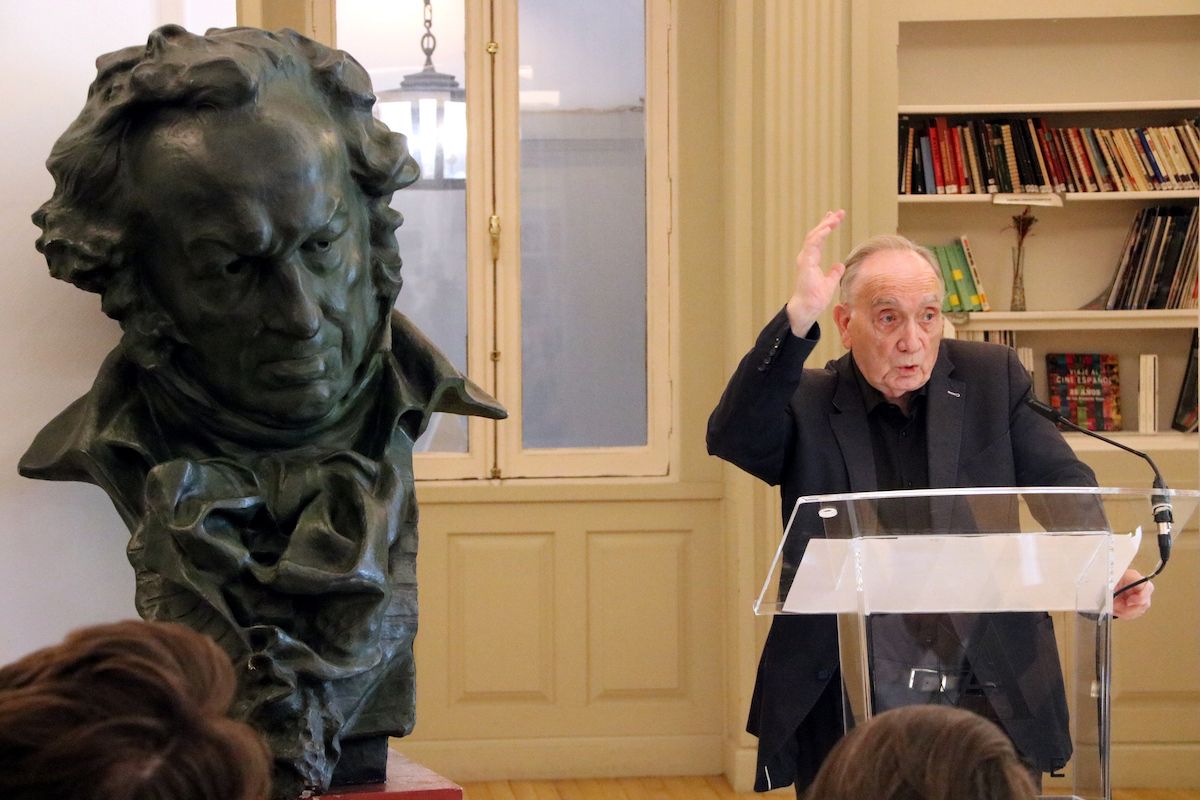
"Spanish cinema looks again to Barcelona, which was the cradle of its beginnings and a great center of film production for decades, at a time of growing recognition of cinema made in the city," Collboni stressed. In the same vein, the spokesperson for the Government, Sílvia Paneque, expressed herself, remarking that the celebration of the gala can mark "a turning point and a great opportunity to position Catalonia as one of the great European poles of creation, production, and cultural innovation."
The president of the Academy also recalled that "Catalan cinema occupies a prominent place in the historical past and the present of Spanish cinematography," since in recent years numerous Catalan productions have won a Goya award. It has done so with successes such as Pa Negre, Estiu 1993, or the blockbusters Casa En Flames or El 47, two films that last year boosted viewers in cinemas and platforms to almost 987,000 people.
The recognition of the Catalan industry transcends borders and occurs not only at a state level, but also internationally, where it has won awards at major film festivals. It has done so with awards such as the Golden Bear at the Berlinale for Carla Simón's Alcarràs, a director who has also competed with her latest production, Romería, in the official selection of this year's Cannes Film Festival. In this same ceremony, the Catalan co-production Sirat, by Oliver Laxe, also won the Jury Prize, shared with Mascha Schilinski's Sound of Falling.
Add The New Barcelona Post as your preferred Google source for free
Stay informed with the latest news.
