The infrastructure, unique in Spain and one of the few of these characteristics in Europe, adds 32 kilometers of fiber optic and allows testing applications of the future 6G generation, such as autonomous driving or remote surgeries, which require high-speed and highly reliable connections
Not so many years ago, the predominant mobile network was 3G. Today, 5G has become a practically ubiquitous technology. But while citizens are still adapting to it, laboratories and companies around the world are already working on the next frontier: 6G. More than a simple speed jump, this new generation of mobile telephony aims to transform the way people, devices and environments connect and interact. For now, however, 6G is not yet a commercial reality, but a line of research, with infrastructures around the world defining the foundations of the future of telecommunications. And it is precisely in this key phase —when it is still necessary to decide what will be possible and under what conditions— when the Universitat Politècnica de Catalunya (UPC) promotes 6GLabNet, an infrastructure designed to advance the development and testing of advanced 5G and 6G technologies.
This new infrastructure, a pioneer in the State and one of the few that exist in Europe, has a clear objective: to create a real environment where these new mobile phone networks can be tested and validated. But it is much more than a computer simulator or a laboratory: it is, in reality, "a private mobile communications network like that of commercial operators, but designed for research," explains Anna Umbert, professor at the Escola Tècnica Superior d'Enginyeria de Telecomunicació de Barcelona (ETSETB) and one of the project's promoters. "The fact of being able to carry out tests in a real environment means that you encounter problems that a simulator does not give you," adds the researcher, from interference from other devices or variable environmental conditions.
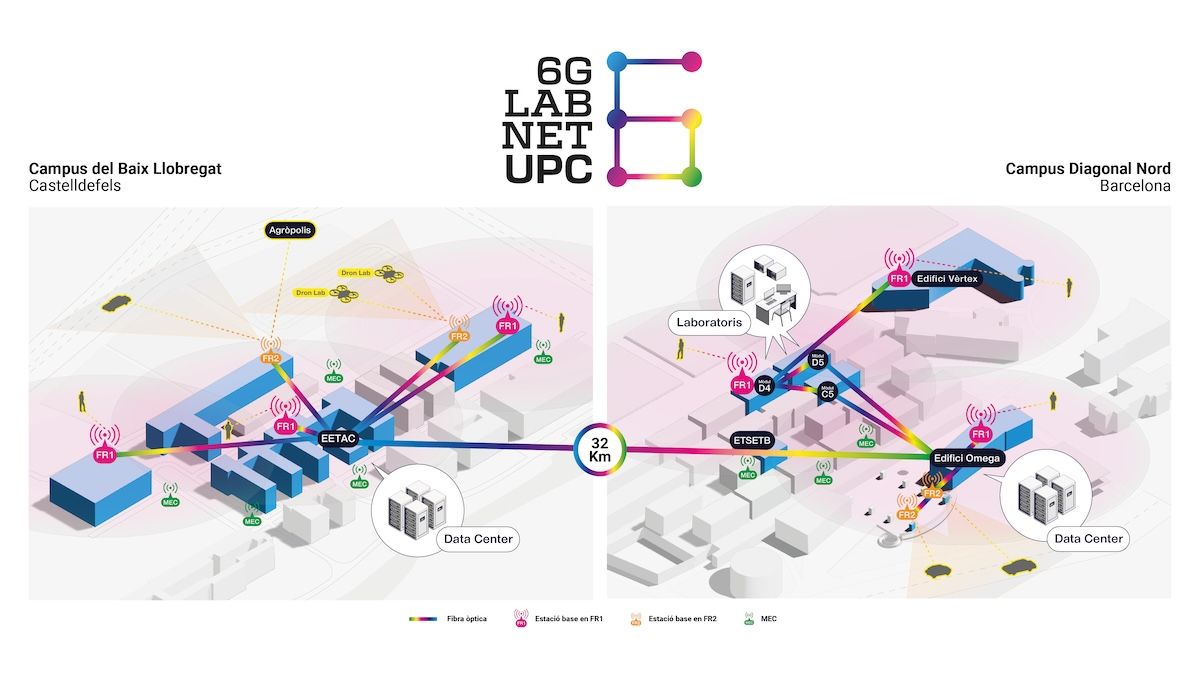
In practice, 6GLabNet consists of a high-capacity fiber optic network that connects two strategic points for the UPC: the Diagonal Nord Campus, in Barcelona, and the Baix Llobregat Campus, in Castelldefels. In total, 32 kilometers of fiber optic, thanks to an infrastructure provided by the Generalitat de Catalunya, in which each campus functions as a data sending and receiving node. The platform is the result of the work of several research groups from the UPC's Broadband Advanced Communications Center (CCABA) within the framework of the 6G-OpenLab (started in September 2022) and ELEGANT (started in April 2023) projects.
Financed with nearly four million euros from the European Horizon 2020 program, the infrastructure uses frequencies reserved for its own use, which allows the university to operate its own mobile network without depending on a commercial operator. It is the university, therefore, that manages the devices, controls the operation of the network and defines the services independently. Thus, unlike the mobile phone networks of commercial operators, conditioned by factors such as the high volume of users, interference or regulatory limitations, the network allows recreating scenarios that closely resemble those of the real world, but with total control of the conditions.
Although the project already opens the door to the 6G generation, it is expected that this new generation of mobile telephony will not be a commercial reality until 2030. Until that time horizon is reached, research centers around the world are working to define its requirements, services and necessary technologies. "Right now we are in the specification phase, a key phase because it will then allow the manufacture of compatible devices," Umbert recalls.
The infrastructure incorporates one of the characteristics that the telecommunications generation of the future will surely have: ultra-low latency. Latency is the time it takes for data to travel from one point to another and back. The lower it is, the faster and more immediate the network's operation. This speed is essential for technologies such as autonomous driving or remote surgery, where any delay can have critical consequences. In the case of 6GLabNet, tests show latencies below one millisecond, which allows for precise study of which applications truly need this extreme speed and to what extent. "If you are performing a remote operation, you need the network to be hyper-fast to ensure you don't put the patient at risk," Umbert exemplifies.
In addition, the network uses millimeter frequencies (FR2), capable of transporting large volumes of data but with a more limited range. "These are among the first outdoor antennas of this type installed in Spain," highlights the researcher, a characteristic that positions 6GLabNet as a unique infrastructure not only at a national level, but also European. Furthermore, the network incorporates integrated artificial intelligence, which allows it to self-configure and optimize its operation in real time without depending on human intervention.
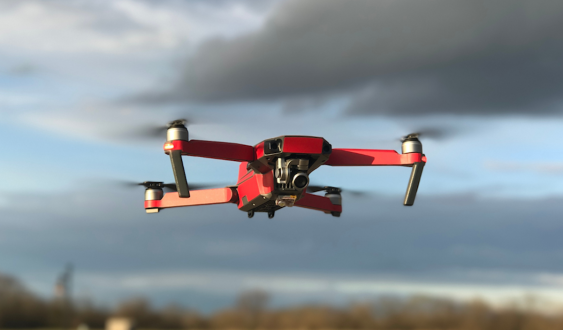
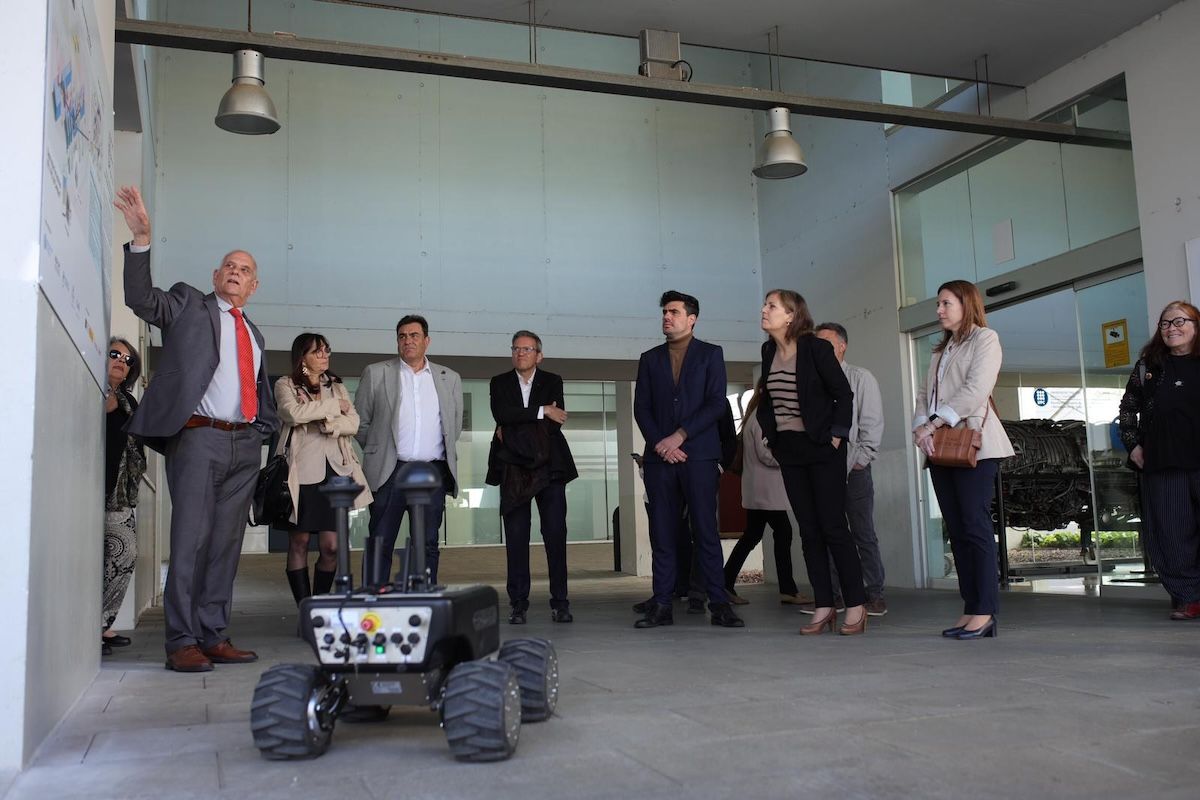
The potential applications of 6G are as broad as they are still uncertain. From autonomous vehicles to agricultural sensors that monitor fields with millimeter precision, the 6GLabNet already serves as a testbed for real-world scenarios. In fact, the UPC is already working on this network with projects such as 6G-EWOC, a series of vehicles equipped with sensors capable of sending real-time data about their environment. In addition, the university also conducts tests with drones in motion in collaboration with the DroneLab —an infrastructure that the center dedicates to these devices—, and agricultural applications in the Agròpolis of Viladecans, with high-precision crop monitoring systems.
But these are not the only applications that the 6G network could have, which could also open new opportunities in areas such as advanced robotics, remote surgeries, or augmented reality or real-time immersive experiences. In fields such as urban mobility, the possibilities are equally unimaginable. "Vehicles connected with these new networks could communicate with each other and with the city's infrastructure to optimize traffic in real time, or even adjust traffic lights or redirect traffic in case they have to let an ambulance pass," Umbert exemplifies.
Beyond technology, 6G is conceived as an evolution that seeks to make connectivity more integrated, efficient, and sustainable compared to 5G networks. "It's about making our lives safer, more connected," Umbert summarizes, with networks that are not only more powerful, but also more energy-efficient and secure.
In addition to academic tests, with UPC research groups already working on different trials in the infrastructure for months, the 6GLabNet is also open to companies and research centers that want to test technologies before their commercial deployment. The infrastructure even allows creating network partitions —the so-called slices— to adapt to the needs of each project.
This opening of the infrastructure to companies and research centers not only has a technical or scientific value. It also falls within a broader debate about the technological future of Europe. In a context where digital infrastructures are dominated by great powers, having its own research and development capacity becomes key for the European Union. In this framework, Barcelona emerges as one of the cities where this innovation takes shape, thanks to the combination of universities, research centers, administration, and business fabric that make possible, among all, infrastructures such as 6GLabNet, and that consolidate it as one of the reference environments for the development of telecommunications.
Add The New Barcelona Post as your preferred Google source for free