[dropcap letter="E"]
A new day begins in Barcelona. We leave behind a 2017 with many moments to engrave in memory, among others the commemoration of the 25th anniversary of the Barcelona'92 Olympic Games. Games that opened the city to the world and gave a clear impulse to the transformation of Barcelona. Today we reap the fruits: Barcelona airport achieves record figures with more than 47 million passengers. An intense year due to the opening of new international connections. New doors that give entry to new projects.
We walk along Las Ramblas, where more than 200,000 people stroll every day. Miró's mosaic evokes a past that is very close to us, but also welcomes all the bags and suitcases that arrive from all over the world to visit the city. In the center, a couple with a small girl takes a selfie to immortalize the moment of a vacation that is coming to an end.
THE MOBILE AND SANT JORDI, TWO WAYS TO EXPERIENCE THE CITY
The crowd pushes us down in a hurry and we end up floating among flower tiles, almost without realizing it. We cross paths with a group of people with Asian features who are running to find transport to take them to the Mobile World Congress. The 2017 edition surpassed the record figure of more than 100,000 visitors. The Mobile is one of the great meetings and congresses that help project Barcelona worldwide every year.
If you are lucky enough to be in Barcelona for Sant Jordi, you will be able to enjoy the quintessential protest festival of Catalan culture. The celebration of the Sant Jordi festival is one of those things that must be experienced, at least, once in a lifetime. An immersive experience among flower and book stalls and a day when love triumphs. A day where it is inevitable to fall in love with Barcelona. The impact and strength of such a unique festival was one of the arguments used by UNESCO in 1995 to declare April 23 as International Book Day.
Surely some of the people who have breathed this atmosphere are those who have made it possible for Barcelona to be one of the 10 best cities in the world, according to the international ranking The World's Best Cities 2018 led by London. In one of the categories, that of place, Barcelona is second only behind Tokyo.
The idyllic climate of Barcelona, one of the factors analyzed in this study, combines with the great variety of colors that make up the puzzle of the Catalan capital: the colors of Park Güell, of Casa Batlló, of the Sagrada Familia, of the Montjuïc surroundings... even the colors of Barça, which attract gazes from all over the world. Monuments and emblematic sites that make Barcelona an original, creative, and unique city.
We accompany a group of young people to Plaça Sant Jaume, the political center and administrative heart par excellence, where the City Council and the Generalitat de Catalunya stand. Curiously, the square was already in ancient times the point where the Cardo and the Decumanus, main roads of the Roman forum, crossed.
"It is admirable how, with the passage of time, Barcelona has managed to integrate the different Gothic, Neoclassical, and Renaissance styles present in the facades, which gives a sense of continuity to history."PIER 01, THE FIRST STONE OF THE HUB
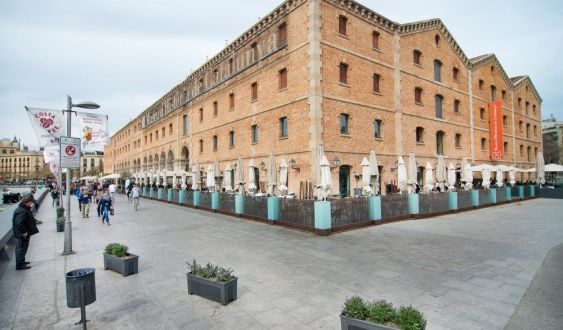
Once we cross Vía Layetana, the Lonja is the antechamber of the Palau de Mar, our final destination. Located in Pau Vila square, the Palau de Mar is a typical 19th-century port architecture building, constructed to meet the trade expectations of the time. It was never used as a commercial warehouse, which was the main intention. During the Olympic Games, it was given administrative use and ended up being the headquarters of the Department of Social Welfare of the Generalitat. A year later, the project for the Museum of History of Catalonia began. Currently, it is home to both the Museum and Pier01, baptized by some as the home of startups.
The gentle wind opens our lungs to strongly inhale the atmosphere of one of Europe's most important ports. The mix of blue tones and the salty aftertaste of the sea evoke an intrinsic force, identity of a way of being and the conviction that the sum of wills leads to the certainty that everything is possible. Like the castellers, who firmly raise the enxaneta to crown the pillar.
Proof of this is the latest televised marathon, focused on research into some of the most serious infectious diseases, where a total of 7.2 million euros was raised through a multitude of acts and solidarity projects.
This conviction is also what led a group of entrepreneurs to propose in 2011 to the then mayor of Barcelona, Xavier Trias, the creation of what has ended up being one of the best European technological hubs: Barcelona Tech City.
THE POTENTIAL OF CATALONIA'S TECHNOLOGICAL ECOSYSTEM
The impulse that Barcelona has had to position itself in the top places of the innovation league, competing with leading cities such as London, Berlin or Paris, is difficult to understand with an exclusively rational logic. It is undeniable that it is a conjunction of factors. One must step into the city of Barcelona to understand it.
And that is why we are here. To understand how, from silence, prudence, and discretion, a project has been built that has exceeded all expectations. Few could have imagined the exponential growth that the startup ecosystem has experienced in recent years. To the right of the two rectangular bodies that make up the Palau de Mar, we find the entrance to Pier01, headquarters of Barcelona Tech City, a digital cluster that encompasses a new generation of technology companies. The building, about 11,000 square meters, houses a hundred startups where almost a thousand people work.
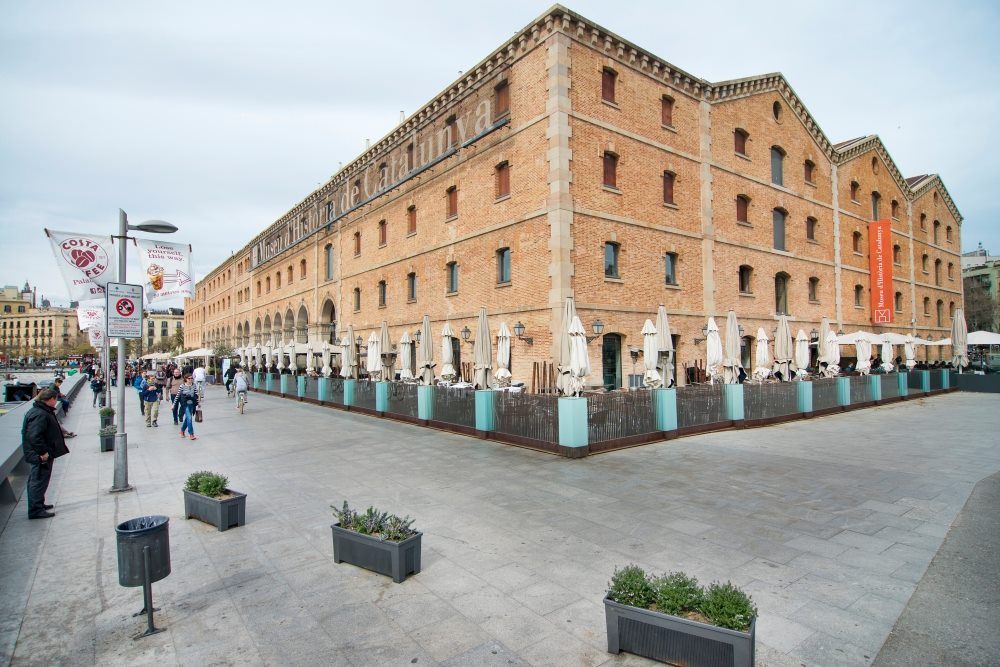
The association, chaired by Miguel Vicente and directed by Miquel Martí, celebrated this year the first anniversary of its star project, this Pier01 where we are now. Few names have been so apt. On the one hand, Pier, as a gateway to the city's entrepreneurial ecosystem and one of the pieces that have helped consolidate Barcelona as a technological hub in the international context. On the other, 01, which essentially states that it is the first but not the last.
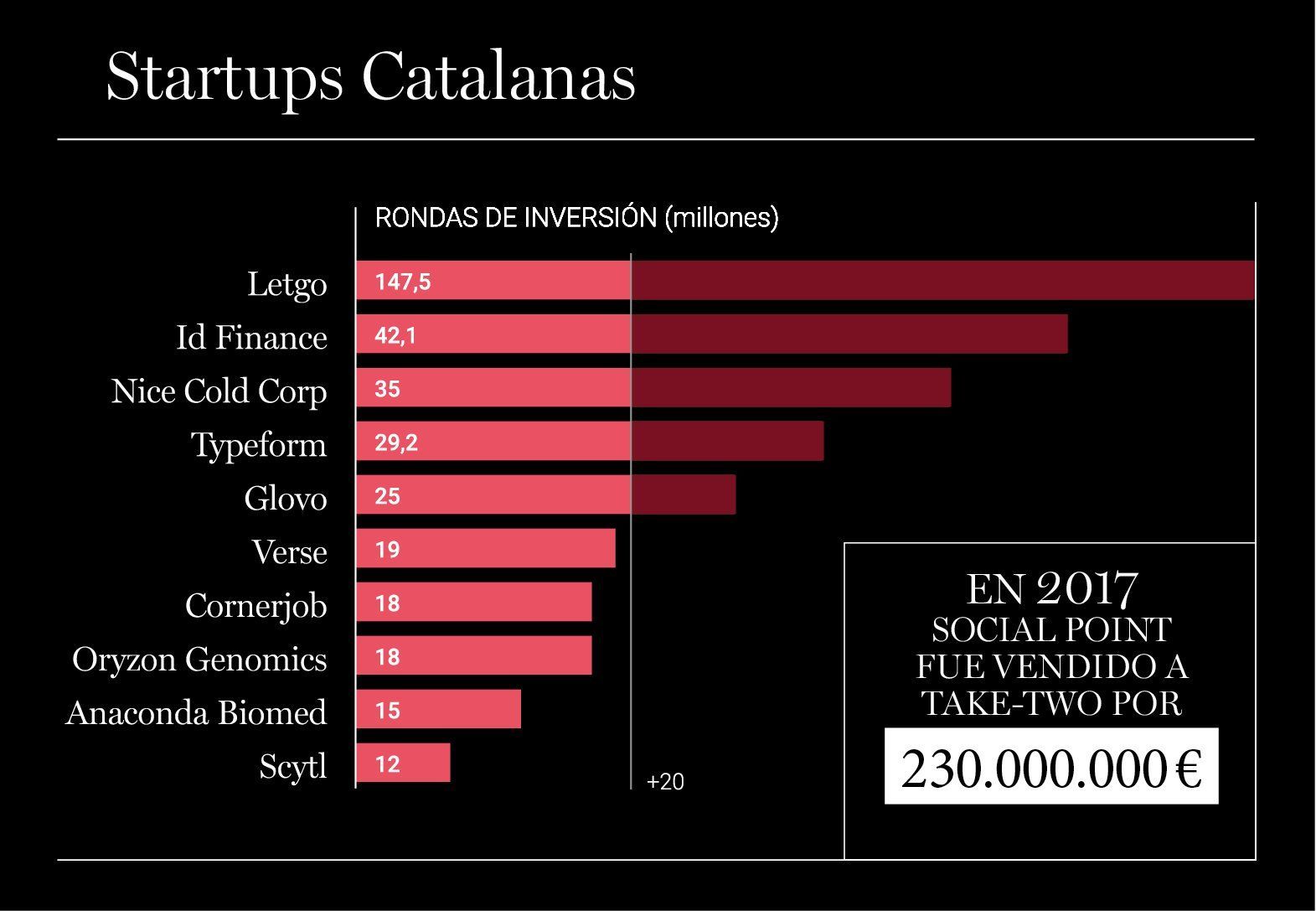
Barcelona generates business opportunities and climbs positions that place it in the European top five with respect to the number of startups, only behind London, Berlin, Paris, and Dublin. This year it occupies the fourth place on the podium in the category of the city where most capital is invested in startups, according to the report The State of European Tech by the international technology investment company Atomico. Barcelona has raised 722 million dollars, about 600 million euros; only the capitals of the United Kingdom (London), Germany (Berlin), and France (Paris) surpass it. This figure shows how initiatives that were believed to be very local have projected themselves internationally with unstoppable force. And it should be noted that this total does not include the acquisitions of Catalan startups that have occurred during 2017, such as the sale of Social Point to Take-two for 230 million euros last February.
"About thirty Catalan projects have attracted investment worth more than 2 million euros in 2017"
You enter the building and beyond appreciating that the spaces are designed with exquisite precision and originality, cared for and thought out to the millimeter, you realize that they are spaces full of illusions, like all those you project into a small suitcase before going on a trip.
Barcelona Tech City has managed to take advantage of concentrating the Catalan technological potential in a single space, with large, totally complementary projects. It is a clear example of public-private collaboration where the Startup Catalonia team from ACCIO or some of the programs from the Mobile World Capital Barcelona also have a place. At the same time, it perfectly combines the presence of leading startups such as Holaluz, Byhours or Tiendeo with innovative projects from large corporations that want to have a foothold in the building. We are talking about the Innovahub from Gas Natural Fenosa, the Payment Innovation Hub from CaixaBank, Global Payments, Samsung, Visa and Arval, or the Metropolis:Lab Barcelona from SEAT. The need to innovate, diversify and be pioneers in the latest technologies has fostered powerful synergies between large companies and startups where everyone seeks what is intrinsic to their DNA: cooperate to grow faster and do business.
We sit in the recently opened canteen with Miquel Martí and listen to future plans to continue climbing positions in this league of cities. We take stock of everything we have and what we still need to achieve, because Barcelona's story is a story in construction. And in these very long conversations, which you wouldn't want to end, you realize that perhaps you just need to slow down a bit, stop and think about everything we have achieved to give it value. Perhaps we have to believe a little all that the rankings say. And not to put on the brakes, but to keep going with the full conviction that perhaps we are on the right track, creating a high-impact Catalan ecosystem.
Add The New Barcelona Post as your preferred Google source for free
Stay informed with the latest news.