The blues had a baby and they named it rock and roll. The great Muddy Waters sang it, and naturally he was right. Arising from the poverty and pain of African-American communities in the United States, this genre is an unquestionable pattern without which the history of modern music could not be explained. Its large number of variants -geographical, stylistic- form a bottomless well so fertile that anyone can perfectly dedicate their life to it without fear of wasting time. The singer Big Mama Montse, active for three decades, points out that the blues "has a specific aesthetic, but apart from that it has a pulsation, a very determined feeling: it expresses the most primitive part of the human being, the desire to connect, to feel alive, to share".
Big Mama is the current president of the Societat de Blues de Barcelona, a non-profit organization founded in 2005 with the aim of promoting the dissemination and knowledge of this music. A mission that is not easy, and not for lack of raw material, but because the major general media are not very inclined to reflect a scene that "is in very good health in Barcelona and Catalonia. In my experience - Big Mama Montse specifies - we are better than before. I remember that fifteen or twenty years ago, when we did concerts with Juan Pablo Cumellas [the harmonica player] we found an audience of very old people who we didn't know if they were exactly blues fans, or people who came to enjoy the concert as they might go to any other performance of whatever genre. Currently I think there are many more people interested in this music, and I suppose that associations, festivals and small festivals... all together we form a strong team".
The content of the 2017 Anuario del Blues - the only printed publication on the genre in Spain, which is precisely edited by the SBB - confirms the portrait that Big Mama points out. Among other contents - in-depth articles, interviews, reports, record reviews... - the magazine reflects that last year 86 festivals and cycles dedicated to blues were held in Spain, 30 of them in Catalonia. All this configures a panorama that the Barcelona Blues Society and its 250 members - almost half of them musicians - contribute to energize on very diverse fronts, starting with concerts. In this chapter, the entity organizes the Blues & Boogie de L'Hospitalet Cycle - which has featured figures such as Keith Dunn, Mark Hummel or Mississippi Heat -, the Primavera in Black festival within the program of the L'Hospitalet Spring Festivals, and two quarterly Blues Thursdays at Casa Golferichs in Barcelona.
The SBB also convenes a biennial award aimed at new formations consisting of four different rewards (recording of a live video, recording of an album, and performances at the Benicàssim and Lleida blues festivals), as well as annual awards that began to be granted in 2015, and which since 2016 bear the name of the legendary bluesman Big Billy Broonzy. The list of distinguished individuals and entities provides new clues about the map of blues in our country. The first year it was received by the association Capibola Blues, linked to the city's Blues School, the Barcelona Blues Festival, and the Blues Nights at Poble Espanyol. In subsequent years, the award was received by the Honky Tonk Blues Bar in Sants (an unmissable spot for lovers of genre concerts) and the singer-songwriter Quico Pi de la Serra for his veteran program T'agrada el blues? ("Do you like the blues?") on Catalan public radio. In 2018, it was awarded in memoriam to Alfredo Papo (1922-2013), tireless music critic and promoter of jazz and blues in the Catalan capital.
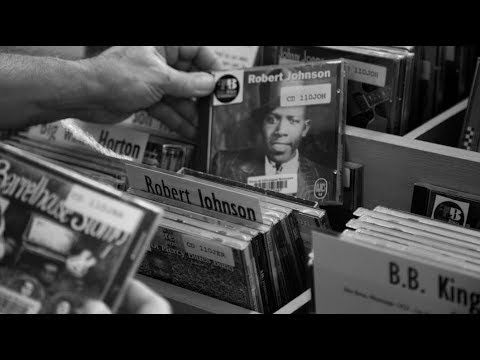
In a third, but no less significant stage, the entity is responsible for an impressive Blues Collection deposited in Hospitalet, a city - as explained by another member of the SBB, Joan Ventosa - "that historically has always championed the blues. In 2005, the Blues Cycle resumed in L'Hospitalet, and within this framework, the proposal to create a specialized collection at the Tecla Sala Library began to take shape." The archive, which opened in 2006 and since the following year has had the endorsement and material contributions of the European Blues Union, currently consists of about 5,000 items, mostly records, but also videos, books, posters, pamphlets, hand programs... The budget of the Tecla Sala Library and individual donations - an example, that of Hugh Lynch, an English fan based in Catalonia who made a significant contribution before he died - feed an important documentary container of black music that also extends to genres such as soul or jazz.
The jewel in the crown of the Blues Collection is the first known publication on the genre in Catalonia and Spain, edited in 1951 by Dau al Set, with a portrait of Big Billy Broonzy created by Joan Ponç"The fund -Ventosa points out- has taken off at a European level. Apart from the production in Spain, people can listen to the blues being made in Hungary, Denmark, England or Italy." The quarterly newsletter Blues a Fons, edited and distributed at Tecla Sala, is also part of this dissemination task. The crown jewel of the Blues Fund is the first known publication about the genre in Catalonia and Spain, edited in 1951 by Dau al Set, with a portrait of Big Billy Broonzy by Joan Ponç. "We made a strong investment to acquire this document, and we are very satisfied," says Joan Ventosa, who also highlights among the most prized pieces of the collection the book by the Englishman Paul Oliver The History of Blues, "a reference work published in the sixties now out of print, and which for blues fans is like the Bible". Photographs -in some cases signed- of the great international blues stars who passed through Hospitalet between 1988 and 1994, and a splendid family tree historical genre elaborated by Miguel Abella and edited by the SBB, are also obligatory stops for anyone who approaches Tecla Sala to enjoy this magnificent cultural heritage.
Add The New Barcelona Post as your preferred Google source for free
Stay informed with the latest news.