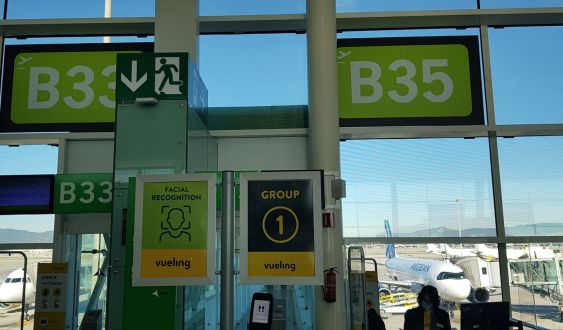
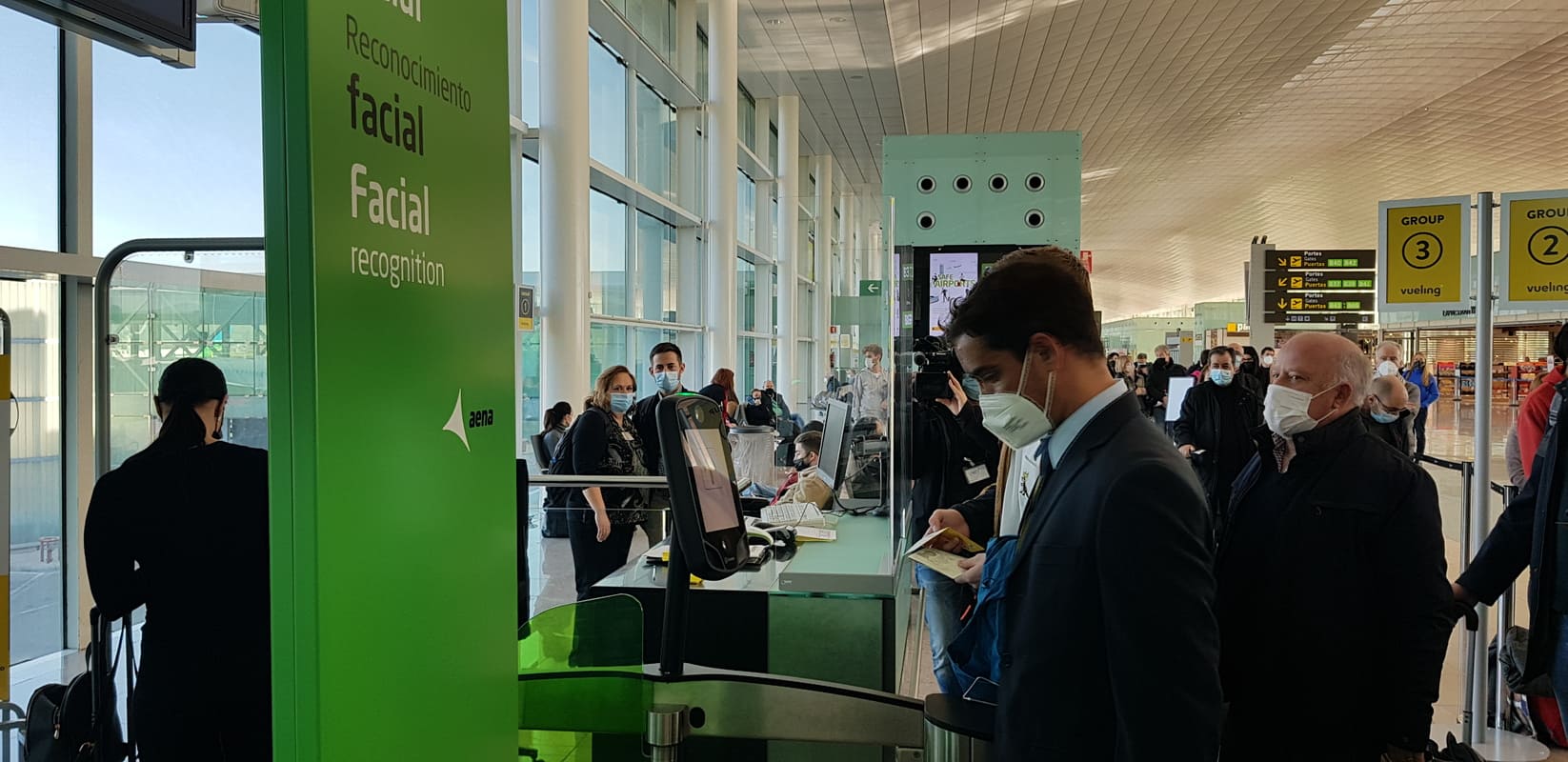
One more step towards modernity. One of those occasions when technology applied to everyday situations shows significant progress. This is what was seen this Wednesday at the most modern terminal of Barcelona-El Prat Airport: a boarding process carried out, entirely, by face.
And it is that T1 has become the first airport building in Europe where an integral boarding process can be carried out using only facial recognition. The system, a joint project of Aena and Vueling, is in a pilot phase. For now and until June 2022, it will be carried out exclusively on the Barcelona-Malaga route, which the airline, the airport's main carrier, operates up to nine times a day.
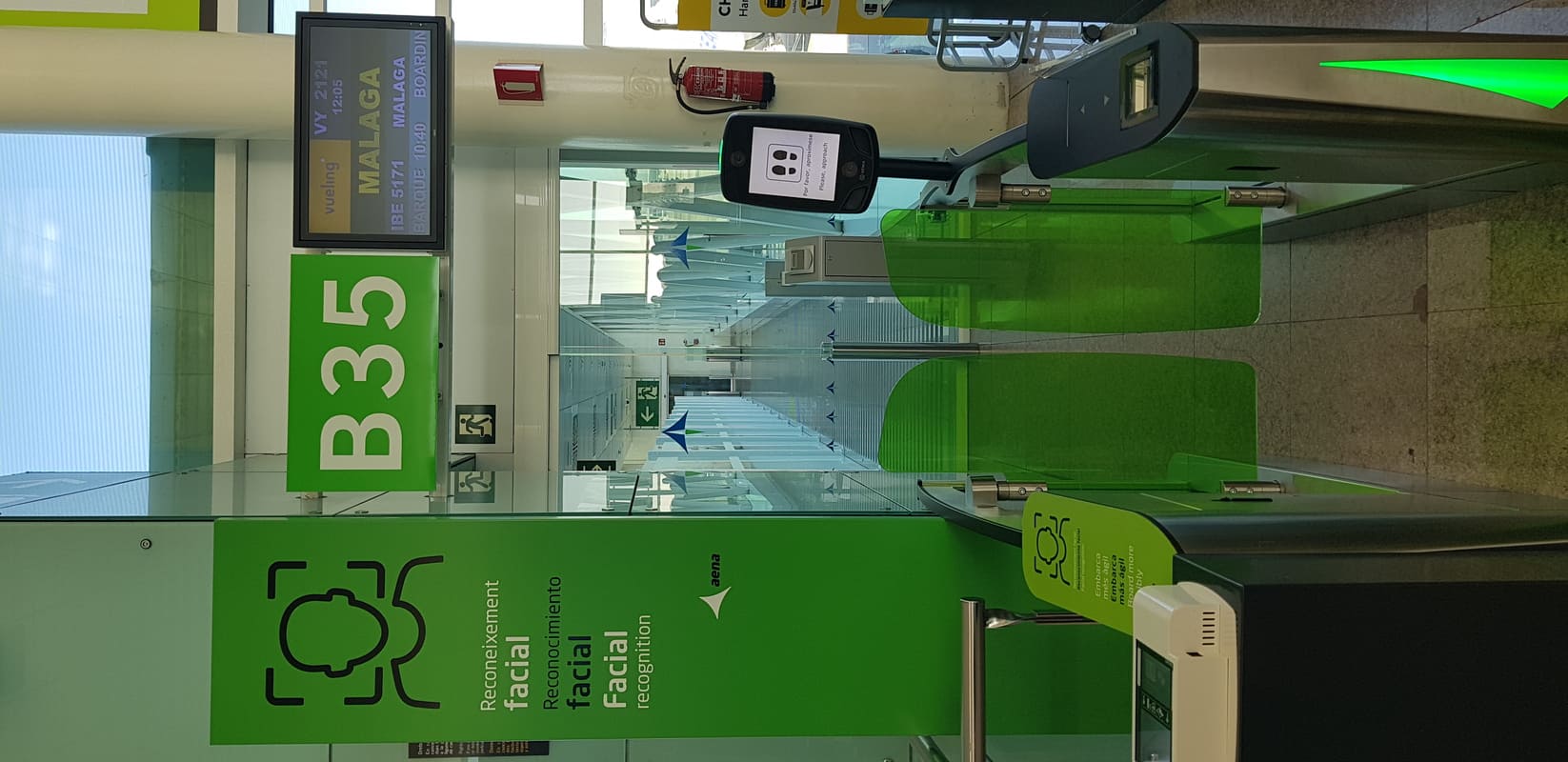
From now on, gate B35, located in the central part of the building, will be primarily dedicated to the boarding of Vueling's Airbuses bound for the main Andalusian airport, as all the necessary systems for passenger identification by facial recognition and the mechanism that allows the traveler to pass once their boarding is approved have been installed there.
In Madrid and Menorca
This last step, that of the integrated system at the boarding gate, has also been tested at two airports in the Aena network: Madrid and Menorca. As in the case of El Prat, in both cases its use has been limited to very specific flights in the testing phase. The difference with Barcelona is that facial recognition is not only applied at the exact moment before reaching the plane, but it is integral: from arrival at T1 until settling into the assigned seat for the flight.
The system, created by five technology firms for the airport operator and the airline, is based on identification technology through the recognition of people's physical and untransferable characteristics.
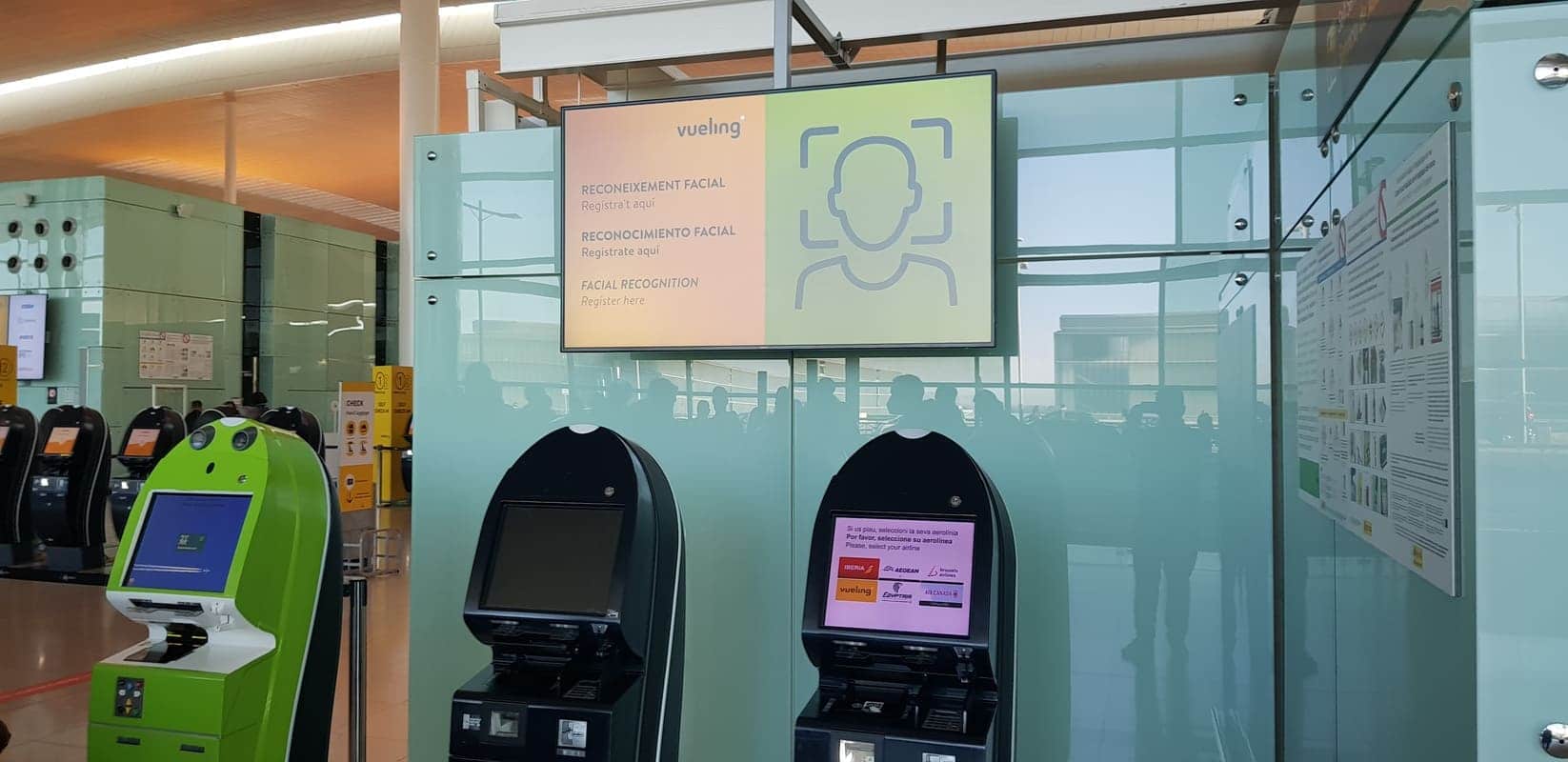
Biometric system equipment has been located in the large departures hall, allowing self-check-in of luggage. Others have been installed at the access to the security filter and, already in the so-called airside area, they have been located at the boarding gate, where the passenger's biometric data will be validated, linking the image of their face or facial features to the documentation, which can be DNI or passport. With this, according to Aena's information, using its application speeds up the process and increases security from when the traveler registers online at home until they catch their flight.
On the other hand, the validation of documentation with biometric data is carried out only once during the pilot program, provided that the passenger gives their consent for it to be so on subsequent flights.
Operator and Operator
"This project is framed within Aena's Strategic Innovation Plan. It is the last step in a set of actions led by the company since early 2019 and aimed at testing the use of biometric systems at different points of the airport," explains Amparo Brea, Director of Innovation, Sustainability and Customer Experience at Aena. "We are convinced that this technology will significantly improve the passenger experience at our airports, and projects like this allow us to advance in its deployment. We provide passengers with tools that allow them to pre-process part of the document checks currently carried out in airport procedures, so that their passage through the airport is safer, smoother, and more comfortable," she concludes.
On the part of the airline operator, Calum Laming, Chief Customer Officer of Vueling, is satisfied that the Barcelona-based airline has become the first in Europe to offer a complete contactless travel experience thanks to the use of biometric technology. "Being able to offer such a complete biometric experience confirms our desire to improve our customers' experience at the airport and, furthermore, promotes a much more agile and modern flow," says Laming. "This is a project with a high technological component, a key element in Vueling Transform and in our digitalization strategy to improve service and for customers to manage their flight with greater autonomy and flexibility."
Five technology firms
Vueling and Aena's partners in this facial recognition project are five:
- Indra has been in charge of the platform in this pilot plan that allows the integration of the equipment and the different systems that make up the solution. Thanks to this, the collection of identifying and biometric data can be guaranteed at the enrollment kiosk (entering data and image) and CUSS, filter and boarding gates for their processing and integration with Aena's systems, ensuring correct operation of the complete solution.
- Materna IPS is in charge of the biometric self-bag drop system. An image of the passenger is taken and contrasted in real time against the database of those subscribed to the biometric program. In this way, it is able to identify if that passenger is part of the program, allowing them to check their luggage themselves at that moment.
- Easier has integrated biometric devices and their middleware (software that sits between the operating system and the applications that run on it) for enrollment and verification at each control point through the supply of dual equipment (common self-service kiosk and biometric registration on the same device), as well as electronic gates with the most precise "uniqueness detection" of passengers from entry into the security zone to boarding.
- Idemia provides high-quality facial image capture at enrollment kiosks, the electronic gate for airside access, and the electronic boarding gate. Passenger identification will be carried out using its biometric engine, recognized in the market as one of the best for its high precision.
- Mobbeel provides the mobile application that allows travelers to enroll their biometrics and verify their identity through scanning an ID or passport with NFC and a selfie with liveness detection to verify that the person is who they claim to be. Pioneers in mobile biometrics, the company has been offering digital identity verification solutions for over 12 years.
Add The New Barcelona Post as your preferred Google source for free
Stay informed with the latest news.