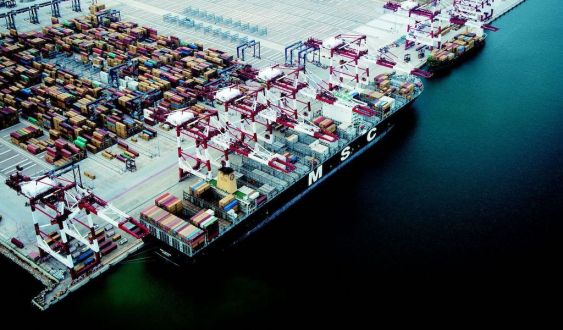
The United Kingdom was the largest foreign investor in Spain last year, with a balance of almost 5 billion euros and the creation of more than 235,000 jobs. In the first half of 2020, it ranked second, with 1 billion euros. If we look back, the bill rises to 56 billion euros in bilateral business between the United Kingdom and Spain over the last 25 years, with 12.695 billion in imports from the United Kingdom and 18.978 billion in exports from Spain. In Catalonia, the United Kingdom has invested a total of 165 million euros this year, being one of the main destinations for British investment in the State, along with Madrid and Castilla y León.
[subscribe_newsletter_esp]
Given these figures, exporting companies continue to want to operate in the United Kingdom, despite being aware that Brexit will increase economic and administrative costs. "The more relationship there is between people, goods, and capital, the more interested we will be in understanding each other with the United Kingdom and the greater impact its departure from the European Union will have," explained the national director of the British Chamber of Commerce, Eva Prada, in a webinar organized by Banco Sabadell to answer some of the doubts that companies have regarding the imminent end of the Brexit transition period at the end of December.
A few weeks before this outcome and without yet knowing whether a trade and security agreement will be reached between the United Kingdom and the European Union (EU), the financial institution wanted to accompany companies this Friday with a webinar designed to help them understand the role of customs in Brexit and to understand how it will affect their commercial exchanges with this country from January 1. More than 1,400 Spanish companies have registered, a fact that highlights the importance of this issue for many sectors. The main questions that have arisen have been related to the main technical impacts in the field of customs and logistics, and the actions that companies must undertake to minimize the impact on their sales in the United Kingdom.
For the director of International Solutions at Banco Sabadell, Carlos Dalmau, this webinar aimed to provide "many high-value tools for Spanish companies to solve the problems" that may arise soon. Therefore, after this Friday's session, another one will be organized in February, when the United Kingdom will officially be a third country for European companies and commercial transactions will have already begun in the new customs reality.
Spain, one of the most affected countries
In the webinar, Prada highlighted that Spain will be one of the countries most impacted by Brexit, considering the magnitude of the commercial relationship with the United Kingdom. The most affected economic sectors will be food and beverages, automotive, and pharmaceutical, adding the logistical difficulties they will have to face to cross the border. The main concern for administrations and companies is the queues that may occur at customs when the transition period ends, starting next year, after some have already begun to form.
Specifically, the fact that the United Kingdom becomes a third country and is not part of the EU will increase the requirements for certifications, declarations, and documents at customs, with more exhaustive controls, which can lead to longer processing times that were previously done more easily and quickly by sharing the same market. For Prada, it will be essential to seek advisors and learn about the best practices of other companies, issues that he pointed out organizations like chambers of commerce are constantly working to resolve.
Analyze administrative capacity
Also participating were the director of the Customs and Special Taxes department at the State Tax Administration Agency (AEAT), Pilar Jurado, and a representative of the General Sub-directorate of Customs Management, María González, moderated by the president of the Customs Foundation, Alejandro Arola. Jurado emphasized that, whether there is an agreement or not, companies will still have to carry out customs procedures, and assured that the administration is working to ensure that "administrative costs are minimal and to minimize queues and delays." "We have a challenge here," she stated.
Given the new reality that will come next year, Jurado has indicated that companies will have to analyze what administrative capacity they have to carry out all the new procedures they will have to face to operate in the United Kingdom, emphasizing that they are not very complicated, but require specific programs. In this sense, he has emphasized encouraging companies to apply for the EORI ---European Economic Operator Registration and Identification number for operators who import or export goods within or outside the EU--- before the end of the year, especially for those that have continuous movements with the United Kingdom. Jurado has explained that they will also be able to apply for it next year, but that it is advisable to do so before to avoid losing time or suffering delays.
Add The New Barcelona Post as your preferred Google source for free
Stay informed with the latest news.
