
For the last decade, or more, marketing has been obsessed with growth. More content, all the time. An industry obsessed with turning craft into consumption, consumers into data, and, in the process, destroying any semblance of trust.
We were sold the idea that everything had to scale exponentially, that monopolies were inevitable, and that private data was the new currency. And, somewhere along the way, we started to confuse scale with success. Not everything is meant to scale. In fact, many things get worse when they do. I think we are reaching the limit of wanting to maximize everything. Generation Z looks skeptically at brands that try too hard to create connection. And now, with AI, the line between real and manufactured is becoming increasingly difficult to ignore.
This is not an anti-AI argument. It is an anti-fake argument.
The next chapter of luxury marketing will be less about reaching everyone and more about meaning something to someone. People know when something has been designed to look real rather than actually being real. And increasingly, I think they are choosing authenticity. Because authenticity requires judgment. It is born of craft, imagination, effort, and a genuine passion for something you care about. And many of the things that make something human are precisely the most difficult to scale.
Let's look at the return of things that seem increasingly scarce: nature tourism, stargazing, long weekends without coverage, everything analog, specialized knowledge, and IRL experiences that simply don't make sense at scale.
"The eclipse captivated people of all ages and made us stop, look up, and contemplate the sky. It didn't need to be published for it to have happened. You just had to be there."
One of the moments this summer that most validated my thesis was the eclipse. It was a moment that captivated people of all ages and made us stop, look up, and contemplate the sky. It didn't need to be published for it to have happened. You just had to be there. I have spent my career building communities and there is a difference I return to again and again: the difference between access and experience. Private home exchange clubs, like ThirdHome, are an interesting example.
I recently stayed at Juliet's house in Notting Hill with my mother and little ones. For a week, we experienced London in a completely different way than we would have in a hotel. We walked to the neighborhood shops. We returned to the same door. We started living at the rhythm of the neighborhood, we learned the bus lines. And there was something else: three generations sharing a house, living together in a way that a hotel can hardly make possible. It reminded me of the best of Airbnb before it became a mass platform obsessed with growth. There's nothing inherently wrong with scaling. But some experiences, and some brands, lose their magic when they are designed to scale, instead of for the people they want to make happy.
That's why I believe authenticity is becoming the new luxury. Not because it costs more, but because it is increasingly rare.
A week ago we went to Oller del Mas, a family winery in the Montserrat valley, where they have created a small collection of designer cabins among the vineyards. The marketing does little justice to the experience, and perhaps that is precisely part of the point. We toured the vineyards in a buggy with Alfonso, the agritourism director, who told us about the vines, the Mediterranean soil, and the particular conditions created by the Montserrat landscape and its strong winds. For the vineyards to remain organic, they have had to adapt to their environment: to the heat, to the lack of rain, and to increasingly unpredictable seasons.
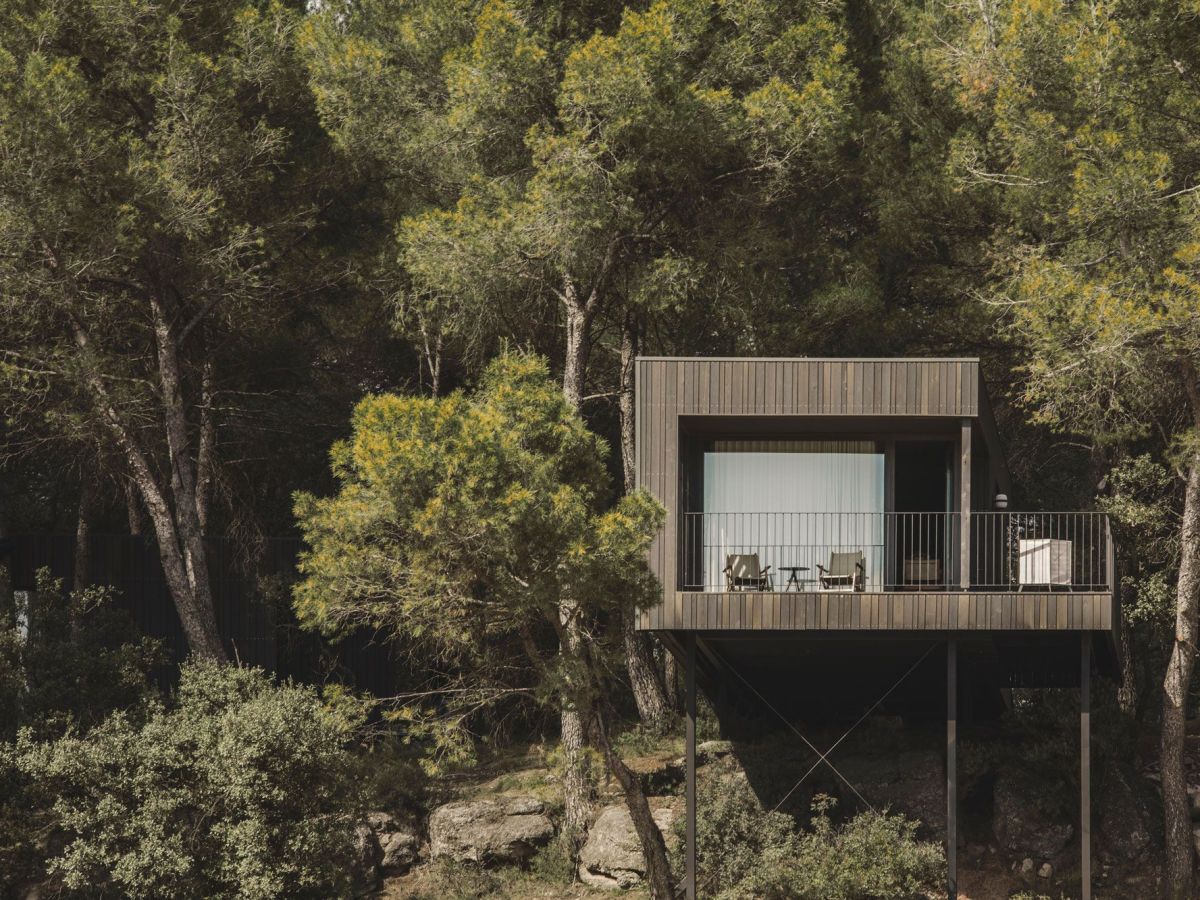
The vines are not optimized for comfort. They adapt to their environment.
The cabins are very well thought out: lush but minimalist, with wrap-around terraces, natural materials, and forest views. Even the straw hats offered to guests seem to represent the kind of luxury that interests me: useful and consistent with the place. But the design never imposes itself on the landscape.
Hospitality has become a good place to see that tension between something truly distinctive and something that has simply been designed to look like it.
The home exchange model works for the same reason. Beneath that quiet luxury is a fundamentally human experience: you are living in someone else's home and you trust that person to take care of yours in return. The value is not simply in the aesthetics of the house or the cabin. It is in the access. Trust is what gives it meaning. The sense of belonging is what makes you want to come back.
Add The New Barcelona Post as your preferred Google source for free
Stay informed with the latest news.