The paradigm of current society tends to reduce the human constitution to the physical body, and we forget about that place where emotions or our deepest longings live. The growing trend towards mechanization in all human spheres, the disconnection from natural rhythms, the accumulation of knowledge thought by others without learning to develop individually living thought, the almost robotic attention presented by conventional medicine, the diversity of toxic substances in the food industry, etc., present us with a scenario where the human being has lost importance. We live in a society that tends towards dehumanization and consequently to selfishness; we spend more time consuming screens than sunsets. It is in this scenario that imbalances such as depressions, anxieties, insomnias, chemical hypersensitivity syndromes, eating disorders and allergies, cancer, ADHD (attention deficit hyperactivity disorder), or the so-called digital dementia and internet addiction that psychiatrist and neuroscientist Manfred Spitzer talks about, appear and become established.
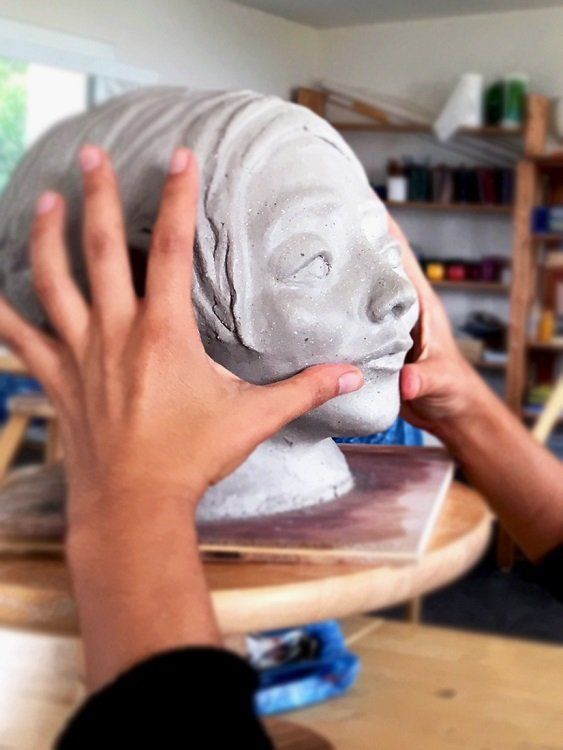
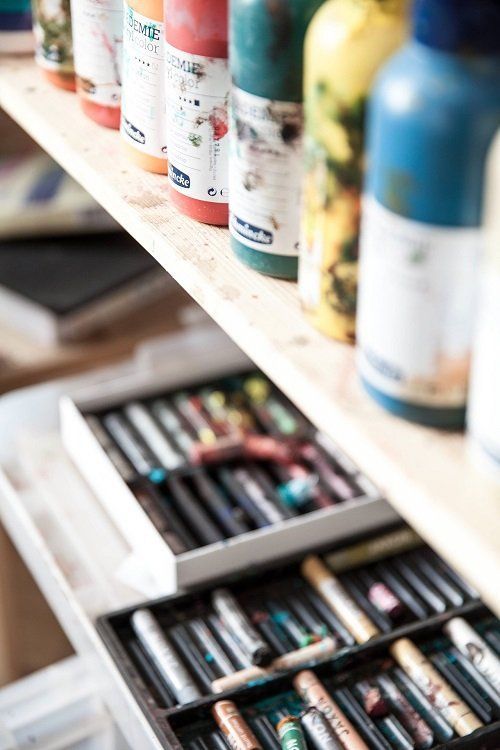
In this type of therapeutic work, the process is more important than the result; it is here where the work of art is no longer the canvas but the human being himself modeling himself in the search for harmony.Art gives us back the human condition, reconstructs the path towards the meaning of being human. We all carry the longing for freedom, the impulse to love, and the capacity to create; we are all artists! We have the commitment to allow this to be so, to look at that invisible part that lives within us, to know it, to transform ourselves and, consequently, society. Art is not a distraction, nor an exclusive luxury for a few, but a human necessity; we only need to recognize ourselves as creative beings, and this is where art therapy plays an important role as a means of diagnosis, self-knowledge, and change. Artistic therapy recognizes the power and necessity of the creative dimension. It uses different arts, such as painting, modeling, sculpture, movement, and music, to build a bridge to the individual's interior, facilitating not only expression but also the impression, in the soul, of what may be missing. The world of colors is the direct expression of the emotional world; conscious work with color, as a relative of emotions, will have an effect on physiology, harmonizing what has lost its balance. Through art therapy, one can influence physical, vital-psychological, mental, and intellectual functions. In this type of therapeutic work, the process is more important than the result; it is here where the work of art is no longer the canvas but the human being himself, modeling himself in the search for harmony.
The healing effect of artistic creation is made possible by the fact that, in artistic activity, laws are evidenced that we can observe and perceive in people themselves, for example, as elements that strengthen or weaken, unite or dissolve, stimulate or calm, that shape images or listen; and that we also find in pathological processes as imbalances. Patients are accompanied and encouraged, through therapies, to actively and creatively intervene themselves in the pathological process and to exploit their access to healing resources. In this way, the process of shaping one's own destiny, and the challenge posed by illness, is one of the central themes in the course of art therapy that will serve as the basis for healing.
In this way, art therapy accompanies medicine, pedagogy, and social therapy. Therapy through art offers inpatient and outpatient care in clinics, rehabilitation centers, special health and education institutions, social therapeutic institutions, in the penal system, and in the context of traumatic situations. In some European countries, health insurance funds cover the cost of medically prescribed art therapy. It also acts as social medicine in groups of people with a common goal, such as work teams, to improve the quality of relationships, develop trust and true communication, in conflict resolution, and in awakening creative capacity.
In some institutions in Barcelona, art therapy is applied as an active part of treatment, for example, at the Sant Joan de Déu hospital where it is a valuable tool for understanding children. It is also present at La Santa Creu i Sant Pau within the medical oncology services and the Palliative Care Unit. There are several independent initiatives supported by state entities, such as the case of the Truth, Memory and Reconciliation Commission (for victims of the armed conflict in Colombia) supported by the Catalan International Institute for Peace (ICIP) together with the Barcelona City Council, and in psychotherapy there are centers that accompany children, young people and adults giving priority to the resources offered by art, such as the Psique i Art Psychotherapy Center. Art therapy is, then, a valuable element of self-knowledge, of individual and collective transformation. It is a space for encountering the divine that lives within us.
Add The New Barcelona Post as your preferred Google source for free
Stay informed with the latest news.