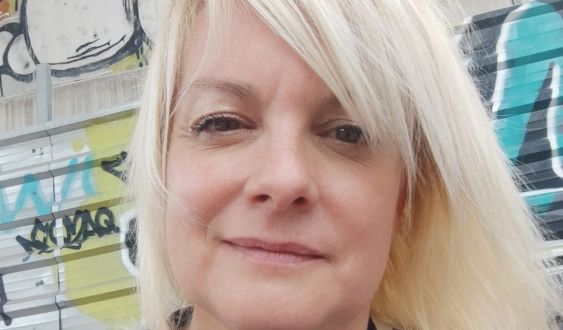
"My greatest gift is that my lyrics reach every person who wishes to travel without moving their feet from the spot. Receiving the feedback from readers who make me grow, enrich myself, and learn every day. Making people feel, dream, love, and hate; offering the reader the life of the characters I have created and that they can enjoy them as I do when writing about them. In this sense, my greatest wish is that, beyond reading my novels, they remain in the heart of whoever discovers them." Convinced that there are always moments to celebrate life and this is one of them, the writer Angelique Pfitzner sips a little from her glass of cava while enjoying a peaceful mid-morning at the Bar.
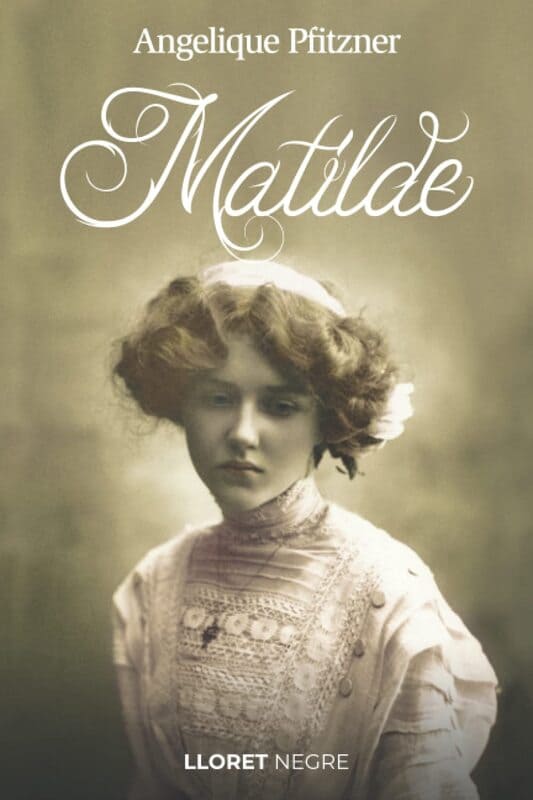
Born in Munich to a German father and a Spanish mother and delighted "to absorb life and not see time pass without being able to enjoy it," the author, with a scientific background in pharmacy, celebrates with a new title, Matilde, the little more than ten years since her acclaimed debut with Compulsiva obsesión, followed by titles such as ELDHA, caso cerrado, the collection of short stories Big Bang 13 or Los niños del éxodo, in addition to several short stories, awards, and initiatives such as programs on local radio and television addressing literary topics.
"With Matilde I have stepped out of my comfort zone, which is crime novel, publishing a historical genre book," explains the author about a work that covers approximately the last century of Spanish history, and which she is presenting these days. "It narrates the life of a 98-year-old woman who lives in a residence with 24 other elderly people and, as she says: Old age is not a disease, but a state that we will all pass through if we add years. It is the story of almost a hundred years of this country in the skin of a generation of wisdom and silence that we cannot forget." In parallel, the author does not neglect her work as promoter and curator of the veteran crime novel contest Lloret Negre, which celebrates a new edition on the 24th and 25th of this month.
"I feel like an observer of the world, of its injustices, inequalities," she explains about her need to write, understood and lived as "the need to pour onto pages and chapters everything that shakes me and I cannot shout." And she assures: "Every novel I have written is a faithful portrait of reality. Each one is different and reflects something of us, humans."
What they can never take away from you
Proud "to continue learning with literature, to set myself challenges and to leave my comfort zone," the parishioner loves the idea of "creating life, characters that inhabit a parallel world and are as real as us," through writing with which she feels happy and with which, "little by little I am making a name for myself."
--- I hope and wish to learn all my life from this humble and at the same time extraordinary craft that is literature, ---she concludes.
And, in this reflection, she includes what, for the writer, is "the obligation, on the part of each one of us, to ensure that culture, education and values are protected and cared for. The three main pillars for society, present and future. It is our obligation to protect that force that will be our heritage," she reflects on the role of adults as transmitters of intangible heritage to build a better tomorrow. "To young people I always offer the same reflection: In life they can take away your house, your job, your car, your partner, but values and studies, learned culture and education, no one can take them away from you. They are ours. Of each one of us."
Barcelona and its essence, the Barcelonians
"Since I came from Germany, many years ago, this city is my second home. I enjoy its streets, its people, the friends I have and of course its life, its energy, its hospitality. Barcelona is a very important part of me and my family," explains the writer, who loves to get lost "in its municipal neighborhood markets, listening to children, the conversations of older people from whom we have so much to learn." Some of her urban discoveries are reflected, as it could not be otherwise, in her work, "like the ruins we find on the Collserola road, which belong to the old Barcelona casino, the largest there was in Europe, and which appears in Matilde."
She has no shortage of words of love for Barceloneta, of which she delights in remembering the shops by the sea, the promenade of yesteryear, "the smell of salt and the Mediterranean" or passing by the Fahrenheit 451 bookstore, on La Sal street, a place that once housed the Negra y Criminal of the beloved Paco Camarasa, "where, under the floor, and through a glass, Roman ruins can be contemplated."
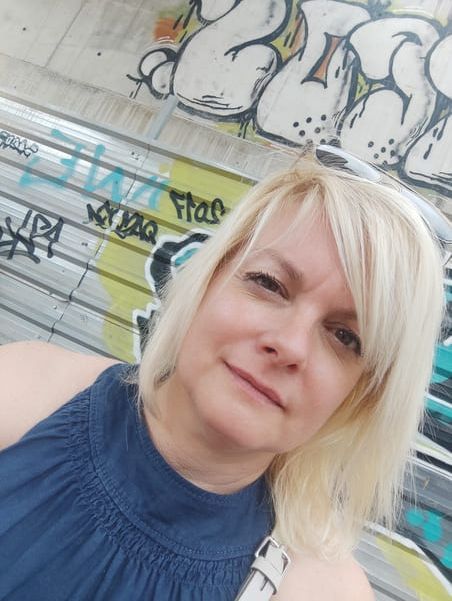
Pained to see "a dirty Barcelona, with very little maintenance," the local laments that increasingly high taxes "are forcing many people to move to the periphery. This leads to a large number of foreign businesses that dress the streets with a mistaken personality. Everyone has the right to find their home and have opportunities, obviously, but, of course, fair and equitable for everyone. And we must not forget the Barcelonans, who are the essence of our city," she concludes, finishing her glass of cava.
--- Well, the essence of this Bar, in addition to good conversations, is its unparalleled culinary repertoire. We have tapas, portions, sandwiches, sweet, savory… whatever you need for a great lunch.
Angelique Pfitzner assumes a thoughtful expression: "I have no preference. Normally what I choose depends on how much of a hurry I'm in, how hungry I am, the heat or the cold, and also my mood."
After a few seconds, her face breaks into a knowing smile, before blurting out:
--- I let my brain decide what it feels like having. I am a free spirit!... ---and she laughs.
Add The New Barcelona Post as your preferred Google source for free
Stay informed with the latest news.
