There are stories that are best told in the first person. More than 4,000 years ago, in 2250 BC, Iny became the favorite explorer of Pharaoh Pepi I, during his reign in the Sixth Dynasty of ancient Egypt. A man who made up to six journeys to distant lands with his ship and returned with perfumes, oils, silver, and other materials from the lands of the Levant. A man who rose from poverty and achieved the equivalent of the noble titles of the time. Who earned the respect, esteem, and friendship of three pharaohs: Pepi I, Merenre I, and Pepi II. A man who was buried in a tomb full of gifts and writings and who —thanks to the work of great Egyptologists— is now exhibited at the Egyptian Museum of Barcelona, accompanied by an interactive room from which the recreation of the explorer's voice guides the viewer to discover the secrets of the life of Iny, the pharaoh's explorer.
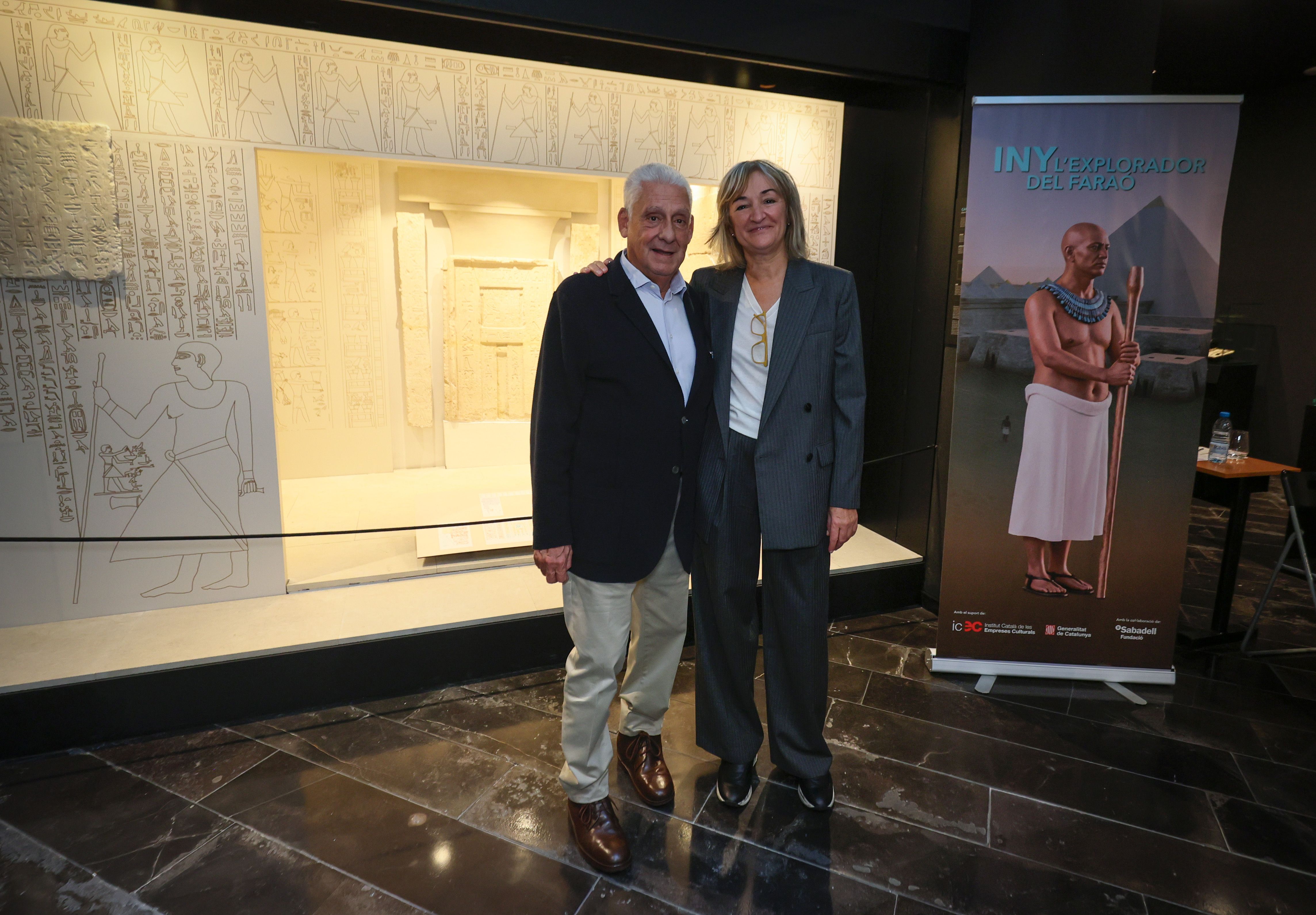
This story begins almost thirty years ago. Jordi Clos, hotel entrepreneur and patron specialized in Egyptology, bought the first piece of the entire collection that was inaugurated this Wednesday at an auction in London. It was a false door stele from an Egyptian tomb and contained inscriptions about a character then practically unknown. That acquisition was the starting point of a decades-long process. Since then, the work of Egyptologists, experts, and museum staff has been to try to unite all the possible pieces of the puzzle that is Iny's life. Auctions, replicas, businesses, and above all, a lot of will have given life to this new collection of about sixty objects that narrate Ancient Egypt through the main gaze of an explorer, as Iny was.
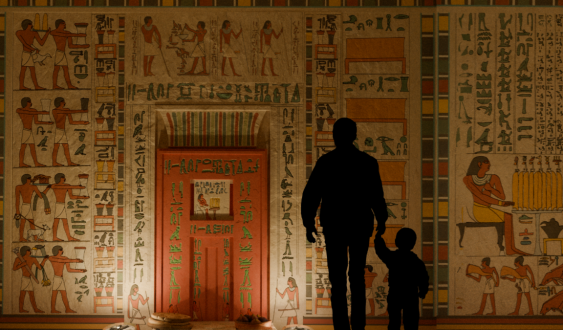
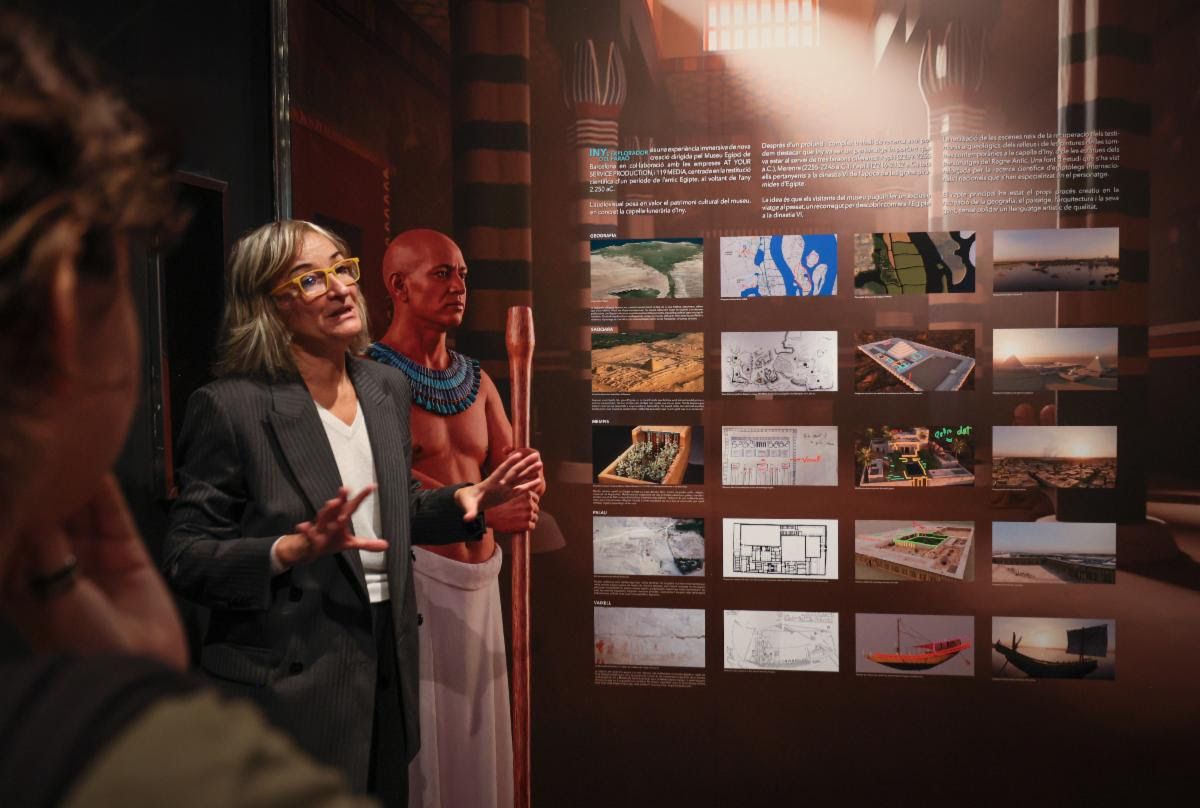
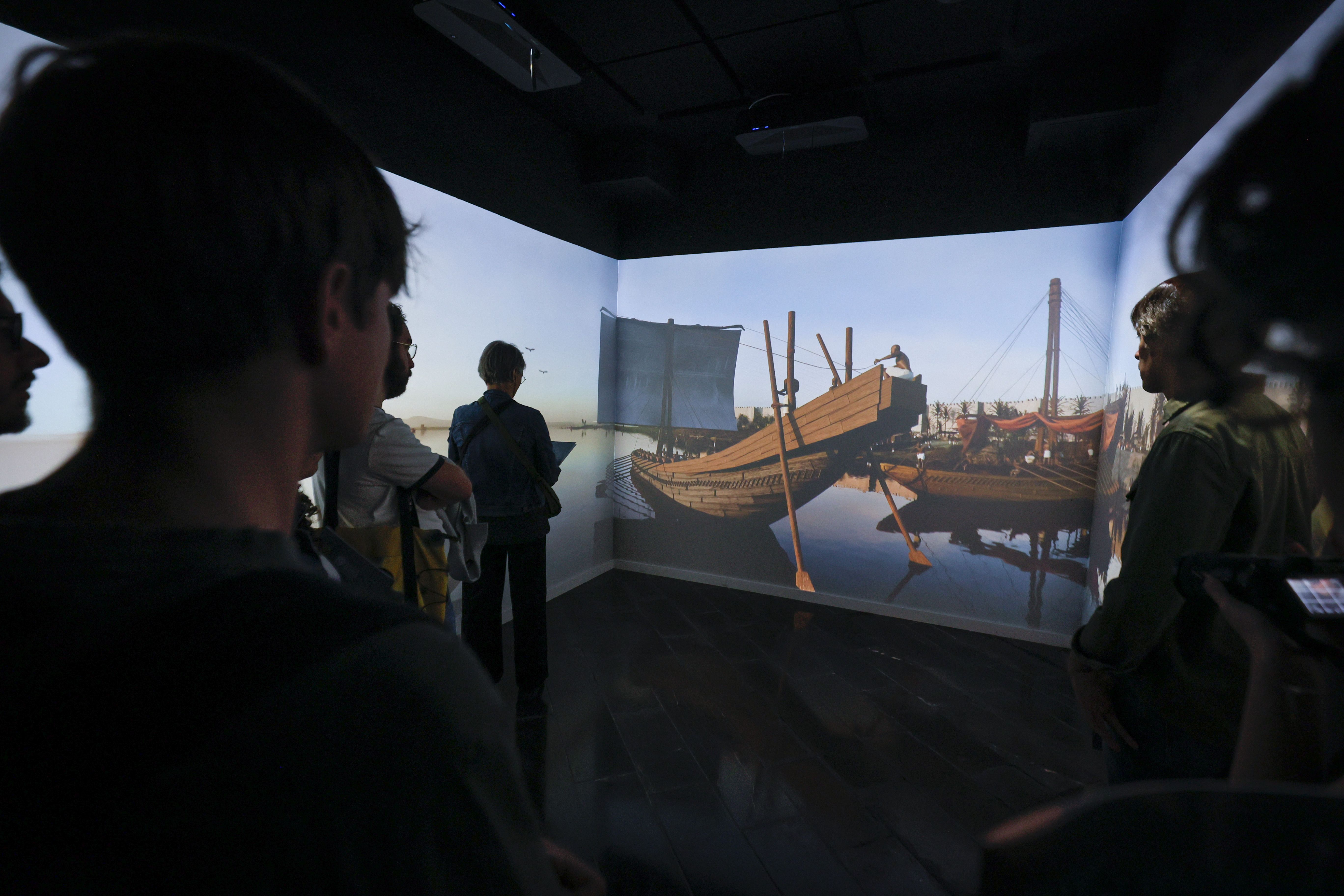
Without a doubt, however, the jewel in the crown is the immersive room; a unique experience that puts the Egyptian Museum of Barcelona "at a new level": "Until now we had not incorporated technology," Clos assures during the inauguration. This space is intended to understand closely everything that Iny lived, but also to experience firsthand a recreation of Ancient Egypt. "It is not the representation of the Egypt we know today, but what we have been able to recover from 4,000 years ago," explains Maixaixa Taulé, director of the Egyptian Museum, also in the presentation. It is a recreation that lasts about 10 minutes and transports visitors to the various parts of Iny's life, from his first contact with Pharaoh Pepi I, to his ships sailing the Nile River. Everything is a story told in the first person that simulates Iny's Ba, that is, the representation that the Egyptians had of the soul and how it could fly over the world of the living.
A faithful representation
The reconstruction of the Sixth Dynasty has been an extensive work carried out by authentic professionals and Egyptologists. Through documents, information and other pieces, a whole world has been represented, until now, never exhibited in the city of Barcelona. The journey passes through the necropolis of Saqqara and reaches Memphis, Iny's city. There, you can see the houses where the Egyptians lived, made through other documents and illustrations that are preserved. You can also see ships with the cabin raised, a technological advance created at that time to have more control of the rudder. As for the flow of the Nile River, which has not always been the same, they have managed to recreate the areas through which it passed more than 4,000 years ago and the banks full of papyrus and other plants they cultivated. "It has been a meticulous work," confesses Taulé, who thanks the collaboration of MAAT: Creació de Contingut Cultural Històric, AT YOUR SERVICE PRODUCTION and 119 MEDIA in the project.
The director of the Egyptian Museum places great emphasis on a part of the film that was put into post-production: the palace of Pharaoh Pepi I. There are not many documents of what the palaces of the VI Dynasty were like, but this has not prevented the museum from achieving a faithful representation of these spaces. While it is true that elements of more modern Egyptian palaces have been added, Taulé confirms that "every decision has a reasoning". The film manages to transport the visitor to an unknown Egypt, but with elements that are still recognized today, such as the step pyramid, in the necropolis of Saqqara, the main part of the funerary complex of Pharaoh Djoser. In the vicinity of this are the tombs of the three pharaohs whom Iny served and, although the specific place where he was buried is not known, it is estimated that his tomb could be in that area.
About sixty pieces
To complement this immersive room, the collection has about sixty pieces from the VI Dynasty on display. There are figures representing important characters, although their origin or name is not known, to models of the ships with which Iny and his men made their trips abroad. Among the selected pieces are a wooden statue of a man from the VI Dynasty, a limestone statue of a seated nobleman, and a figure of a servant grinding grain, in addition to the reliefs and inscriptions from the same chapel. The works —although not all belong to Iny— help to put a face and context to the Egypt in which the explorer lived.
In short, in the coming year, Iny's life will be exhibited in the museum. The initiative is part of the digital transformation process promoted by the museum in recent years. The project was presented last March in Shanghai, within the framework of the international program Research Fellowships in Digital Leadership, promoted by the International Council of Museums (ICOM) and ICOM-IMREC. In addition, it has the support of the Generalitat de Catalunya and the collaboration of the Banc Sabadell Foundation. However, as Taulé announces: "Technology is a tool at the service of history and scientific rigor", therefore, Iny aims to be the first of many immersive exhibitions at the Egyptian Museum of Barcelona.
Add The New Barcelona Post as your preferred Google source for free
Stay informed with the latest news.