
"I define myself through what I do. In fact, I am a workaholic and I tell you this aware that it is a shortcoming and not a source of pride... But I wouldn't know how to fix it either." The writer and cultural journalist Álvaro Colomer savors a short sip of the freshly served twelve-year-old Glenfiddich ---"with a single ice cube, please"---. He closes his eyes and lets himself be carried away by the voice of Harry Connick Jr. who, wrapped in Bacharachian arrangements, brings to life Cole Porter's classic, Just the way you are. He smiles. "It's also true that, following my father's death when I was thirteen, my family had to make a living and I've worked since I was very young," he adds.
During his time as a Philosophy university student, a friend told him about Ajoblanco, at the moment when Pepe Ribas had breathed a second life into the mythical cultural magazine. "I showed up at the newsroom and offered to work there for free, because I was collecting unemployment from another job. The thing is, they accepted and, after a year, I started getting paid." And, from then on, he never stopped working for various publications as a journalist (Interviu, Vanidad…) while writing fiction to respond to his novelist's urge. His true vocation.
By a stroke of luck, he debuted with the short novel La calle de los suicidios (The Street of Suicides), which was included in Alberto Vázquez Figueroa's volume Ébano (Ebony), in an initiative by this author to support young writers. "I was one of the six lucky ones, although I never even got to personally meet Vázquez Figueroa. The thing is, in the end, this story ended up being the first of a kind of trilogy about urban death that I was going to complete with Mimodrama de una ciudad muerta (Mimodrama of a Dead City) and Los bosques de Upsala (The Forests of Uppsala)," he recalls. In parallel, his projection came with non-fiction as a result of an assignment in 2003. "For Se alquila una mujer (A Woman for Rent) I spoke with all kinds of prostitutes, from luxury ones to streetwalkers." Thanks to this book, the regular was invited to be part of the Special Commission on Prostitution of the Senate.
So proud "of what I have written at a fiction level as well as my work as a cultural journalist", he currently collaborates with Cultura|s of La Vanguardia, Ara, Cadena SER, he is the coordinator of Zenda and never stops baking books. The latest: Aprende a escribir (Debate), a compilation of articles in which 84 Spanish-speaking writers ---"from very young to very veteran"--- reveal their working methods. Their routines, their secrets, their rituals when effectively facing the proverbial blank page, cementing stories that reach readers all over the world.
The success of getting on people's nerves
In 2017, Álvaro Colomer hit a nerve. It was with the novel Aunque caminen por el valle de la muerte. "It was based on the events of the Battle of Najaf, which had taken place in the Iraq War in April 2004 following an attack by a group of militiamen on the Spanish base Al-Ándalus. A topic that the Ministry of Defense did not want to be talked about, and they were not at all pleased that the book came out, even though the story was fictionalized." He smiles remembering it. "Also, with that book I can say that I truly found my voice. It gave me a lot of self-confidence as a writer."

The habit of rubbing salt in the wound came from before, when as a young man, together with the group of writers called La Gancho Divine, in allusion to a bar fight, they decided to launch the Órbitas literary prize. "We awarded it the same night as the Planeta. Ours was the serious prize, of course, while the other was the cheesy one." But in addition to this stimulating impertinence, that group meant much more to the writer. "Around us we articulated a whole generation of people dedicated, in one way or another, to the field of letters. We organized memorable dinners and parties and I believe they cohesive the cultural environment of that time."
Bent on being annoying, the parishioner does not intend to rest and announces that next year his next essay, Historia cultural de la destrucción de las mujeres (Cultural History of the Destruction of Women), will see the light, "with which I seek to demonstrate how, throughout history, men have tried to steal the act of having children from women." He gives a sideways smile. "Surely, I'll get a lot of flak from several places ---he predicts---, but that means you're doing something right." The soul of a writer has something, probably a lot, of that: of discomfort with the world, of tension with reality. "Of being wayward" who, at a given moment, do not stab without a thread.
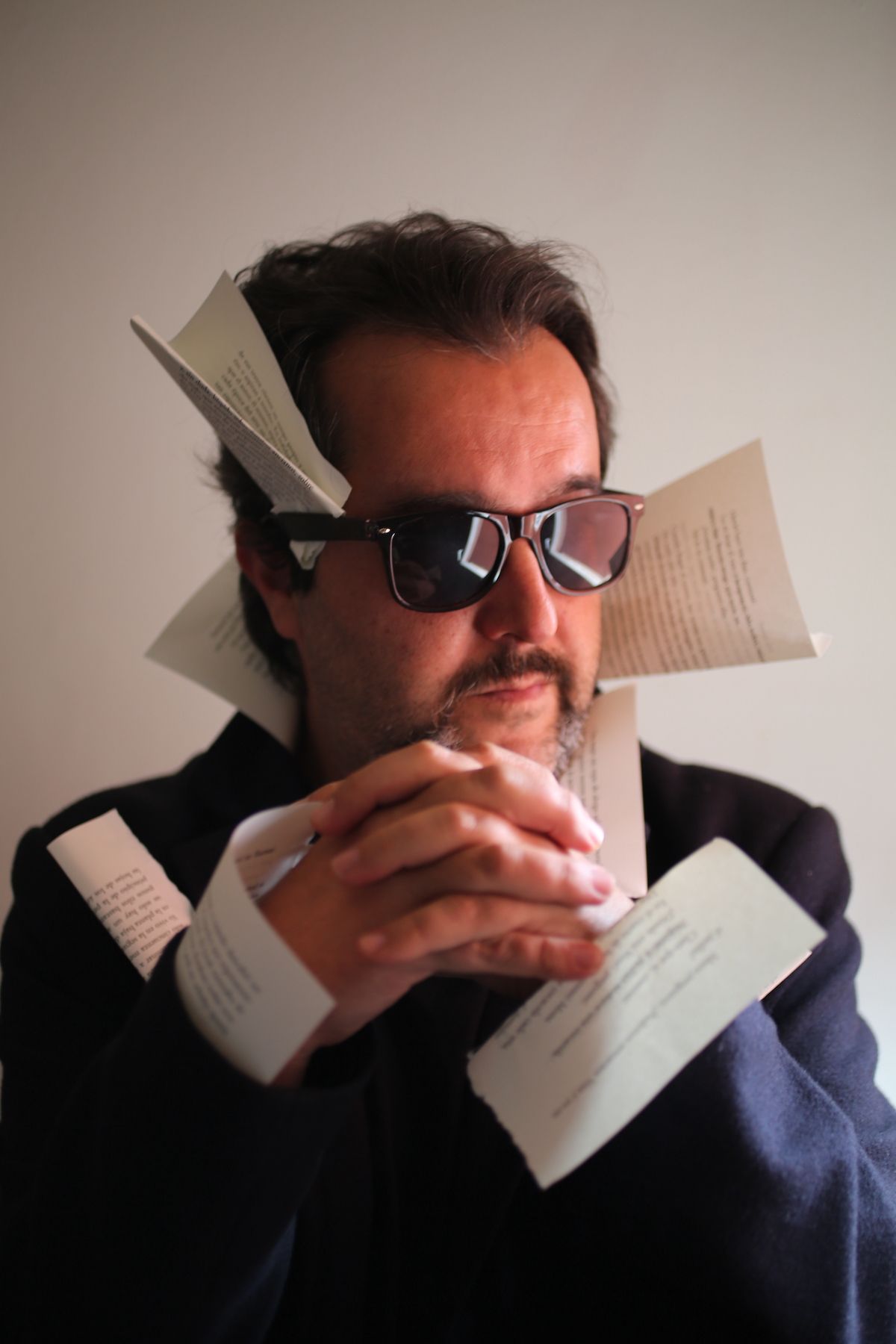
Circumstantial city
The writer's relationship with Barcelona is an anomalous one. "For me it is purely circumstantial, and I believe that I would have been more or less the same person if I had been born and lived in any other large city like Seville, Madrid or Bilbao, capable of providing similar stimuli." He thus denies that the city has a decisive influence on him, beyond missing more parks to be able to walk with his dog, Lena, and incidentally avoid the skaters, "who scare her." But he admits that there are neighborhoods he has never even been to "nor does it worry me too much." Nor is there anything that particularly enamors him about here. "My favorite place is the bar below my house, a Galician place where my wife and I eat our half menu every day, because we don't like to cook at all."
--- Seriously? You never cook?
Álvaro Colomer laughs.
--- I think that if the kitchen in our apartment disappeared, we wouldn't even notice!
And he continues to savor his whiskey while Marta Calvo, his wife, catches up with him. They look at each other. They smile. They understand each other among "wayward people who live in the world of letters," she being a photographer and designer very much linked to the field of books. "For me, a sparkling water," asks the newcomer, leaning on the bar next to Álvaro while, in the background, Harry Connick Jr.'s voice enters the night with the notes of It had to be you.
Add The New Barcelona Post as your preferred Google source for free
Stay informed with the latest news.
