[dropcap letter="E"]
this is the objective of the Psychosocial Care Teams (EAPS), distributed throughout the State, and of the program for the Comprehensive Care for People with Advanced Illnesses of the "la Caixa" Social Project, which next year celebrates its first decade with 18 recognition events for all professionals, volunteers, and family members who work to ensure that life remains life until the last moment.
"We don't have magic wands, we cannot transform that sadness into happiness, but we can accompany in sadness: help them understand it, manage it, and facilitate them to transform it so that the final experience is different, without suffering," says Laura Espinàs, doctor in psychology, psycho-oncologist, and coordinator of the EAPS of the Hospital Sant Joan de Déu in Palma.
The hospital's location is beautiful. The sea calms. It is clear that Dr. Espinàs gives her all daily to alleviate one of the hardest experiences that human beings live, have lived, and will live: death and loss. One of the key points of the project is that not only the sick body is cared for, but also the emotional, relational, social, and spiritual dimension of the person is worked on. For this reason, the EAPS teams are made up of social workers and psychologists like Laura.
In our culture, talking openly about death is difficult. It has to do with protection systems. People think that if the topic is avoided, they will not feel the pain. "And it's not true. People suffer because suffering is part of life. It is better to share that suffering and face it together, rather than doing it in isolation. Fostering communication reduces the levels of emotional distress for both the patient and the family," says Dr. Espinàs.
And those who are afraid of death, can they overcome it? According to the psychologist, the answer is yes. "A short or medium-term life prognosis is always a very big impact for the person and their family: at first, the feelings are of anger, helplessness, hopelessness… But, as the disease progresses, there is a learning experience of the disease process and vital maturity on the part of the person and the family." Although losing the fear of death is not the same as accepting it.
Laura Espinàs says that there is a very high number of people who have difficulty looking death in the face when they approach the end of life. They die in a process of denial, because it is less difficult for them than accepting it. "Dying thinking that tomorrow they will see their family again is not bad in itself, it is an adaptation strategy. There are people who do not have the capacity to face certain processes." Others, she explains, can say goodbye without discomfort, openly forgive, tell family and friends that they love them. Each person is unique and their death is no exception. The EAPS work with respect, without judging, unblocking everything that can be unblocked to have a dignified death and to make accompaniment the final acceptance.
The great allies are the unconditional support of those close to you and non-verbal language, which overcomes all barriers. Touch and hearing are the last senses we lose; therefore, giving a caress, remembering anecdotes, thanking or being in silence together are some of the best aids in the last shared moments. "When you really give them an act of love that has no name is when you give them permission to leave," she explains. "Go peacefully wherever you have to go, rest if you need to rest, we will be fine and we will move forward. If you have to leave, follow your path." During our conversation, Laura represents this act of letting go with her hands, as if a bird were escaping from between her palms.
And now the million-dollar question. Yes, in this job professionals also cry. Of course they cry! Because no matter how many years of experience they have, they are human and connect with suffering. But, as Laura Espinàs says, "crying has no side effects and everything these people teach them —to revalue life, to enjoy every moment, to know how to manage their own fears that have to do with a future that does not exist— is worth all the lives in the world."
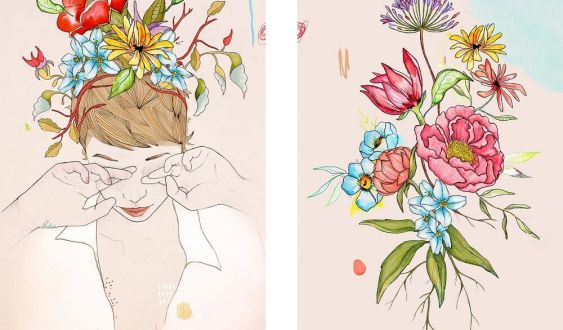
Text: Laura Calçada Illustration: Belén Segarra
You can read more stories like these in ALMA, the social social network, a digital space dedicated to the social sphere that provides a new perspective on the present and future of society, from an optimistic and diverse voice, and from all the initiatives promoted by the "la Caixa" Social Project.
Add The New Barcelona Post as your preferred Google source for free
Stay informed with the latest news.