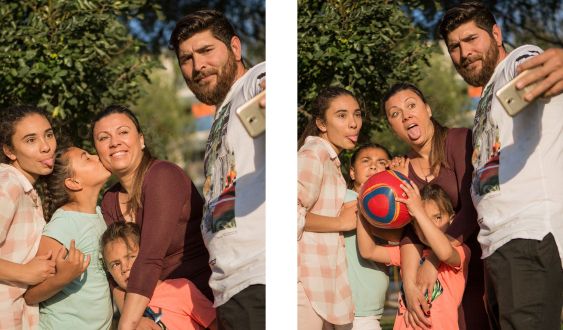
Those three words are also noticeable in the humor and whirlwind energy of Asunción González, "Sión," a courageous mother. In the polite silence, hidden behind the thick red beard and clear gaze of her husband, Benjamín Barrull. In the harmless mischief of little José, four years old, who doesn't stop talking and hugging and playing with everything, including his tiny blonde ponytail. In the adorable laugh of Azahara, who at nine years old is already in love with flamenco and, well, also with reggaeton. And in the shyness of her older sister, Sión, like her mother, 12 years old, who watches the clock while chatting, so as not to be late for the choir she sings in.
Today, May 15, is International Family Day, and few embody its spirit as much as these five giant souls who radiate goodness in their 360 degrees. And that's despite things not being easy in La Coma, a neighborhood in the Valencian town of Paterna. But neither that nor the stigmas they sometimes carry for being a gypsy family —something they wear with pride— weaken their smiles and their desire to fight. And it is precisely for this effort that the family has been recognized by the "la Caixa" Social Project as a reference in their social environment. Why? Because their incredible involvement in their children's education is obvious. You only have to listen to little José lamenting that some classmates hit him. "And you don't hit, José?" "No, I don't," he replies without hesitation.
Sión's family, in their joyful way of overcoming adversities, has been helped by the Gypsy Secretariat Foundation, which in turn works with the CaixaProinfancia program of the "la Caixa" Social Project to help minors and families in vulnerable situations for 10 years now. But the help has been even stronger in the opposite direction: Sión's family has not settled for attending their workshops and receiving support, but has multiplied it by sharing the knowledge and skills acquired.
It all started 10 years ago, when the eldest daughter was two years old and the mother had some gaps in how to raise her. "I was a first-time mother and very lost, so the foundation's maternal-child workshops helped me a lot: I learned about nutrition, about hygiene... One thing is what the doctor tells you and another, the day-to-day: here I was helped by women who had had more children."
The middle daughter, Azahara, for her part, participates with Sión in the family educational workshops, in which several mothers and their middle children, "who receive less attention than the older or younger ones," share games and courses. The foundation also provides them with school reinforcement classes.
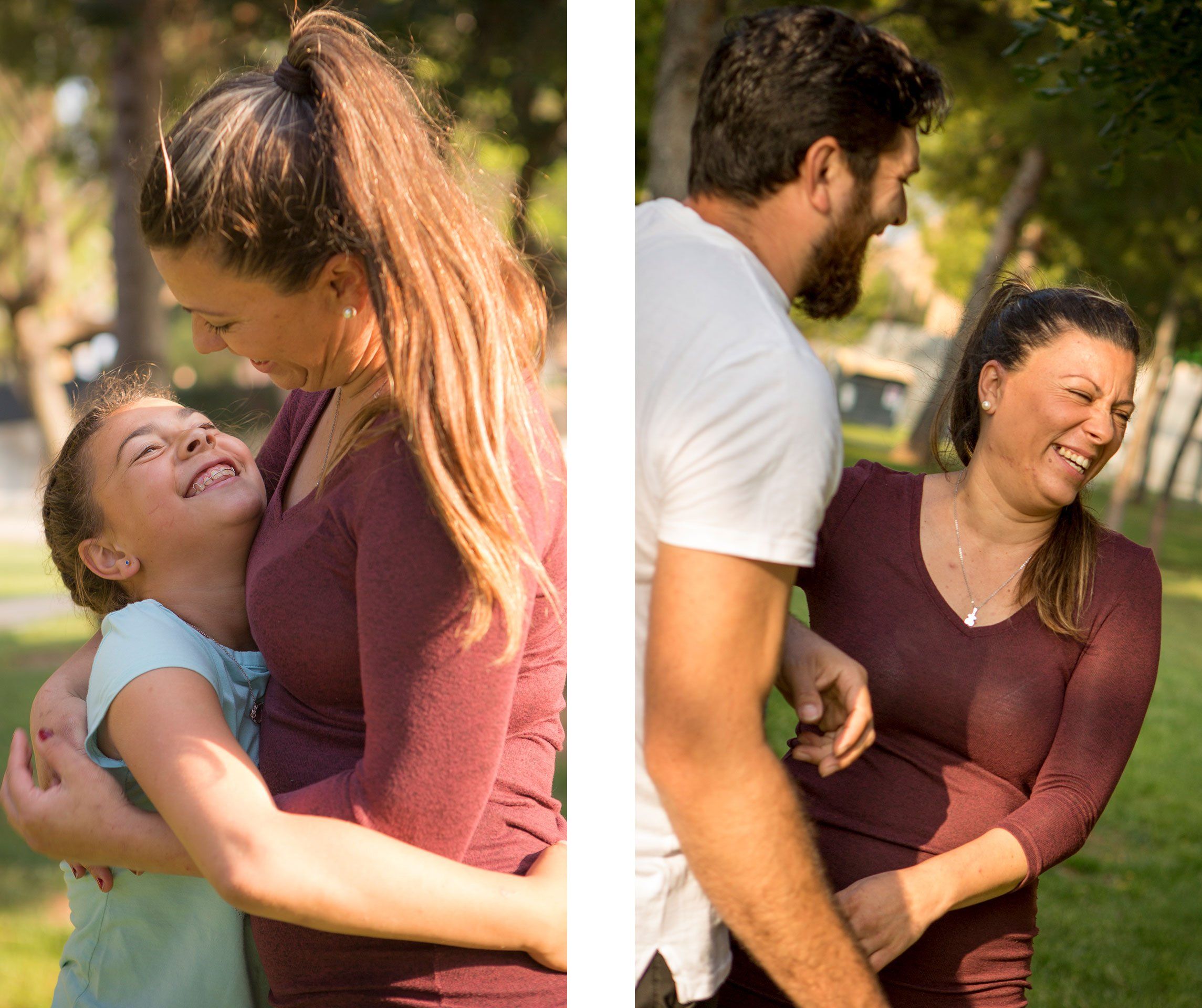
And Sión's attitude has been so exemplary that she has become a worker for the Secretariat. "She is a reference woman," acknowledges María José, who also works there. She is studying to train as a community-based health agent and before finishing she is already seeing its usefulness. "Yesterday on the tram a mother came to ask me if my daughter wore braces, because she thought hers also needed them. She didn't know what a pediatric dentist was or what we get through social security. That one-on-one is important so that families know what they need and what is within their reach," says Sión.
This woman's story is full of rupture, clichés and prejudices. In a society accustomed to men taking the initiative and to marriages with younger girls, it was she, three years older than Benjamín, who dared to speak when they met in a nearby shopping center.
It was love that brought her to the neighborhood and today, horseback riding in the mountains and vintage car exhibitions (it's Benjamín's passion, he has a Seat 124) fill the leisure time of this cheerful family. Both cook. "I'm more into paella and he's into fideuá," says Sión. "Cooking it and eating it." And they laugh. Azahara doesn't know how to choose which of her parents cooks better, but she says she prefers baked rice. José, who dreams of being a police officer, is always either playing soccer or drawing sharks. The older sister takes care not to take her eyes off him and calm his hyperactivity a bit. It's not easy, because he has a lot of energy. But with hugs and smiles, harmony always ends up reigning. Sión, the mother, smiles when she sees how well her children get along, and sighs: "Family is everything to me."
Text: Germán Aranda Photography: Guillem Sartorio Production: Javier O. San Martín
You can read more stories like these in ALMA, the social social network, a digital space dedicated to the social sphere that provides a new perspective on the present and future of society, based on an optimistic and diverse voice, and all the initiatives promoted by the "la Caixa" Social Project.
Add The New Barcelona Post as your preferred Google source for free
Stay informed with the latest news.