
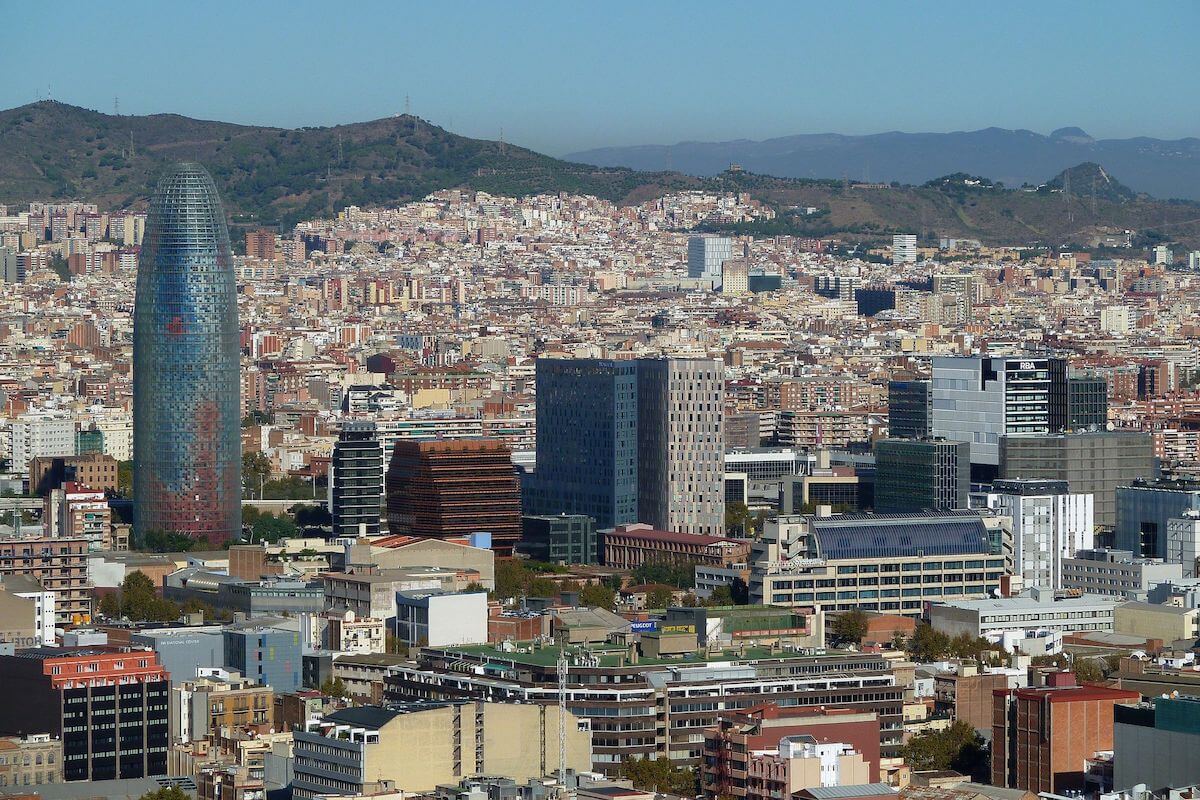
Barcelona is at a momentous point. A city that throughout its history has known how to reinvent itself, today responds to a confluence of opportunities, challenges, and decisions that will mark the course of our metropolis for the coming decades. And in this context, the 22@ district emerges as one of the main urban laboratories, where, to a large extent, the model of the city we want to be is defined.
Today, Barcelona is at a historic crossroads. It is no exaggeration to say that we are facing a stage that could be as decisive as the 92 Olympic Games or the 2004 Forum of Cultures. But this time, the challenge is more complex, deeper, and even more existential.
The metropolis of Barcelona today faces challenges that test its capacity for social cohesion and its model of coexistence. Access to housing, the climate emergency, the renovation of infrastructures, or the impact of tourism are just some of the vectors that demand intelligent management, capable of balancing economic development and quality of life.
To speak of the future in Barcelona today is to speak, necessarily, of water resilienceIn this scenario, 22@ is not just a district of technological innovation. It is, above all, an opportunity to demonstrate that urban growth can, and must, go hand in hand with sustainability, inclusion, and resilience.And this is where water management becomes a central element.
To speak of the future today in Barcelona is to speak, necessarily, of water resilience. The recurrence of drought periods, increasingly intense and prolonged, forces us to rethink the water management model with a structural perspective. At Aigües de Barcelona, we are aware that it is no longer enough to guarantee supply: it must be ensured in a sustainable, efficient way and adapted to a changing climate environment.
From the company, we work to make 22@ also a benchmark in this area. We are committed to innovative solutions such as the reuse of regenerated water for urban, agricultural and industrial uses, the digitalization of all phases of the integral water cycle to optimize efficiency, or the integration of urban systems that allow for more circular resource management. Water, in this sense, ceases to be just a service to become a lever for urban transformation.
But innovation is not just technology. It is also governance, collaboration and shared vision. The future of 22@ will depend, to a large extent, on the ability to articulate alliances between administrations, companies, research centers and citizens. Only then can we build a model that is both competitive and equitable.
We are, indeed, facing a new historical phase for Barcelona, with the horizon of 2035. The great milestones of this stage will not only be events or infrastructures, but the capacity to build an environmentally sustainable city and metropolis, socially cohesive, economically dynamic, open to the world and integrated into the metropolitan territory.
The future of the city inexorably involves an integrated metropolitan vision, one that transcends administrative limits and thinks in terms of mobility, housing, services, and opportunities for all citizens. And within this framework, water management must play a strategic role, ensuring territorial balance and resilience in the face of climate challenges.
The 22@ must be an example of this new way of making a city. A space where innovation is not only an economic driver, but also a tool to improve quality of life, reduce inequalities and protect our environment.
Barcelona has demonstrated, throughout its history, an extraordinary capacity for mobilization and transformation. Today, in this new scenario, we have a new opportunity to return. With ambition, with responsibility and with a long-term vision. Because at Aigües de Barcelona we know that the future is not waited for: it is built. And 22@ is, without a doubt, one of the places where we have already begun to build it.
Add The New Barcelona Post as your preferred Google source for free
Stay informed with the latest news.