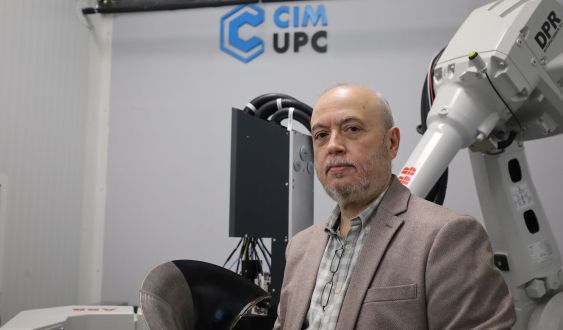
For decades, manufacturing a part meant taking a block of material and removing fragments until the desired shape was obtained. But what happens when the material is as expensive as titanium, a superalloy, or an advanced composite? Here, not a speck of material can be turned into scrap, and this is where 3D printing came in, to move from what is known as subtractive manufacturing—which removes material, the traditional way—to additive manufacturing, which adds material only where necessary.
The result is a reduction in material waste, and not only that: 3D printing allows the creation of parts with previously impossible geometries, lighter and with complex internal structures. "It's an unprecedented design freedom," explains José María Cabrera, director of CIM UPC, a center that works on 3D printing to get ahead of future manufacturing.
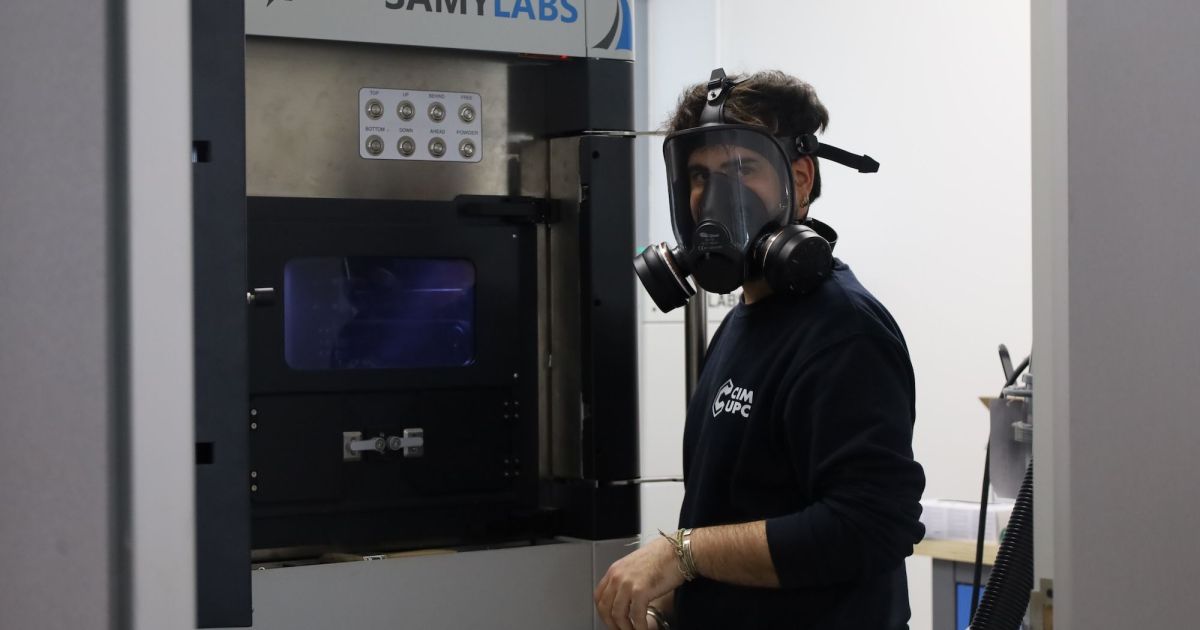
The center, part of the Universitat Politècnica de Catalunya (UPC), has become one of the references in advanced 3D printing in Catalonia, with an activity that combines applied research, technology transfer, and training. As a technology center, its objective is not only to print parts, but "to develop the technology that allows them to be printed," as Cabrera emphasizes. It does so with a team of 45 professionals and a pilot plant that has technologies that allow printing everything from plastics to metal, using techniques ranging from a printhead that melts a filament to lasers that fuse powder to shape new parts. Full of machines moving at different rhythms, 3D printers generate a kind of coordinated dance with the researchers and workers of the center who explore new ways to manufacture everything imaginable.
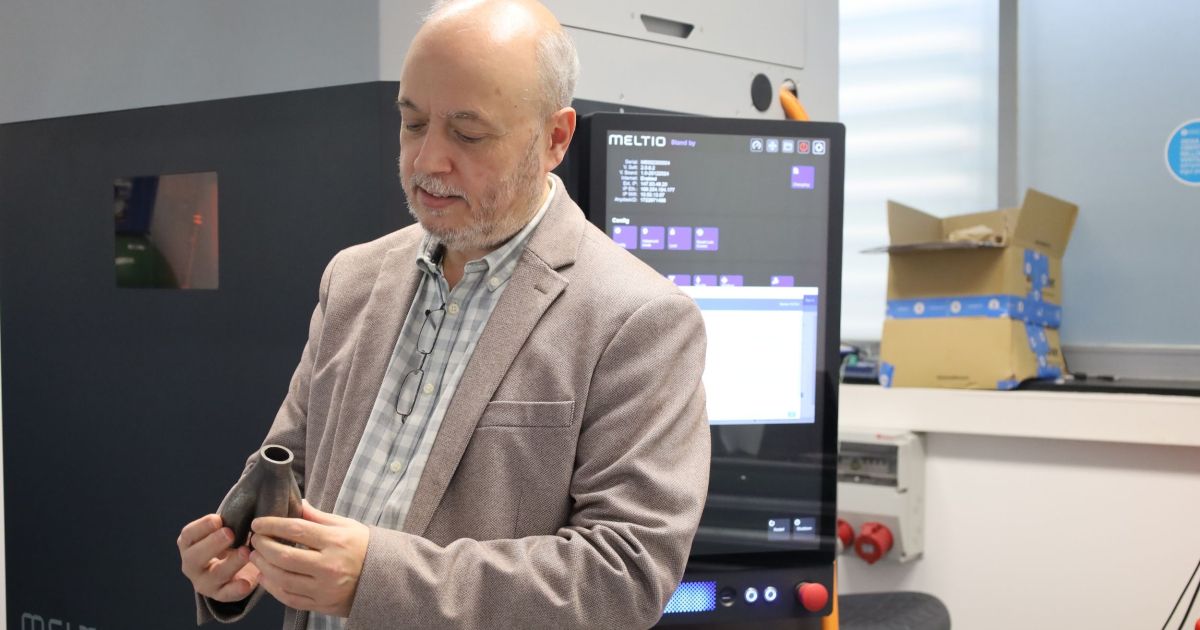
However, the center's roots are not in 3D printing, but in computer-aided manufacturing, which was revolutionizing factories when the center was founded in 1990. Its very name (Computer Integrated Manufacturing, CIM) reflects that moment, but when these technologies became consolidated, the center sought new horizons. It was then that they turned to 3D printing, of which it has become a benchmark. Now, it aims to grow 10% annually, both in staff and turnover (it was 2.5 million in 2024), while expanding its research lines and projects.
In its roadmap, one element stands out: metal. "We are making a very significant effort in metallic 3D printing," defends the director, who points to challenges that involve precisely controlling factors such as temperature, robot movement, or material contribution to ensure that the final part meets industrial requirements. This commitment is joined by the incorporation of new elements into the machines, such as sensors and AI tools, which allow them to make autonomous decisions when printing: "Machines are increasingly intelligent."
The center's ambition also involves exploring territories still little traveled. Among the lines it investigates is the printing of amorphous materials, magnetic materials, and new formulations that allow manufacturing objects with properties previously difficult to achieve. And it is that parts that were once impossible to manufacture are now beginning to be viable with these technologies: "We are opening the frontiers."
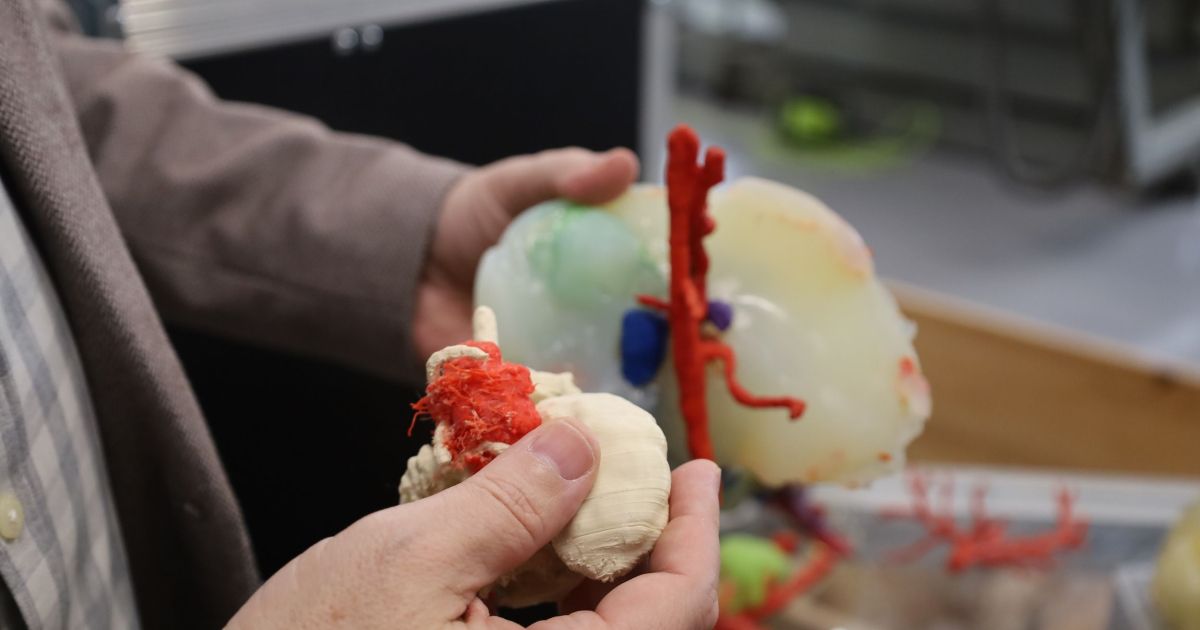
This effort to expand frontiers does not always stay in the laboratories and the pilot plant, but a relevant part of CIM UPC's work is dedicated to bringing innovation to the market ---understood in a broad sense: it can have applications ranging from architectural to medical, even reproducing tumors in 3D to facilitate the work of surgeons before an operation---. In fact, the center is mainly financed through what it invoices through the market. It does so especially through two channels, through which innovation leaves the laboratory: with orders for manufacturing parts from third parties —be they companies, administrations, or hospitals—, and also with innovations that acquire their own entity and leave the pilot plant converted into independent companies.
BCN3D is one of them. The company was born in 2018 from an innovation developed at the center, an independent dual extruder system that allowed simultaneous printing with two materials or manufacturing two pieces at once. The usefulness of this innovation led to its conversion into a spin-off of the center, just as more recently happened with Aridditive and its concrete 3D printing technology. Founded as an independent company in 2023, it applies the same layer-by-layer manufacturing principles of desktop 3D printers, but on a large scale; where a printer uses plastic, Aridditive uses concrete, and where one measures in millimeters, Aridditive does so in meters.
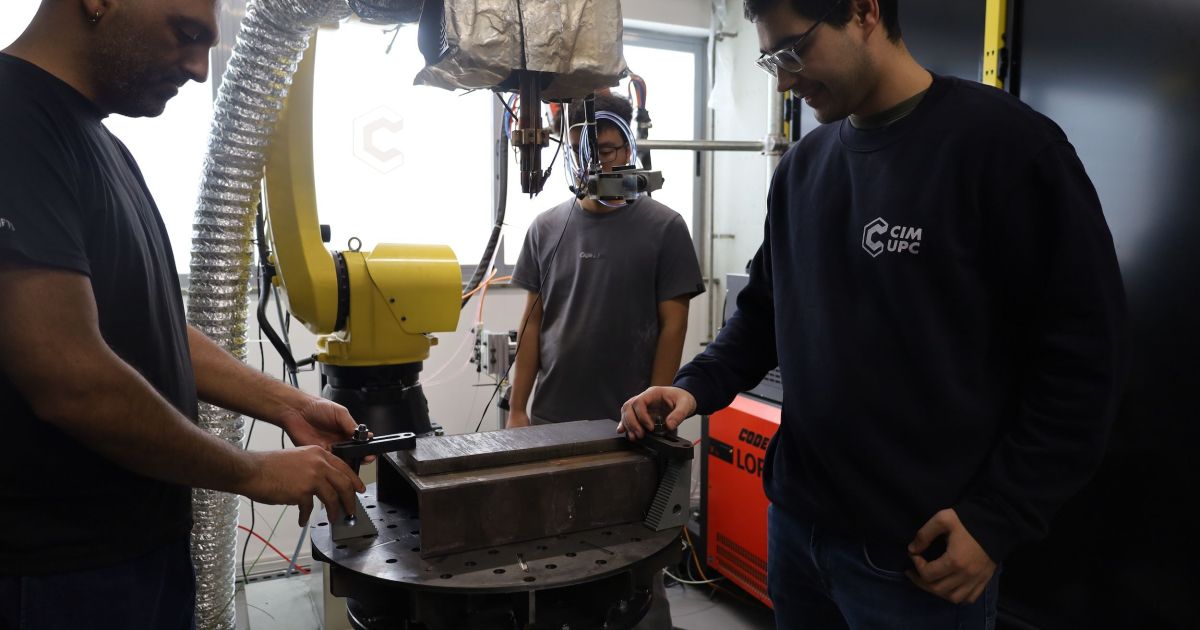
This commitment to supporting innovation is also reflected in its training and outreach activities, as Cabrera highlights. The center participates in the revitalization of various Fab Labs, spaces equipped with digital manufacturing technologies that Cabrera defines as "the libraries of the future." The objective of these laboratories is for students to learn by experimenting, building prototypes, and turning ideas into tangible objects, as the center's director emphasizes.
All this work by CIM UPC does not occur in isolation, however, but is embedded in an innovation ecosystem where additive manufacturing has been prominent for years. In fact, in the Barcelona metropolis, an increasingly dense ecosystem has been woven around additive manufacturing, to the point of becoming one of the main hubs in southern Europe in this field.
Technology centers, universities, large industrial companies, and startups coexist in a network that has contributed to accelerating the adoption of 3D printing beyond laboratories. This ecosystem includes world-leading companies, such as the HP center in Sant Cugat del Vallés, and has spaces that are responsible for promoting and revitalizing it, such as the DFactory of the Consorci de la Zona Franca, or the IAM3DHUB initiative, launched by public and private actors as a 3D printing hub, housed, precisely, in the DFactory.
In fact, DFactory hosted in September the first edition of a summit that brought together additive manufacturing hubs and organizations from Europe, the Global AM Hubs Summit, during which (Add)liance, a new European alliance focused on 3D printing, was launched. Its objective is to create a stable and collaborative international framework that facilitates the adoption of these technologies.
The fact that the alliance was launched from Catalonia helped to highlight a Catalan sector that is gaining weight. Although the latest data from Acció is from 2024, it reflects significant growth compared to previous data from 2019: in five years, the number of companies linked to 3D printing increased by 32% —to more than 150—. The growth in business volume was even more pronounced, at 72% (560 million euros in 2024), accompanied by a 58% increase in workers, up to more than 2,000 people employed.
In this context, CIM UPC acts as a driving force. While the printers continue to work in the pilot plant and throughout its facilities, the center keeps its sights set on a broader objective; it is not just about manufacturing the part, but about rethinking the way it is manufactured and how ideas take shape. Thus, the center aspires to contribute to the redesign of future manufacturing, from Barcelona, layer by layer.
Add The New Barcelona Post as your preferred Google source for free
Stay informed with the latest news.